
This article's table of contents introduction:
- What You Are Describing: A Heavy-Duty Industrial Explosion-Proof Fan
- "Forced Ventilating"
- "Stainless Steel"
- "Blower"
- "Explosion Proof"
- "Anti Abrasive"
- Putting It All Together: The Complete Picture
Based on the keywords you provided, it sounds like you are describing a very specific type of industrial equipment. Here is a breakdown of what each term means and the type of fan you are likely dealing with.
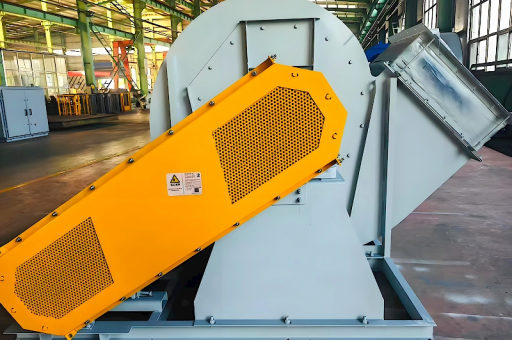
What You Are Describing: A Heavy-Duty Industrial Explosion-Proof Fan
This is a Centrifugal (Radial) Blower, specifically engineered for the harshest and most dangerous industrial environments. It combines safety features (explosion-proof), material durability (stainless steel, anti-abrasive), and functional design (forced ventilating).
Let's break down the name:
"Forced Ventilating"
- Meaning: This is a mechanical ventilation system. It uses the fan's power to push (force) air into a space (supply) or pull (exhaust) air out of a space, rather than relying on natural wind or convection. This is critical for removing fumes, dust, or heat from a confined area like a tank, duct, or building.
"Stainless Steel"
- Meaning: The fan housing, impeller (wheel), and often the inlet/outlet cones are made of Stainless Steel (typically 304, 316, or 316L).
- Why use it?
- Corrosion Resistance: Ideal for chemical plants, pharmaceutical labs, offshore platforms, and humid environments.
- Sanitary/Non-Contaminating: Used in food processing, clean rooms.
- Spark Resistance: While "spark-resistant" is the main goal for explosion-proof, stainless steel is non-ferrous and does not produce sparks when struck as easily as carbon steel.
"Blower"
- Meaning: In industrial terms, a blower is typically a Centrifugal Fan. It operates at a relatively high pressure compared to an axial fan (like a box fan). It is designed to move air against resistance (e.g., through long ducts, scrubbers, or filters).
"Explosion Proof"
- This is the most critical safety feature.
- Meaning: The fan is specifically designed and certified to prevent an internal explosion from igniting the surrounding atmosphere.
- How it works:
- Spark Prevention: The impeller is made of a non-sparking material (like aluminum or a special alloy) or is coated with a non-ferrous material. The housing is designed to prevent internal rubbing.
- Enclosure: The motor is a Totally Enclosed Fan Cooled (TEFC) motor rated for hazardous locations (e.g., Class I, Division 1, Groups C & D for gases/vapors; or Class II for dust).
- Pressure Containment: If an explosive mixture ignites inside the fan, the housing is strong enough to contain the explosion without rupturing. The seals prevent the explosion from escaping to the outside atmosphere.
- Where it's used: Oil refineries, grain elevators, paint booths, chemical storage, wastewater treatment plants (for methane gas), and any area with flammable gases, vapors, or combustible dusts.
"Anti Abrasive"
- Meaning: The fan is built to handle air streams that contain hard, sharp, and heavy particles (like sand, grit, metal shavings, cement dust, or wood chips).
- How it's achieved:
- Thicker Materials: The fan housing and impeller are made from thicker gauge steel than standard.
- Hardened Surfaces: The impeller blades and housing wall may be case-hardened or coated with a wear-resistant material (like a rubber lining or a ceramic coating).
- Replaceable Liners: Many anti-abrasive fans have sacrificial liners inside the housing that can be replaced when they wear out, extending the life of the main fan.
Putting It All Together: The Complete Picture
This is a high-performance, high-safety, and high-durability fan. It is designed for a specific set of harsh conditions:
- The Environment: Hazardous (explosive gas or dust).
- The Material Conveyed: Corrosive (chemicals) and/or abrasive (sand, dust).
- The Application: Forced ventilation of a confined space or ductwork.
Typical Applications:
- Powder Coating Booths: To exhaust explosive dust and abrasive powder.
- Chemical Processing: To vent corrosive fumes and flammable vapors.
- Mining & Quarrying: To ventilate tunnels where explosive methane gas and abrasive rock dust are present.
- Grain Handling: To vent dust (which is explosive) from silos and mills.
- Wastewater Treatment: At digester tanks where corrosive hydrogen sulfide gas and explosive methane are present.
Potential Model Numbers or Brands to Search For: If you are looking to buy or spec this fan, you might search for:
- "High Pressure Radial Blower"
- "SISW (Single Inlet, Single Width) Centrifugal Fan"
- "Sanitary Grade Explosion Proof Blower"
- "Industrial Exhauster with Abrasive Duty Wheel"
WARNING: The "Anti Abrasive" feature is incompatible with the "Explosion Proof" feature if the anti-abrasive wheel is made of steel. A steel wheel can create sparks when hitting particles or the housing. For true explosion-proof AND anti-abrasive performance, you need a non-ferrous anti-abrasive wheel (e.g., a special aluminum bronze alloy or a stainless steel wheel that has been spark-tested). Always verify the certification (ATEX, UL, CSA) for the specific gas group or dust class you are working with.





