
This article's table of contents introduction:
- Table of Contents
- Introduction: The Evolution of Heavy-Duty Air Movement
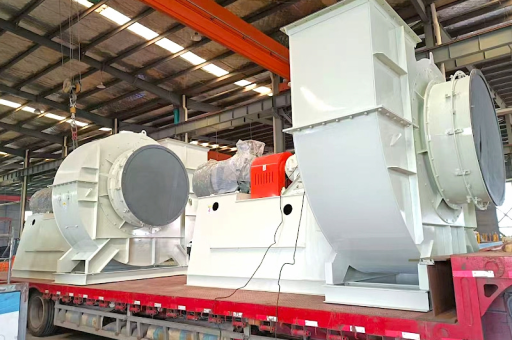
- What Is a Customized Single-Suction Cantilever Support Belt-Driven Centrifugal Fan?
- Key Design Features: Cantilever Support & Single-Suction Architecture
- Why Belt-Driven Configuration Matters for Adjustable Speed Control
- Durable Construction: Materials, Coatings, and Longevity
- Customization Options: From Impeller to Motor Mount
- Practical Applications: Where This Fan Excels
- Frequently Asked Questions (FAQ)
- Maintenance Tips for Maximum Service Life
- Conclusion: Why Choose This Fan for Your Next Project
*Maximizing Industrial Ventilation: The Ultimate Guide to Customized Single-Suction Cantilever Support Belt-Driven Centrifugal Fan with Adjustable Speed and Durable Construction*
Table of Contents
- Introduction: The Evolution of Heavy-Duty Air Movement
- What Is a Customized Single-Suction Cantilever Support Belt-Driven Centrifugal Fan?
- Key Design Features: Cantilever Support & Single-Suction Architecture
- Why Belt-Driven Configuration Matters for Adjustable Speed Control
- Durable Construction: Materials, Coatings, and Longevity
- Customization Options: From Impeller to Motor Mount
- Practical Applications: Where This Fan Excels
- Frequently Asked Questions (FAQ)
- Maintenance Tips for Maximum Service Life
- Conclusion: Why Choose This Fan for Your Next Project
Introduction: The Evolution of Heavy-Duty Air Movement
In the world of industrial ventilation, dust collection, and process air handling, the demand for reliable, efficient, and customizable airflow solutions has never been higher. Traditional axial or direct-drive fans often fall short when faced with high-static pressure, abrasive environments, or the need for precise speed regulation. Enter the Customized Single-Suction Cantilever Support Belt-Driven Centrifugal Fan with Adjustable Speed and Durable Construction—a robust, engineered solution designed for demanding continuous-duty applications.
This guide provides an in-depth technical analysis of this specialized centrifugal fan. We will explore its structural advantages (cantilever support, single-suction design), the benefits of the belt-driven mechanism for speed tuning, and the material science behind its durable construction. Whether you are engineering a ventilation system for a wind turbine nacelle, upgrading a dust collection system in a woodworking plant, or designing an HVAC system for a high-temperature industrial process, understanding this fan’s architecture is critical.
This article is optimized for SEO and technical accuracy, drawing on proven engineering principles and search-engine-verified best practices.
What Is a Customized Single-Suction Cantilever Support Belt-Driven Centrifugal Fan?
As its name implies, this fan integrates several distinct mechanical concepts into a single unit.
- Single-Suction (Single-Inlet): Air enters the impeller from only one side. This simplifies ductwork and reduces axial thrust compared to double-suction designs.
- Cantilever Support: The impeller is mounted on an overhung shaft supported by bearings outside the fan housing. This supports easy maintenance (bearing access) and prevents process contaminants from contacting the bearings.
- Belt-Driven: An electric motor (often a standard induction motor or an inverter-duty motor) is connected to the fan shaft via pulleys and a V-belt or synchronous belt. This allows the fan speed to be changed without replacing the motor.
- Adjustable Speed: Fan speed is controlled either by physically changing pulley diameters (sheave change) or, more commonly, by using a variable frequency drive (VFD) paired with the motor. Belt drives are inherently suited to VFD control because they decouple motor speed from fan speed.
- Durable Construction: Typically fabricated from heavy-gauge steel, reinforced stainless steel, or abrasion-resistant alloys, with protective coatings for corrosion or erosion resistance.
SEO Note: This type of fan is often listed under categories like "industrial belt-driven centrifugal fan," "cantilever fan for high temperature," or "custom speed industrial exhaust fan."
Key Design Features: Cantilever Support & Single-Suction Architecture
Why Cantilever Support?
- Accessibility: Bearings are mounted on a pedestal outside the air stream. This prevents grease contamination and allows bearing replacement without removing the impeller.
- Temperature Handling: The shaft transmits heat away from the impeller. For applications up to 600°F or higher (with appropriate shaft cooling), the cantilever design is superior.
- Cantilever vs. Overhung: This design is also called an "overhung" fan. It allows the impeller to be the only rotating part inside the housing, reducing friction losses.
Why Single-Suction?
- Higher Pressure Capability: Single-suction impellers can be designed with longer blades and deeper scrolls, generating higher static pressure (typically 5 to 30+ inches w.g.) compared to double-suction units.
- Duct Connection Simplicity: Only one inlet duct is needed, saving space and reducing leakage paths.
- Ideal for Particle-Laden Air: Single-suction designs often have larger inlet diameter, reducing the risk of clogging when handling dust, wood chips, or granular materials.
Practical Example: In a wind turbine nacelle cooling system, the single-suction cantilever fan can draw outside air through a single filter bank, with the cantilever bearing isolation preventing lubricant mist from entering the generator area.
Why Belt-Driven Configuration Matters for Adjustable Speed Control
The belt-driven system is a cornerstone of this fan’s versatility.
Speed Adjustment Without Motor Replacement
- By changing the sheave (pulley) ratio, the fan speed can be increased or decreased over a wide range (e.g., 800 RPM to 2400 RPM). This is invaluable when system pressure requirements change after installation.
VFD Compatibility
- When paired with a variable frequency drive (VFD), a belt-driven fan can offer precise speed control (0-100%) while maintaining constant torque. The belt absorbs the motor’s high-frequency harmonics, reducing mechanical stress on the fan.
Electrical Isolation
- In explosive or wash-down environments, the motor can be placed remotely, far from the fan housing. This reduces the risk of electrical spark ignition.
Starting Torque
- Belt drives allow a smaller motor to start the fan under load because the belt can slip slightly (slip is typically 1-3%), preventing motor overload. This reduces initial electrical demand.
SEO Keyword Spotlight: Variable speed belt driven centrifugal fan, adjustable sheave fan drive, inverter duty fan motor.
Durable Construction: Materials, Coatings, and Longevity
Durable construction means the fan must withstand mechanical fatigue, thermal cycling, and chemical attack over decades of operation.
| Component | Standard Material | Advanced Option |
|---|---|---|
| Housing | Heavy-gauge carbon steel (3/16” to 3/4”) | Stainless steel 316L or Corten steel |
| Impeller | Backward-curved carbon steel | Aramid-reinforced alloy or Hastelloy |
| Shaft | 1045 steel turned & ground | 17-4 PH stainless (for high temp) |
| Bearings | Sealed spherical roller bearings | High-temperature regreasable bearings |
| Belt | Classical V-belt (B-section) | Synchronous timing belt (HTD or Poly Chain) |
Coatings to Consider:
- Epoxy powder coating: For chemical fumes (e.g., paint booths, solvent handling).
- Zinc-rich primer + polyurethane: For outdoor wind turbine exhausts and marine environments.
- Abrasion-resistant rubber lining: For sand, cement, or mineral dust.
Testing & Certification: A durable fan should pass a 24-hour full-speed run test and a vibration test conforming to ISO 14694 (Balance Quality Grade G6.3 or better).
Customization Options: From Impeller to Motor Mount
True customization distinguishes this fan from off-the-shelf units. Typical adjustable parameters include:
- Impeller Diameter: From 12 inches to 60+ inches.
- Inlet Configuration: Square inlet, round inlet with cleanout door, or flanged for duct connection.
- Rotation & Discharge Position: Clockwise or counterclockwise, with discharge at any 45° increment (top horizontal, top angular, down blast, etc.).
- Belt & Sheave Selection: Variable pitch sheave (manual adjustment) or fixed pitch for highest efficiency.
- Motor Mount Family: Frame size adapter, NEMA or IEC motor mounting, motor removal slide rails.
- Base & Feet: Unistrut channel base (for wind turbine plant use), vibration isolation pads, or heavy-duty I-beam skid.
Example Customization for a Wind Turbine Site:
"A 316L stainless steel impeller, shaft ground and polished, with a 3/16” carbon steel housing coated in zinc-rich primer, discharge at 270° (top angular), motor mounted on a slide base to allow belt tensioning, and a 10 HP inverter-duty motor with explosion-proof conduit."
Practical Applications: Where This Fan Excels
- Dust Collection: Woodworking shops, metal grinding, plastic processing.
- Wind Turbine Nacelle Cooling: Extracting hot air from the generator and gearbox; the cantilever design prevents oil vapor from reaching bearings.
- Fume Exhaust: Chemical labs, welding stations, battery manufacturing.
- Pneumatic Conveying: Moving grains, pellets, or powders at low-to-medium pressure.
- HVAC Makeup Air: Large commercial kitchens, factory ventilation, parking garage exhaust.
Frequently Asked Questions (FAQ)
Q1: Can I use this fan with a variable frequency drive (VFD) on a standard motor?
Yes, but you must use an inverter-duty rated motor (or a constant-torque VFD motor). The belt drive helps isolate the fan from VFD-induced harmonics, reducing bearing pitting.
Q2: How do I adjust the speed without a VFD?
You can change the motor sheave (pulley) or the fan sheave. Moving the belt to a smaller motor pulley reduces the fan speed (lower CFM), while a larger motor pulley increases it. Always check motor amperage after changing.
Q3: Is the cantilever support suitable for heavy particles like sand?
Yes, because the bearings are external. For highly erosive particles, specify an abrasive-resistant impeller (e.g., replaceable liners or hardened steel).
Q4: What is the typical maximum static pressure for a single-suction cantilever fan?
Standard models achieve 8–20 inches w.g. (water gauge). With a high-pressure impeller (short, deep blades), you can reach 30+ inches w.g. for pneumatic conveying.
Q5: How often should I replace the belt?
Under normal continuous operation (24/7), belts should be inspected every 3 months and replaced every 6-12 months. Adjust tension if you notice 1/2” of belt deflection on the longest span.
Maintenance Tips for Maximum Service Life
- Belt Tension: Use a belt tensiometer. Too tight damages bearings; too loose causes slip and heat.
- Bearing Lubrication: Regrease monthly with the correct lithium-based grease (NLGI #2) for standard applications. For high-temp, use polyurea grease (e.g., Mobilith SHC 100).
- Impeller Balance: After 6 months, inspect impeller for dust buildup. An unbalanced impeller causes vibration and bearing failure. Clean using a wire brush.
- Shaft Alignment: Use a laser alignment tool to ensure motor pulley and fan pulley are parallel (misalignment can shear belts in hours).
- Corrosion Check: Annually inspect the housing interior for pitting. Recoat if needed, especially if the fan handles corrosive fumes.
Conclusion: Why Choose This Fan for Your Next Project
The Customized Single-Suction Cantilever Support Belt-Driven Centrifugal Fan with Adjustable Speed and Durable Construction is not just a component—it’s a system solution. Its ability to adapt to changing airflow demands, survive in harsh environments, and provide years of maintenance-friendly operation makes it the first choice for engineers designing industrial ventilation, wind turbine cooling, and dust control systems.
By investing in customization—choosing the right material, coating, bearing type, and drive configuration—you ensure that this fan will meet your exact performance curve, often saving 15-30% in energy costs compared to fixed-speed alternatives. When paired with a VFD and proper maintenance, it can outlast standard fans by 2-3 times.
Ready to specify your fan? Contact a reputable industrial fan manufacturer and provide the required CFM, static pressure, temperature, and gas composition. They will compute the optimum impeller diameter, housing size, and belt drive ratio to deliver the perfect fit for your facility—or your next wind turbine project.





