
This article's table of contents introduction:
- Key Design Challenges & Solutions
- Recommended Customized Specification Sheet
- Example Application: High-Temp Blower for a Glass Furnace
- How to Order / Request a Quote
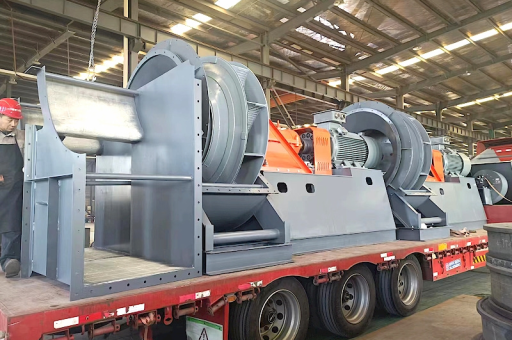
Based on your request for a Customized Design, High Temperature Resistance, Energy Efficient Centrifugal Fan for Industrial Ventilation, here is a detailed technical breakdown and specification guide for manufacturing or sourcing such a unit.
This type of fan is critical for applications like oven exhaust, boiler draft, kiln ventilation, fume extraction from furnaces, and heat treatment facilities.
Key Design Challenges & Solutions
| Challenge | Standard Fan Issue | Customized Solution |
|---|---|---|
| High Temperature (200°C - 600°C+) | Motor burn-out, bearing failure, impeller warping. | Shaft cooling fins, insulated bearing housing, thermal barrier, high-temp alloys. |
| Energy Efficiency | Low static efficiency, high power consumption. | Backward-curved (BC) or airfoil (AF) impeller; Premium Efficiency (IE4/IE5) motor. |
| Corrosion / Abrasion | Rapid wear from fumes or dust. | Specialized coatings (Ceramic, PTFE, or Hardox liners) or Stainless Steel contact parts. |
| Vibration / Noise | Resonance at operating speed. | Dynamic balancing (ISO 1940 G2.5/G1.0), vibration isolators, acoustical housing. |
Recommended Customized Specification Sheet
Fan Type: Single Inlet, Backward Curved (BC) or Airfoil (AF)
- Why: BC blades are non-overloading (motor won't burn out if duct is blocked) and offer 75-85% static efficiency. AF blades offer the highest efficiency (85-90%) but are less tolerant of dirty air.
High Temperature Construction (The "Hot Section")
- Impeller Material:
- < 250°C: Steel (Q235B) with high-temp paint.
- 250°C - 400°C: Corten Steel or 304 Stainless Steel (SS304) for anti-corrosion.
- 400°C - 650°C: 310S Stainless Steel or Inconel alloy (for extreme heat + stress).
- Shaft Cooling: A carbon steel 'cooling disc' (heat slinger) must be welded between the impeller hub and the bearing housing. This radiates heat away from the bearings.
- Bearing Assembly:
- External Pillow Block Bearings (mounted on a separate pedestal, not in the airstream).
- High-Temp Grease (e.g., Mobil Polyrex EM, rated to 200°C+).
- Vented or Water-Cooled Bearing Housing if gas temperature exceeds 300°C.
- Shaft Seal: Graphite-impregnated packing or labyrinth seal to prevent hot gas leakage into the bearing area.
Energy Efficiency Components
- Drive System:
- V-Belt Drive (allows speed adjustments for tuning).
- Direct Drive (Rigid Coupling) with VFD (Variable Frequency Drive) . This is the standard for maximum efficiency (no belt friction losses).
- Motor: IE4 (Super Premium Efficiency) or IE5 (Ultra Premium) .
- Note: The motor must be physically isolated from the heat source. Use a P55 flange or long motor base with thermal break.
- Aerodynamics: The volute casing should have a cut-off (scroll) clearance optimized to reduce recirculation losses. Computational Fluid Dynamics (CFD) optimization can add 2-5% efficiency.
Control & Monitoring Features (IoT Ready)
- Vibration Sensors: Integrated accelerometers on bearing housing for predictive maintenance.
- Temperature Probes: PT100 RTDs on bearings and a thermocouple in the airstream.
- Variable Frequency Drive (VFD): Set to ramp up/down based on duct pressure (VAV - Variable Air Volume control) to save 30-60% energy vs. constant speed.
Example Application: High-Temp Blower for a Glass Furnace
- Air Volume: 150,000 m³/h
- Static Pressure: 3,500 Pa
- Gas Temperature: 450°C (Deg C)
- Material: Impeller in 310S SS, Casing in Corten
- Motor: 250 kW, IE5, 4-pole, with VFD
- Cooling: Water-cooled bearing bracket
- Energy Savings: 18% vs. a standard radial fan (due to BC design and VFD control).
How to Order / Request a Quote
When contacting a manufacturer (e.g., New York Blower, Howden, Robinson Fans, or a specialized Chinese OEM like Yilong or SIMO Blower), provide this data:
- Flow (m³/h or CFM): Required volume at operating temperature.
- Pressure (Pa or inWG): Total or static pressure required.
- Gas Temperature (°C): Normal, maximum, and density.
- Gas Composition: Is it clean air, corrosive fumes, dust-laden, or explosive (ATEX)?
- Location: Indoor/outdoor, altitude, ambient temp.
- Efficiency Target: e.g., Minimum 85% static efficiency.
Pro Tip for Custom Designs: Always specify "T-Design" or "Thermal Barrier" fans. Do not accept standard warehouse fans. A proper T-design will have the bearings mounted outside the housing on a rigid steel base.
Would you like a CAD schematic representation of the cooling disc and bearing isolation layout, or a CFD performance curve estimate for a specific flow/pressure?





