
This article's table of contents introduction:
- Understanding the Specification
- The Optimal Fan Design for This Application
- Major Manufacturers Known for This Niche
- Critical Selection & Procurement Questions
- Actionable Recommendation
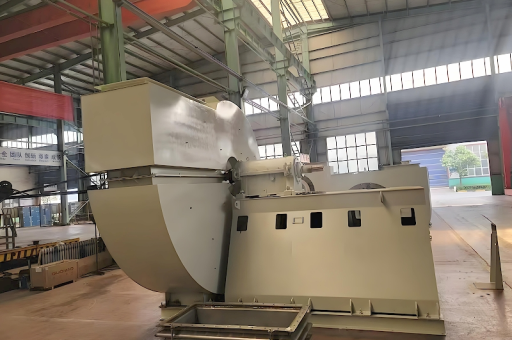
This is a specific and high-value industrial equipment request. When looking for a High Efficiency, Large Volume, Wear-Resistant Induced Draft (ID) Fan for industrial boiler systems, you are typically moving beyond standard centrifugal fans into heavy-duty, engineered solutions.
Here is a breakdown of what this specification means, the typical design solutions, and key considerations for procurement.
Understanding the Specification
- Induced Draft (ID) Fan: Located at the end of the boiler system (after the baghouse/ESP). It pulls flue gas (negative pressure) through the boiler, economizer, and pollution control equipment. This is the toughest fan in the system.
- High Efficiency: Implies an efficiency rating >85% (aerodynamic), often using advanced airfoil blades. This is critical for reducing power consumption (OPEX) on large motors (500 HP to 3,000+ HP).
- Large Volume: Handles high volumetric flow rates, measured in cubic feet per minute (CFM) or cubic meters per hour (m³/h). For large utility or industrial boilers, this can be 200,000 CFM to over 1,000,000 CFM.
- Wear-Resistant: The flue gas contains highly abrasive fly ash. Standard carbon steel will erode rapidly. The fan must be engineered for erosion resistance.
The Optimal Fan Design for This Application
The most common and effective solution is a Single-Width, Single-Inlet (SWSI) or Double-Width, Double-Inlet (DWDI) Centrifugal Fan with specific features.
A. Impeller Type (Critical Choice)
| Feature | Backward-Curved Airfoil (BC-AF) | Modified Radial (Wear-Resistant) |
|---|---|---|
| Efficiency | Highest (85-90%) | Lower (75-82%) |
| Wear Resistance | Low (airfoil is hollow, thin) | High (solid, thick blade) |
| Best For | Clean or lightly loaded gases < 2 gr/acf | Heavy fly ash loads > 4 gr/acf |
Recommendation for "High Efficiency, Wear-Resistant" Hybrid: Look for a Tapered-Plate or Modified Backward-Inclined (BI) blade. This is a thick, solid plate blade shaped like an airfoil. It sacrifices 2-3% efficiency vs. a true airfoil but gains significant wear life.
B. Key Wear-Resistant Engineering Features
- Sacrificial Liners: The housing must have replaceable wear plates (typically 10-16 gauge thick) made of:
- AR400 / AR500 (Abrasion Resistant Steel) – standard.
- Hardfacing overlay (chromium carbide) – for extreme wear.
- Blade Protection: Leading edges of blades should be built up with Stellite or chromium carbide weld overlay.
- Shaft Seals: Must be nitrogen-purged labyrinth seals to prevent dust migration into bearings.
- Low Tip Speed: The fan should be designed for a tip speed no higher than necessary (e.g., 18,000 – 22,000 FPM) to reduce erosion velocity.
Major Manufacturers Known for This Niche
These companies are the global leaders for specialized heavy industrial ID fans:
| Manufacturer | Headquarters | Notes for Wear-Resistant ID Fans |
|---|---|---|
| Howden | Global (UK) | Industry standard for utility boilers. Excellent wear solutions. |
| TLT-Babcock | Global (Germany/Akron, OH) | Dominant in power generation. Known for robust centrifugal designs. |
| Robinson Fans | USA (Zelienople, PA) | World leader in custom, difficult-duty fans. Excellent for fly ash. |
| Greenheck | USA | Large industrial range, often used for biomass or lower-grade coal. |
| New York Blower (NYB) | USA | Strong for harsh environment fans, good material selection. |
| Cincinnati Fan | USA / India | Large ID fans for industrial boilers, competitive in wear solutions. |
Critical Selection & Procurement Questions
When you contact a manufacturer (or a sales rep), you must provide these parameters to get the right fan:
- Gas Flow: (ACFM / Am³/h) and Temperature (°F / °C). ID fans see the hottest gas just before the stack.
- Static Pressure: (in. w.g. / kPa). Total system resistance.
- Gas Composition: Is it flue gas from coal, biomass, waste-to-energy, or natural gas?
- Dust Loading: Grains per cubic foot (gr/acf) or mg/m³. This is the #1 factor for wear.
- Particle Analysis: What is the size distribution (e.g., 90% < 10 microns?) and hardness (e.g., Mohs scale)? Fine, sharp silica (quartz) is extremely erosive.
- Altitude / Site Conditions: Affects air density and motor power.
- Desired Control: Inlet vanes, variable frequency drive (VFD), or discharge damper?
Actionable Recommendation
If you are designing a new system or replacing a failed fan:
- Do NOT buy a standard "off-the-shelf" fan. Order a Class III or Class IV heavy-duty centrifugal fan as per AMCA (Air Movement and Control Association) standards.
- Specify a "Wear Kit". Request that the manufacturer includes a full set of replaceable wear liners for the scroll housing and a weld overlay for the impeller blades.
- Consider the Motor. A high-efficiency fan with a High Efficiency (IE4/IE5) motor and a VFD will pay for itself in power savings within 1-3 years compared to a standard inlet vane control system.
- Get a CFD Analysis. Ask the supplier if they perform Computational Fluid Dynamics (CFD). This helps predict wear patterns and optimize the fan for your specific gas flow.
In short, the product you need is a "Heavy-Duty, Backward-Inclined Centrifugal Fan with replaceable wear liners and blade protection," typically from a supplier like Robinson Fans, Howden, or TLT-Babcock. Specify "induced draft" and "high fly ash content" to ensure you get a wear-resistant design, not a general-purpose one.





