
This article's table of contents introduction:
- What is this Fan Called?
- Key Construction Features (The "How")
- Key Applications (The "Where")
- Pros & Cons Summary for Your Request
- How to Specify This Fan (For a Quote)
- Final Verdict
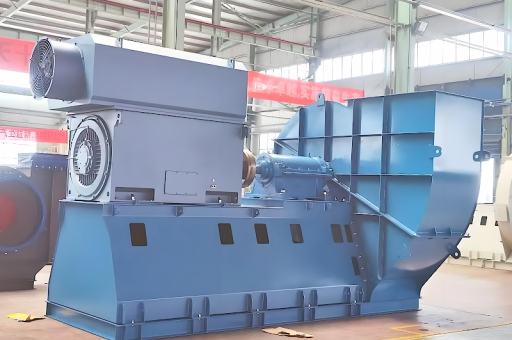
Based on your request, you are looking for a Carbon Steel, Long Lifetime, Wear Resistant, High Pressure Centrifugal Fan for industrial applications.
This specification points towards a specific class of industrial fans designed for harsh environments, often involving pneumatic conveying, dust collection, or material handling.
Here is a detailed breakdown of what this fan is, its construction, key applications, and why it fits your description.
What is this Fan Called?
The most common industry term for this fan is a Material Handling Fan or Industrial Exhauster. Specific models often fall under variations of the LS (Long Sweep) or Radial Blade design, built with heavy-duty plate steel.
Key Construction Features (The "How")
To achieve the Long Lifetime and Wear Resistant requirements, the fan is built differently than standard HVAC or ventilation fans.
-
Material: Carbon Steel (A36 or A516 Grade 70)
- Why: Carbon steel is strong, durable, and cost-effective for high-pressure applications. It handles the stress of high rotational speeds and the impact of particulate matter better than aluminum.
- Wear Protection: While the housing is carbon steel, high-end fans for abrasive materials will have replaceable wear plates or hardened steel liners (e.g., AR200, AR400, or chromium carbide overlay) welded or bolted to the housing interior at the point of highest impact (the "cutoff" or "scroll" area).
-
Wheel Design: Heavy-Duty Radial or Paddlewheel
- Radial Blade: Flat blades that are perpendicular to the wheel. This design is self-cleaning, handles high static pressures (typically 20" to 60"+ WG), and is resilient to material buildup.
- Long Sweep (LS) Backward Inclined: LS blades have a backward curve that reduces material buildup on the blade itself, reducing the need for frequent cleaning.
- Reinforced Construction: The wheel is typically all-welded with thick steel and a heavy backplate to prevent fatigue cracking. Wheel internal supports are used to withstand high RPMs.
-
Bearing & Shaft Assembly
- Factory-Packed (Sealed) Bearings or Greaseable Pillow Block Bearings are used, sized for a L10 life of 100,000+ hours (this is the "Long Lifetime").
- Shaft: Oversized, turned, ground, and polished. Protected by a shaft seal where it enters the housing, preventing dust ingress that would destroy bearings.
-
High Pressure Design
- Housing: A thick-gauge spiral scroll housing designed to contain the high static pressure without vibration.
- Drive Arrangement: Typically Arrangement 1 (Direct Drive with stiff shaft) or Arrangement 9 (Overhung pulley, which allows for speed changes via belt drive). Belt drives are common for adjusting pressure/flow.
Key Applications (The "Where")
You would specify this fan for these industrial processes:
- Pneumatic Conveying: Moving cement, fly ash, wood chips, plastic pellets, grain, sand, or dust through pipes. (Wear resistance is critical here).
- Dust Collection / Filtration Systems: As a primary fan for baghouses or cartridge collectors handling abrasive dust (e.g., from grinding, sanding, or mining).
- Boiler / Furnace Draft: Handling flue gases with high temperature and particulates (though temperature might dictate a high-temp alloy).
- Scrubbers & Dryers: In processes where the gas stream contains hard, abrasive particles.
- Mining & Quarrying: Ventilation and dust control in very harsh environments.
Pros & Cons Summary for Your Request
| Feature | Pros | Cons |
|---|---|---|
| Carbon Steel | Low cost, high strength, weldable, repairable. | Not corrosion resistant! (Use epoxy paint or stainless if moisture/acid is present). |
| Wear Resistant | Long service life (2-5 years vs. 6 months for standard fan). | Heavier wheel increases bearing load. Higher initial cost for AR liners. |
| Long Lifetime | TCO (Total Cost of Ownership) is low. Less downtime. | Heavier, larger footprint. Requires more motor power (often 30-150 HP). |
| High Pressure | Can move material effectively through long pipe runs (up to 80" WG). | Very noisy (often requires silencer). Not energy efficient compared to airfoil fans. |
How to Specify This Fan (For a Quote)
To get a proper quotation from a manufacturer (e.g., Chicago Blower, New York Blower, Greenheck, Cincinnati Fan, or Robinson Fans), you need to provide:
- Air Volume (CFM / m³/hr): How much air needs to be moved.
- Static Pressure (WG / Pa): The resistance in your system. (Typically > 15" WG for "high pressure").
- Air/Gas Temperature: Is it ambient (70°F) or hotter?
- Material Being Handled: Type, size, concentration (grains/ft³), and abrasiveness (e.g., "Portland Cement, 100 microns, 50 grains/ft³, highly abrasive").
- Required Wear Protection: (e.g., "AR400 liners on housing interior and wheel blades, 1/4" thick").
- Environment: Indoor/outdoor, hazardous (ATEX/NEC) classification?
Final Verdict
If you need a High Pressure Centrifugal Fan that is Wear Resistant and has a Long Lifetime, using Carbon Steel is the practical standard. The specific type you are describing is a Heavy-Duty Industrial Exhauster (Radial or LS wheel) with a plate steel housing and replaceable wear liners.
Recommendation: Ensure the fan comes with replaceable wear plates (liners) in the housing and a thick, reinforced wheel. This is the single biggest factor for achieving a "Long Lifetime" in abrasive service.





