
This article's table of contents introduction:
- What is a 75kW Boiler Combustion Fan?
- Key Functions
- Typical Specifications for a 75kW Boiler
- Types of Fans Used
- Key Selection Criteria
- Why 75kW Fan Power is Confusing
- Summary Table (for a 75kW Thermal Boiler)
- Common Manufacturers (for this size fan)
- Final Advice
Here is a detailed breakdown of a 75kW boiler combustion fan, covering its purpose, specifications, types, and key selection criteria.
What is a 75kW Boiler Combustion Fan?
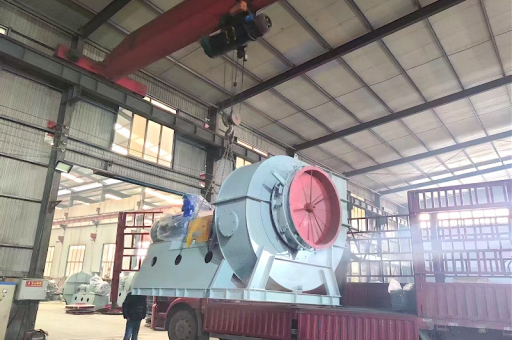
A 75kW boiler combustion fan is a forced draft (FD) fan or induced draft (ID) fan designed to supply the precise amount of combustion air (oxygen) to a burner for a boiler rated at approximately 75 kilowatts (kW) of thermal input.
- 75kW is a common size for medium-to-large commercial or light industrial boilers (e.g., in hotels, hospitals, district heating, small factories).
- The fan is critical for efficiency and safety: too little air causes incomplete combustion (soot, CO), while too much air wastes energy by heating excess air.
Key Functions
- Provide Combustion Air: Delivers the required volume of air to mix with fuel (natural gas, oil, biomass).
- Overcome System Resistance: Must have enough static pressure to push air through the burner, boiler heat exchanger, flues, and any dampers.
- Maintain Air-Fuel Ratio: Works with the burner's control system (VFD or damper) to modulate airflow based on boiler load.
- Purge the Boiler: Provides a pre-purge and post-purge cycle to clear any unburned gases before ignition and after shutdown.
Typical Specifications for a 75kW Boiler
For a natural gas boiler at 75kW thermal input:
- Fuel: Natural Gas (typical gross calorific value ~45 MJ/m³)
- Burner Type: Forced draft (pre-mix or nozzle mix)
- Excess Air: Typically 10-20% (for gas) or 15-30% (for oil)
- Combustion Air Temperature: Ambient (10-40°C) or preheated (up to 150-350°C for high-efficiency or condensing boilers)
Airflow Calculation (Approximate Rule of Thumb)
A common rule of thumb for natural gas combustion: 1 m³/h of air per 1 kW of boiler input.
- Minimum Required Airflow: ~75 m³/h (at 0°C, 1013 mbar) or ~90-110 m³/h at actual operating conditions (considering temperature/density).
- More Accurate Calculation:
- Fuel flow for 75 kW ≈ 75 kW ÷ (45 MJ/m³ ÷ 3.6) ≈ 6 m³/h of gas.
- Stoichiometric air required ≈ 9.5-10 m³ of air per m³ of natural gas.
- Total air needed ≈ 6 m³/h × 9.5 = 57 m³/h.
- With 20% excess air: 4 m³/h.
- Typical Fan Performance Curves for a 75kW System:
- Flow Rate: 70 – 120 m³/h (at fan outlet conditions)
- Static Pressure: 500 – 1500 Pa (2 – 6 inches of water gauge). Can be higher for dirty fuels (biomass) or long flue runs.
- Power: 75kW (fan motor) but this is a high-power motor for a small boiler fan. Correction: A 75kW boiler uses a much smaller fan motor. The fan motor itself is usually 75 kW to 2.2 kW for a 75kW thermal boiler. A 75kW electric fan motor would be for a very large industrial boiler (>2 MW thermal).
Types of Fans Used
-
Centrifugal Fans (Most Common)
- Backward Curved: High efficiency, non-overloading power curve. Best for clean gas/air.
- Forward Curved: Lower speed, compact, good for lower pressure. Can overload motor if backpressure is lost.
- Radial (Paddle Wheel): Rugged, good for dirty air or particulate (biomass fly ash), but lower efficiency.
-
Axial Fans (Less Common for Combustion)
Used for high flow, low pressure applications (e.g., large industrial boilers with low-resistance burners). Noisy.
Key Selection Criteria
- Airflow vs. Pressure: The fan must operate at the intersection of the system resistance curve and the fan performance curve.
- Air Temperature: If the fan draws hot air from a pre-heater (economizer), it must be rated for that temperature (e.g., 150°C+).
- Motor: Typically an AC induction motor (IE3 or IE4 efficiency). Speed control via Variable Frequency Drive (VFD) for modulation is standard.
- Material: Mild steel construction is typical. For corrosive flue gas (condensing boilers), stainless steel (316L) or coated fans are recommended.
- Sound: Commercial boilers have noise limits. Low-noise impeller designs and sound enclosures may be needed.
Why 75kW Fan Power is Confusing
Clarification: It is highly unlikely a 75kW thermal input boiler requires a 75kW electric motor. That would be extremely inefficient (fan consumes same power as boiler output). A 75kW fan motor is used for boilers with a thermal input of around 2-5 MW (megawatts).
If you are specifying a 75kW electric motor for a boiler fan, re-check the boiler's thermal rating. You likely have:
- Small Commercial System: 75kW thermal boiler → Fan motor 5 – 1.5 kW.
- Large Industrial System: 75kW fan motor → Boiler thermal rating 2 – 5 MW.
Summary Table (for a 75kW Thermal Boiler)
| Parameter | Typical Value |
|---|---|
| Boiler Thermal Input | 75 kW |
| Fan Type | Centrifugal, Backward Curved |
| Airflow (at 20°C) | 80 – 120 m³/h |
| Fan Static Pressure | 800 – 1500 Pa |
| Fan Motor Power | 75 – 2.2 kW (not 75 kW) |
| Motor Speed | 2800 RPM (fixed) or 500-2800 (VFD) |
| Material | Mild steel (carbon steel) or stainless (condensing) |
Common Manufacturers (for this size fan)
- EBM-Papst (High-efficiency EC motors)
- Soler & Palau (Commercial centrifugal)
- Cincinnati Fan (Industrial)
- New York Blower (Industrial)
- Buffalo Fan (Industrial)
Final Advice
To specify correctly, you need:
- Boiler Fuel Type (Natural gas, oil, biomass, waste gas).
- Actual Airflow Required (m³/h or CFM) at operating temperature.
- System Static Pressure (Pa or inches w.g.)
- Ambient/Preheated Air Temperature (°C)
- Regulation Method (VFD, damper, or on/off).
- Noise Limit (dB(A) at 1m).
Do not assume the motor power is 75 kW – it is almost certainly about 0.75 to 1.5% of the boiler's thermal input (unless a very high-pressure system). Always confirm with the boiler or burner manufacturer's datasheet.





