
This article's table of contents introduction:
5. Application Scenarios in Coal Mining and Tunnel Ventilation
6. Comparative Advantages Over Traditional Ventilation Systems
Article Title:
Optimizing Underground Safety: The FBCDZ-8-No25 Coal Mine Exhaust Explosion-Proof Counter-Rotating Axial Flow Fan – Design, Operation, and Industrial Applications
Table of Contents
Introduction to the FBCDZ-8-No25 Coal Mine Exhaust Fan
Technical Specifications and Design Principles
Explosion-Proof Mechanism and Safety Standards
Counter-Rotating Axial Flow Technology: How It Works
Application Scenarios in Coal Mining and Tunnel Ventilation
Comparative Advantages Over Traditional Ventilation Systems
Maintenance, Energy Efficiency, and Lifecycle Management
Frequently Asked Questions (FAQ)
Conclusion and Future Outlook
Introduction to the FBCDZ-8-No25 Coal Mine Exhaust Fan
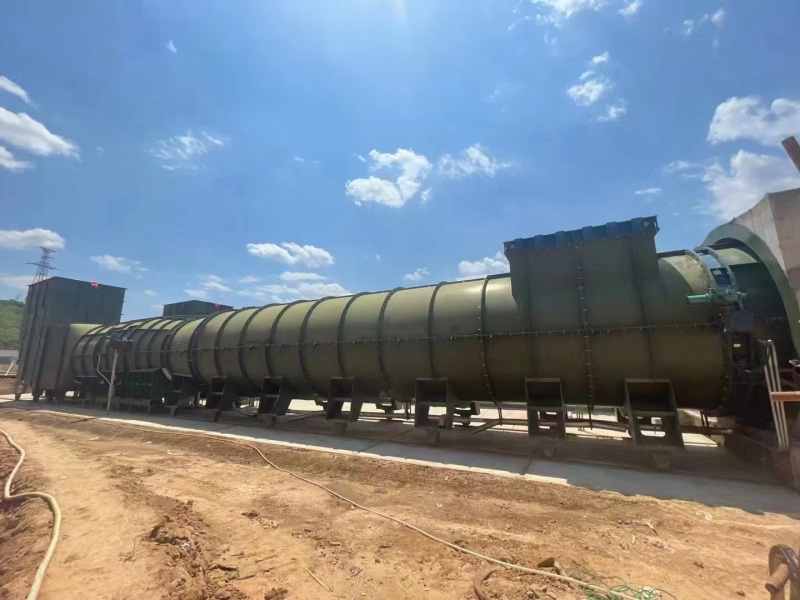
The FBCDZ-8-No25 is a specialized industrial ventilation system designed for hazardous underground environments, particularly coal mines and tunnels where explosive gases such as methane may accumulate. Manufactured to meet stringent international explosion-proof standards, this fan is classified as a counter-rotating axial flow fan, meaning it uses two impellers rotating in opposite directions to generate high static pressure and airflow without the need for guide vanes.
In the context of modern mine safety, the FBCDZ-8-No25 plays a critical role in diluting and exhausting toxic gases, controlling dust, and providing fresh air to workers. Its design integrates mechanical robustness with electrical safety, ensuring that even in the event of a gas ignition, the fan housing and motor will not propagate the explosion.
Technical Specifications and Design Principles
Core Parameters
Model: FBCDZ-8-No25
Diameter: No. 25 (rotor diameter ~2.5 m)
Airflow Range: 30–120 m³/s
Static Pressure: 500–4,500 Pa
Motor Power: Typically 2 × 75 kW to 2 × 250 kW
Speed: 590–990 RPM
Structural Design
The fan consists of a cylindrical casing, two coaxial impellers (front and rear), and dual explosion-proof motors mounted directly on the impeller hubs. The casing is made of high-strength steel or cast iron with anti-corrosion coating. The blade profiles are aerodynamically optimized using CFD modeling to reduce noise and turbulence while maximizing flow efficiency.
Why “Counter-Rotating”?
Unlike standard axial fans with a single impeller and stator vanes, the FBCDZ-8-No25 uses two impellers that spin in opposite directions. This eliminates the need for a downstream stator, reduces overall length, and significantly increases pressure recovery. The result is a compact, high-performance unit that fits easily into narrow mine drifts.
Explosion-Proof Mechanism and Safety Standards
Governed Standards
The FBCDZ-8-No25 complies with:
IEC 60079-0 (General requirements for explosive atmospheres)
GB 3836 (Chinese national explosion-proof standards)
ATEX Directive 2014/34/EU (for EU markets)
Key Protection Features
Flameproof Enclosure: The motor housing and terminal boxes are designed to contain any internal explosion and prevent ignition of surrounding gases.
Surface Temperature Limitation: The motor is rated for T3 or T4 temperature class, ensuring surface temperatures stay below the ignition point of methane (typically 150–200°C).
IP55 or Higher Sealing: Protects against dust and water ingress, critical for wet mine environments.
Intrinsic Safety Circuitry: Sensors monitor vibration, temperature, and current; if anomaly detected, the fan shuts down automatically.
Counter-Rotating Axial Flow Technology: How It Works
The working principle is based on momentum transfer and pressure staging:
First Impeller (Front): Accelerates air inward and imparts rotational velocity.
Second Impeller (Rear): Rotates in the opposite direction to straighten the airflow and recover kinetic energy as static pressure.
Because the rear impeller counter-rotates relative to the front, the net swirl of the exit flow is near zero. This design produces 10–20% higher efficiency compared to single-stage axial fans of similar size.
Real-World Analogy: Consider a wind turbine in reverse. In a wind turbine, the rotor extracts energy from the wind. In the FBCDZ-8-No25, the two counter-rotating rotors work like two “wind turbines in reverse” — they add energy to the air, producing thrust and pressure.
Application Scenarios in Coal Mining and Tunnel Ventilation
Primary Use Cases
Main mine ventilation: Installed at shaft exits (exhaust mode) or at fresh air intakes (forced mode).
Auxiliary underground ventilation: Connected to flexible ducts for tunneling and longwall face ventilation.
Tunnel construction: Highways, railways, and subway tunnels require explosion-proof fans during excavation.
Case Example: In a recent project at a 1,200-meter-deep coal mine in Shanxi Province, the FBCDZ-8-No25 was deployed to handle a methane concentration of up to 1.2% (vol). The fan maintained stable airflow of 85 m³/s with pressure of 3,200 Pa, reducing gas levels below 0.5% within 8 minutes after startup.
Comparative Advantages Over Traditional Ventilation Systems
| Feature | FBCDZ-8-No25 (Counter-Rotating) | Traditional Single-Stage Fan |
|---|---|---|
| Efficiency | 82–87% | 65–75% |
| Pressure per stage | High (no stator) | Needs multiple stages |
| Explosion-proof rating | Built-in | Requires separate motor protection |
| Noise level | 85–92 dB(A) | 92–100 dB(A) |
| Footprint | Compact (shorter length) | Long (requires guide vanes) |
Furthermore, the counter-rotating design reduces power consumption by 15–20% at the same duty point, translating to lower operating costs over a 10-year lifespan.
Maintenance, Energy Efficiency, and Lifecycle Management
Scheduled Maintenance Tasks
Weekly: Check blade clearance, vibration, and motor temperature.
Monthly: Inspect flameproof joints and seals; clean blade surfaces.
Quarterly: Replace lubricant in motor bearings; test emergency shutdown.
Energy Optimization Tips
Use variable frequency drives (VFDs) to match fan speed to real-time ventilation demand.
Install pressure sensors at multiple points in the mine to fine-tune fan operation.
Monitor power factor and correct with capacitors if needed.
Lifecycle Expectancy
With proper maintenance, the FBCDZ-8-No25 typically achieves:
Service life: 15–20 years
Major overhaul interval: 5–7 years
Bearing replacement: Approximately 25,000–30,000 operating hours
Frequently Asked Questions (FAQ)
Q1: What does the model number “FBCDZ-8-No25” stand for?
A:
FBC: Flameproof, Counter-rotating
DZ: Low-noise axial flow
6: Pole count of motor (for ~990 RPM at 50 Hz)
No25: Impeller diameter in decimeters, i.e., 2.5 meters
Q2: Is this fan suitable for use in wind turbine applications?
A: Not directly. The FBCDZ-8-No25 is designed specifically for underground ventilation with explosion-proof certification. However, certain axial-flow components (e.g., blade aerodynamic profiles) share design principles with those used in wind turbine nacelle cooling fans. Industrial fans marketed under the same brand for surface applications are sometimes adapted for wind turbine internal ventilation systems.
Q3: What is the maximum methane concentration it can safely handle?
A: The fan is certified for use in atmospheres with up to 1.5% methane (by volume) when properly installed with gas monitoring. In practice, it should not be operated above 1.0% external concentration for long periods.
Q4: Can the fan be installed vertically?
A: Yes, but orientation affects bearing lubrication. Horizontal installation is standard; vertical installation requires a special oil circulation system. Consult the manufacturer for custom modifications.
Q5: How does this fan compare to a contra-rotating wind turbine design?
A: The concept is similar — both use two rotors spinning in opposite directions. In a wind turbine, this can increase power output by 5–10%. In the FBCDZ-8-No25, the benefit is higher pressure gain and efficiency rather than energy harvesting.
Conclusion and Future Outlook
The FBCDZ-8-No25 Coal Mine Exhaust Explosion-Proof Counter-Rotating Axial Flow Fan represents a mature yet evolving technology at the intersection of mine safety and fluid dynamics. Its dual-rotor design delivers superior static pressure, energy savings, and a compact footprint — all critical for confined underground spaces.
As mining operations move deeper and environments become more complex, demand for explosion-proof fans with intelligent monitoring and variable-speed control will grow. Future developments may include IoT-enabled vibration analysis, self-cleaning blade coatings, and hybrid fans that operate in both forced and exhaust modes without manual reconfiguration.
For industries that require explosion-proof ventilation, the FBCDZ-8-No25 remains a benchmark product — safe, efficient, and built to last.





