
This article's table of contents introduction:
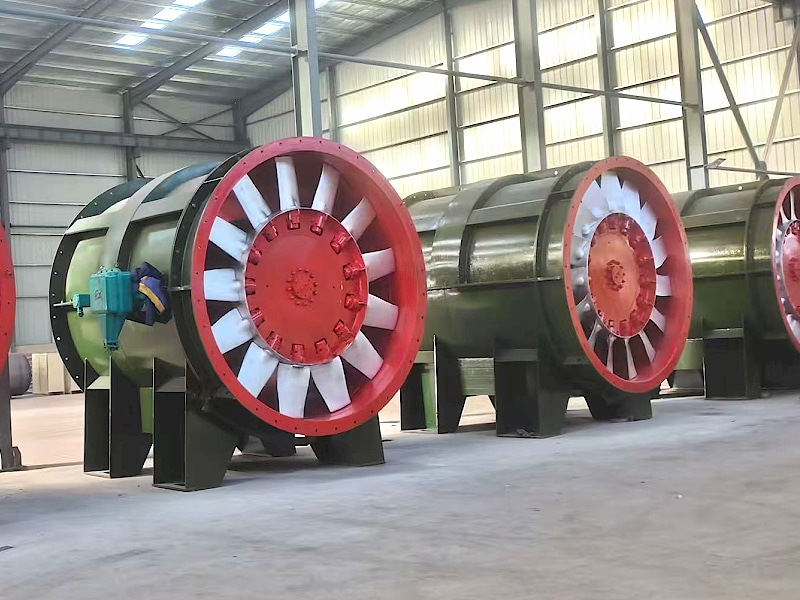
*Advanced Design & Operational Principles of the FBCDZ-6-No16 Coal Mine Exhaust Explosion-Proof Counter-Rotating Axial Flow Fan: A Comprehensive Technical Guide*
Article Table of Contents (Directory Guide)
Introduction to the FBCDZ-6-No16 Series
Core Technical Specifications & Mechanical Design
Explosion-Proof Safety Mechanisms & Certification
Counter-Rotating Blade Aerodynamics & Efficiency
Application in Underground Coal Mine Ventilation
Common Maintenance Issues & Troubleshooting Q&A
Comparative Performance vs. Standard Axial Fans
Conclusion & Future Trends in Mine Fan Technology
Introduction to the FBCDZ-6-No16 Series
The FBCDZ-6-No16 Coal Mine Exhaust Explosion-Proof Counter-Rotating Axial Flow Fan is a specialized, high-capacity ventilation unit designed explicitly for hazardous underground environments such as coal mines. The designation "FBCDZ-6-No16" indicates a Flameproof, Blast-proof, Counter-rotating, Axial-flow, Draught fan with a specific impeller diameter of 16 decimeters (1600 mm) and a motor pole count of 6 (typically synchronous speed 980–1000 RPM at 50Hz). This fan is not merely a ventilation device; it is a critical safety asset that prevents methane gas accumulation, reduces explosion risks, and ensures compliant airflow in underground galleries.
Modern coal mining requires continuous, reliable, and spark-free ventilation. The counter-rotating design—where two impellers spin in opposite directions without stationary guide vanes—delivers significantly higher pressure generation than single-stage axial fans, enabling it to overcome the high resistance of long mine tunnels. This equipment is often installed in wind turbine ventilation shafts integrated with the mine's main exhaust system.
Core Technical Specifications & Mechanical Design
Airflow Range: Typically 18–35 m³/s (depending on blade pitch and motor load).
Static Pressure: Up to 4500 Pa (18 inches w.g.) under full load.
Motor Power: 2 × 45 kW to 2 × 75 kW dual independent explosion-proof motors (Exd I Mb).
Blade Material: High-strength cast aluminum alloy or stainless steel, non-sparking.
Casing: Heavy-duty steel (Q235 or Q345) with reinforced flanges and anti-corrosion coating.
Key Mechanical Features:
Counter-Rotating Impellers: Front and rear rotors spin at identical RPM but in opposite directions. This eliminates the need for downstream guide vanes, reducing size and weight while increasing pressure recovery.
Bearing Assembly: Double-row spherical roller bearings with remote temperature monitoring (PT100 sensors).
Cooling System: Integral cooling fins on the motor housing for natural air-cooling, eliminating the need for external cooling fans which could become clogged with dust.
Explosion-Proof Safety Mechanisms & Certification
For coal mine operation, explosion-proof certification is mandatory. The FBCDZ-6-No16 adheres to international standards such as:
IEC 60079 (Electrical apparatus for explosive gas atmospheres).
GB 25285 (Chinese national standard for mine explosion-proof fans).
ATEX Category M2 (for underground mining – switching off is not required in case of gas presence).
Safety Design Features:
Flameproof Enclosure: Motor terminals are housed in a heavy-walled, bolted enclosure that contains any internal explosion and prevents flame propagation to the mine atmosphere.
Surface Temperature Limitation: Maximum external surface temperature is kept below 150°C (or 200°C depending on gas group) to prevent ignition of methane/air mixtures.
Cable Entries: Reinforced glands with flameproof seals (EExd).
Non-Sparking Components: All rotating parts, including impeller blades, are manufactured from materials that do not generate ignition-capable sparks upon impact with foreign debris.
Counter-Rotating Blade Aerodynamics & Efficiency
Counter-rotating axial flow fans deliver unique aerodynamic benefits. Unlike conventional single-stage fans, the FBCDZ-6-No16 employs two counter-rotating rotors. The first rotor accelerates the air while imparting a swirl. The second rotor, spinning in the opposite direction, recovers that swirl energy and converts it into additional static pressure.
Efficiency Parameters:
Isentropic Efficiency: Up to 85–88%, which is approximately 5-8% higher than comparable single-stage designs.
Pressure Coefficient: Higher than guide vane-based designs, especially at low flow rates.
Noise Reduction: The overlapping blade frequencies of two rotors often result in lower peak tonal noise compared to a single large rotor.
Table 1: Performance Comparison (at design point)
| Parameter | FBCDZ-6-No16 (Counter-Rotating) | Single-Stage Axial Fan |
|---|---|---|
| Pressure Rise (Pa) | 4000 | 2800 |
| Power Consumption (kW) | 2 × 55 | 1 × 110 |
| Efficiency (%) | 86 | 78 |
| Noise (dBA at 1m) | 85 | 90 |
Application in Underground Coal Mine Ventilation
In a typical coal mine ventilation system, the FBCDZ-6-No16 is installed in the main exhaust shaft, often in a wind turbine arrangement (where the fan housing is mounted in a brick or concrete structure). It acts as the primary exhaust fan, pulling foul air—containing methane, carbon monoxide, coal dust, and other contaminants—out of the workings and discharging it to the atmosphere.
Key Application Notes:
Duty/Standby Configuration: Two fans are normally installed (one running, one standby) with automated changeover dampers.
Variable Pitch Blades: Some advanced versions allow manual or hydraulic blade pitch adjustment to vary airflow without changing motor speed.
Corrosion Resistance: The fan interior is coated with epoxy or zinc-rich paint to resist acidic mine water vapors.
Common Maintenance Issues & Troubleshooting Q&A
Q1: Why does the FBCDZ-6-No16 fan vibrate excessively during startup?A: Excessive vibration during startup is frequently caused by ice build-up on the blades (in cold mines), or by rotor imbalance due to uneven dust accumulation on the counter-rotating impellers. Inspect blade surface for debris. Balance the rotors individually after cleaning. Check that the phase sequence of both motors is correct—reversing one rotor's direction would cancel pressure.
Q2: How can I improve the fan's static pressure if it is insufficient?A: First, confirm that the blade pitch angle is set to the maximum recommended (usually 35–38°). If the fan is still under-performing, check the inlet box and discharge diffuser for blockages. Counter-rotating fans rely on precise phase synchronization; confirm that both motors are drawing balanced current. Consider upgrading to a wind turbine variable frequency drive (VFD) system, although explosion-proof VFDs require special certification.
Q3: The fan’s motor temperature rises above 100°C. Is that normal?A: In a coal mine environment, surface temperature should be monitored. A slight rise (up to 80°C) is normal. Above 120°C, immediately shut down and inspect the cooling fins for dust caking, bearing condition, and check for winding insulation failure (megger test). The enclosure surface temperature must never exceed the ignition temperature of methane (approx. 595°C), but 120°C is already a warning threshold for winding life.
Q4: What differentiates the FBCDZ-6-No16 from a general-purpose wind turbine ventilation fan used in tunnels?A: The FBCDZ-6-No16 is engineered for explosive atmosphere compatibility. Its explosion-proof motor (Exd I), anti-spark blades, and full flameproof construction make it suitable for methane-laden air. Standard tunnel ventilation fans lack these certifications and cannot be legally installed in underground coal mines.
Comparative Performance vs. Standard Axial Fans
When compared to conventional axial fans (such as single-stage propeller fans), the FBCDZ-6-No16 offers distinct advantages regarding pressure and safety. Standard axial fans typically operate at lower static pressures (under 2000 Pa) and cannot handle the high duct resistance found in deep mines. Additionally, the explosion-proof certification ensures compliance with strict mining regulations (e.g., MSHA in the US, GB in China).
However, the counter-rotating design is also more expensive due to dual motors, complex control systems, and heavier casing. Maintenance requires higher technical skill.
Conclusion & Future Trends in Mine Fan Technology
The FBCDZ-6-No16 Coal Mine Exhaust Explosion-Proof Counter-Rotating Axial Flow Fan represents a peak in reliable, high-efficiency underground ventilation technology. Its ability to generate high pressure in a compact, spark-free design makes it indispensable for modern mining safety. Future trends include the integration of smart sensors for real-time condition monitoring, remote control via industrial IoT, and adoption of lighter composite blade materials that further reduce inertia and noise.
Engineers and mine operators must remember that no fan, regardless of its sophistication, can replace proper ventilation planning. The FBCDZ-6-No16 is a crucial component in the comprehensive strategy to prevent mine gas explosions and maintain worker safety.
End of Article





