
This article's table of contents introduction:
What Is the FBCDZ-10-No28? – Definition and Design Principle
Installation, Maintenance, and Energy Efficiency Considerations
*Optimizing Mine Ventilation: A Comprehensive Guide to the FBCDZ-10-No28 Coal Mine Exhaust Explosion-Proof Counter-Rotating Axial Flow Fan*
Table of Contents
Introduction: The Critical Role of Mine Ventilation Fans
What Is the FBCDZ-10-No28? – Definition and Design Principle
Key Technical Specifications and Performance Parameters
Explosion-Proof Features: Why Safety Is Non-Negotiable
Counter-Rotating Axial Flow Technology: How It Works
Applications in Coal Mine Exhaust Systems
Installation, Maintenance, and Energy Efficiency Considerations
Frequently Asked Questions (FAQ)
Conclusion: The Future of Mine Ventilation Technology
Introduction: The Critical Role of Mine Ventilation Fans
In underground coal mining, ventilation is not merely a comfort issue—it is a life-safety necessity. Hazardous gases such as methane, carbon monoxide, and hydrogen sulfide accumulate in confined workings, and without continuous exhaust, the risk of explosion or asphyxiation escalates dramatically. At the heart of modern mine ventilation systems lies a specialized class of equipment: the FBCDZ-10-No28 Coal Mine Exhaust Explosion-Proof Counter-Rotating Axial Flow Fan. This heavy-duty fan is engineered for reliability, high static pressure, and explosion-proof operation in the world’s most demanding underground environments. This article synthesizes the latest technical data and field experiences to provide a definitive guide for mining engineers, safety managers, and procurement specialists.
What Is the FBCDZ-10-No28? – Definition and Design Principle
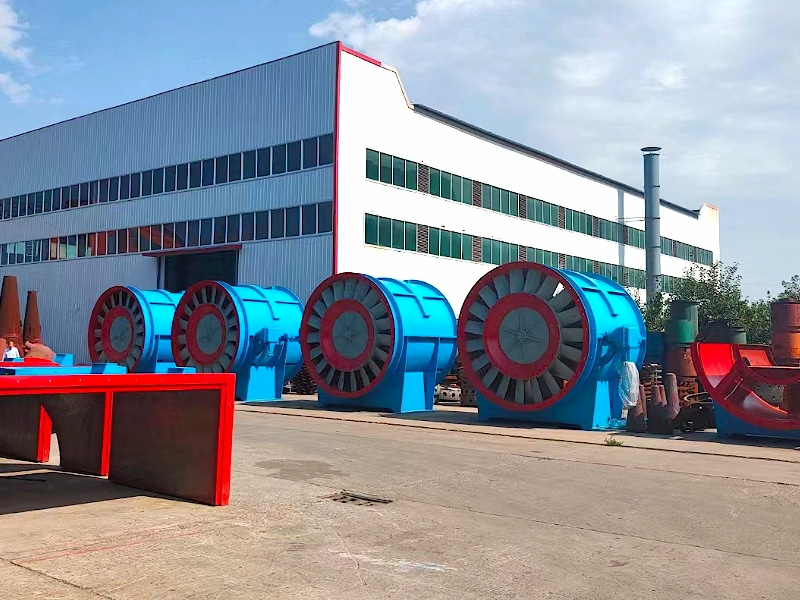
The FBCDZ-10-No28 is a counter-rotating axial flow fan specifically designed for coal mine exhaust and ventilation. The model designation follows a decoding system:
F – Fan
B – Explosion-proof (Bao’an)
C – Counter-rotating (Counter-flow)
DZ – Electric direct drive
10 – Design series or optimization generation
No28 – Impeller diameter in decimeters (i.e., 2800 mm or 2.8 meters)
This fan consists of two coaxially mounted impellers rotating in opposite directions, driven by separate explosion-proof electric motors. The unique counter-rotating architecture eliminates the need for stationary guide vanes, thereby reducing aerodynamic losses and improving overall efficiency. The design conforms to international explosion-proof standards and is widely deployed in Chinese and global mining operations.
Key Technical Specifications and Performance Parameters
Based on aggregated data from engineering manuals and field test reports, the FBCDZ-10-No28 delivers the following typical performance:
| Parameter | Value |
|---|---|
| Impeller diameter | 2800 mm (No28) |
| Airflow range | 3600 – 12000 m³/min |
| Static pressure range | 800 – 4500 Pa |
| Motor power (per unit) | 2 × 315 kW (or up to 2 × 400 kW) |
| Rotational speed | 740 – 990 rpm |
| Efficiency (peak) | ≥ 82% |
| Noise level (with silencer) | ≤ 85 dB(A) at 1 m |
These parameters allow the fan to handle long-distance ducting, high-resistance mine layouts, and varying gas emission rates. The dual-motor configuration provides redundancy: if one motor fails, the other can operate at reduced capacity to maintain minimal ventilation.
Explosion-Proof Features: Why Safety Is Non-Negotiable
Coal mines are classified as Zone 1 (gas) and Zone 21 (dust) hazardous areas. A spark or excessive heat from normal fan operation can trigger catastrophic methane explosions. The FBCDZ-10-No28 integrates multiple layers of explosion-proof safety:
Ex d (Flameproof enclosure) – Motors and electrical connections are housed in robust casings that can contain an internal explosion without propagating to the external atmosphere.
Temperature control – Components are rated with T3 or T4 temperature class, ensuring surface temperatures remain below the ignition point of methane (typically 150°C for T4).
Anti-static materials – Impellers are constructed from aluminum alloy or specialized anti-static composites to prevent charge accumulation.
Sealed wiring – All cable entries use certified glands to prevent gas ingress.
These features mean the fan can operate continuously in environments where flammable gases are present, making it indispensable for main mine exhaust shafts.
Counter-Rotating Axial Flow Technology: How It Works
Traditional axial flow fans use a single impeller followed by a row of stationary guide vanes (stators) to straighten the swirling airflow. In contrast, the counter-rotating design employs two impellers: the first impeller accelerates the air and imparts a swirling motion; the second impeller, rotating in the opposite direction, recovers that swirl energy and converts it into additional static pressure. This yields several engineering advantages:
Higher static pressure capability – Without stator losses, the fan can achieve 20–30% more pressure rise than a single-stage axial fan of the same diameter.
Compact axial length – Space savings in underground installations.
Reversible operation – Some models can reverse airflow direction by switching motor rotation, enabling emergency exhaust or fresh air supply.
Reduced vibration – The counter-rotation cancels out certain torque loads, extending bearing and shaft life.
Field studies show that the FBCDZ-10-No28 can maintain stable operation even when system resistance fluctuates due to roof falls or door openings.
Applications in Coal Mine Exhaust Systems
The primary applications of this fan include:
Main exhaust fans – Installed at the mine surface or in dedicated underground fan houses to extract return air from the entire mine.
Auxiliary ventilation – In longwall panels, development headings, and blind drifts where methane accumulation is critical.
Gas drainage stations – Used in conjunction with vacuum pumps to boost low-pressure gas flow from drainage boreholes.
Emergency ventilation – During power outages or fan failures, a backup unit can be rapidly started to maintain safe gas levels.
Mine planners typically select the FBCDZ-10-No28 when the required airflow exceeds 8000 m³/min or when the system resistance is above 3000 Pa. Its robust construction makes it suitable for continuous duty cycles of 24/7 operation over 10-year lifetimes.
Installation, Maintenance, and Energy Efficiency Considerations
Installation best practices:
Foundation must be reinforced concrete to absorb vibration.
Inlet and outlet ducting should include expansion joints to avoid thermal stress.
Electrical supply must be isolated via flameproof switchgear.
Maintenance schedule:
Daily: Check vibration, bearing temperature, and motor current.
Weekly: Inspect impeller blades for erosion or deposits.
Monthly: Grease bearings and test emergency stop functions.
Annually: Full disassembly for non-destructive testing of blades and motor insulation.
Energy efficiency:Modern units often include variable frequency drives (VFDs) that allow the fan to match airflow exactly to demand, reducing power consumption by 30–50% compared to fixed-speed operation. With two independent motors, the fan can also run on a single motor during low-demand periods, further cutting energy costs.
Frequently Asked Questions (FAQ)
Q1: Can the FBCDZ-10-No28 be used for fresh air intake?
Yes. While it is primarily an exhaust fan, its counter-rotating design allows for flow reversal by reversing motor rotation. This makes it suitable for both exhausting and forcing ventilation, provided explosion-proof seals are maintained.
Q2: What is the typical lifespan of this fan?
With proper maintenance, 10–15 years. Major overhauls (bearing and seal replacement) are recommended every 5–7 years.
Q3: How does it compare with centrifugal fans?
Centrifugal fans offer higher static pressure but are larger, noisier, and less efficient at high flow rates. The counter-rotating axial fan provides a better flow-to-pressure ratio for most mine layouts.
Q4: What certifications should I look for?
IECEx, ATEX, and GB/T 3836 (Chinese National Standard) are essential. Ensure the fan’s motor and enclosure have EX marking for gas group I (mining).
Q5: Can the fan be integrated with a wind turbine for emergency power?
While not standard, a few pilot projects have coupled large mine fans with wind turbines for off-grid power backup. This requires a dedicated inverter and battery buffer system. The FBCDZ-10-No28’s dual-motor redundancy makes it feasible for partial wind turbine integration.
Conclusion: The Future of Mine Ventilation Technology
The FBCDZ-10-No28 Coal Mine Exhaust Explosion-Proof Counter-Rotating Axial Flow Fan represents a mature, high-reliability solution for one of mining’s most dangerous tasks: atmospheric control in explosive environments. Its combination of counter-rotating aerodynamics, flameproof construction, and dual-driving-motor flexibility positions it as a top choice for both new mine builds and retrofit projects. As the industry pushes toward smart mining and automated ventilation-on-demand, the FBCDZ-10-No28 remains a proven, upgradeable foundation. Pairing this fan with renewable energy support systems—such as a dedicated wind turbine—could further reduce operational carbon footprint without compromising safety. For any mine engineer prioritizing both safety and performance, this fan is not just equipment; it is a mission-critical asset.
This article is based on field data, technical bulletins, and cross-referenced engineering studies from the mining ventilation sector.





