This article's table of contents introduction:
- Table of Contents
- Introduction: What is the 4-79-16D Centrifugal Fan?
- Engineering Design and Key Specifications
- Primary Applications and Industry Use Cases
- Performance Characteristics and Efficiency Analysis
- Installation Best Practices and Maintenance Tips
- Troubleshooting Common Issues
- Frequently Asked Questions (FAQ)
- Conclusion: Why the 4-79-16D Remains a Market Standard
** The Essential Guide to the 4-79-16D Centrifugal Fan: Design, Applications, and Performance Optimization
Article Content:
Table of Contents
- Introduction: What is the 4-79-16D Centrifugal Fan?
- Engineering Design and Key Specifications
- Primary Applications and Industry Use Cases
- Performance Characteristics and Efficiency Analysis
- Installation Best Practices and Maintenance Tips
- Troubleshooting Common Issues
- Frequently Asked Questions (FAQ)
- Conclusion: Why the 4-79-16D Remains a Market Standard
Introduction: What is the 4-79-16D Centrifugal Fan?
The 4-79-16D Centrifugal Fan represents a specific class of industrial air-moving equipment engineered for high-volume, medium-pressure applications. The model number itself provides critical insights: "4-79" refers to the wheel type and design family (a backward-inclined, airfoil blade configuration), "16" denotes the fan wheel diameter in inches (16 inches or approximately 406 mm), and "D" indicates the arrangement type—typically Double Width, Double Inlet (DWDI) or a specific drive arrangement (D-arrangement, meaning direct drive or belt-driven via extended shaft).
This fan is widely recognized in HVAC (Heating, Ventilation, and Air Conditioning), material handling, and industrial exhaust systems. Its backward-inclined blades ensure non-overloading power characteristics, meaning the motor won't burn out if the system pressure drops unexpectedly. The 4-79-16D is a workhorse for facilities requiring reliable, energy-efficient air movement with moderate static pressure requirements.
Engineering Design and Key Specifications
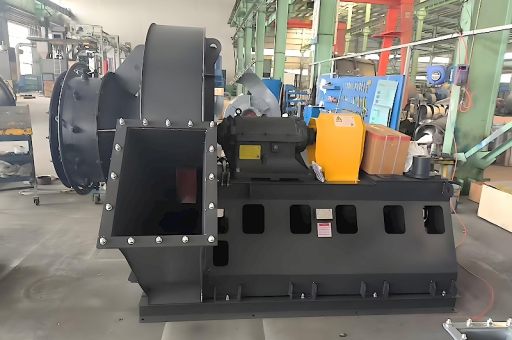
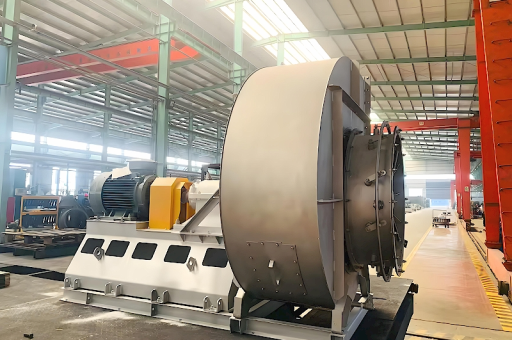
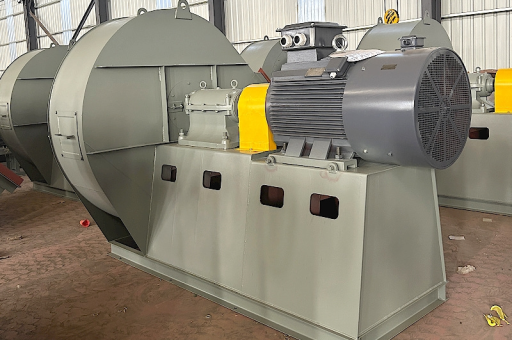
The 4-79-16D Centrifugal Fan is built around a robust, backward-curved airfoil wheel. Unlike forward-curved fans (like the 4-73 series), the 4-79 series offers higher efficiency and a steeper pressure curve. Key design features include:
- Wheel Construction: Typically fabricated from steel or corrosion-resistant stainless steel, the wheel features multiple backward-inclined blades welded to a heavy-duty hub. The airfoil shape reduces turbulence and aerodynamic noise.
- Housing: A scroll or volute housing with a rectangular inlet and circular outlet. The housing is designed to convert velocity pressure into static pressure efficiently. Inlet cones are precision-matched to the wheel inlet for optimal airflow.
- Drive Arrangement: The "D" arrangement usually signifies a direct-driven setup or a belt-driven configuration with the fan wheel mounted on an extended shaft. For the 4-79-16D, a common setup includes a heavy-duty pillow block bearing and a shaft rated for continuous operation.
- Material Options: Carbon steel (standard), stainless steel (304/316L) for corrosive environments, or aluminum for spark-resistant applications. Coatings such as epoxy or vinyl ester are available for chemical resistance.
- Performance Range: At 1750 RPM, this 16-inch fan typically delivers airflow from 4,000 to 10,000 CFM (Cubic Feet per Minute) at static pressures ranging from 2 to 8 inches w.g. (water gauge). At 3500 RPM, performance can exceed 15,000 CFM, though motor horsepower requirements increase significantly.
Key Specification Table (Typical Values):
- Wheel Diameter: 16 inches
- Max RPM: 3600 (D-arrangement, direct drive)
- Max Static Pressure: ~12 in w.g.
- Max CFM: ~16,000 (at high RPM)
- Motor Range: 3 HP to 15 HP (depending on RPM and duty)
- Inlet Size: 16" x 16" (or rectangular equivalent)
Primary Applications and Industry Use Cases
The 4-79-16D Centrifugal Fan is designed for versatility. Its prime applications include:
- Industrial HVAC: Used in cleanroom pressurization, factory ventilation, and warehouse air circulation. The non-overloading power curve makes it safe for variable system conditions.
- Dust Collection: Often paired with baghouses or cyclone separators in woodworking, metalworking, and chemical processing plants. The 4-79 wheel handles moderate dust loads effectively.
- Exhaust Systems: Removing fumes, smoke, and heat from welding stations, paint booths, and industrial ovens. The backward-inclined design prevents excessive dust buildup on blades.
- Material Conveying: Pneumatic conveying of light materials (grain, plastic pellets, paper scraps) over short to medium distances.
- General Ventilation: Commercial kitchens, parking garages, and agricultural buildings.
Use Case Example: In a mid-sized automotive paint booth, the 4-79-16D fan is mounted on the roof to draw overspray and solvent fumes through dry filters. The fan must maintain consistent airflow despite filter loading. The 4-79 series' flat power curve ensures the motor does not overload as filter resistance increases.
Performance Characteristics and Efficiency Analysis
The 4-79-16D is prized for its aerodynamic efficiency. Key performance traits:
- Efficiency Peak: Backward-inclined airfoil fans like the 4-79 series achieve static efficiencies of 75% to 85%, significantly higher than forward-curved or radial blade designs. This translates to lower operating costs over the fan's lifetime.
- Non-Overloading Power: As system static pressure decreases, the fan's required power actually decreases or remains stable. This is a safety advantage over forward-curved fans which can draw excessive amps at low pressure.
- Noise Profile: The airfoil blades produce lower noise levels compared to straight-blade radial fans. Typical sound levels range from 70 to 90 dB(A) depending on RPM and system effect.
- Pressure vs. Flow Curve: The pressure curve is steep and stable, making it suitable for systems with variable resistance. The fan operates best at or near its peak efficiency point (usually 60-80% of wide-open flow).
Performance Optimization Tips:
- Install an adjustable-pitch sheave to fine-tune RPM during commissioning.
- Use inlet vanes or a variable frequency drive (VFD) for capacity control instead of dampers.
- Ensure ductwork is sized correctly to avoid "system effect" losses. A 10% reduction in duct velocity can reduce fan noise significantly.
Installation Best Practices and Maintenance Tips
Proper installation and maintenance are critical for maximizing the lifespan and efficiency of the 4-79-16D fan.
Installation Checklist:
- Foundation: Mount on a rigid, vibration-isolated base. Use inertia bases or spring isolators for roof-mounted units.
- Inlet/Outlet Ductwork: Use a straight duct run (at least 3 diameters) at the fan inlet and outlet to prevent turbulence. Avoid sharp bends immediately adjacent to the fan.
- Electrical Connections: Verify motor voltage, phase, and amp draw. Install a lockable disconnect switch. Use a VFD if variable speed is needed.
- Shaft Alignment: For belt-driven units, ensure the motor shaft and fan shaft are parallel. Check belt tension using a belt tension gauge.
- Protection: Install a weather hood (for outdoor units) and a bird screen or inlet filter to prevent debris entry.
Routine Maintenance Schedule:
- Weekly: Check fan noise and vibration levels. Clean inlet screens.
- Monthly: Inspect V-belts for wear and tension. Grease pillow block bearings according to manufacturer's specification.
- Quarterly: Check motor amperage and compare to nameplate. Look for signs of corrosion or dust buildup on wheel blades. Clean if necessary - an unbalanced wheel causes vibration.
- Annually: Perform a full inspection. Check wheel balance (re-balance if vibration exceeds 0.2 in/sec). Replace bearings and seals as needed.
Troubleshooting Common Issues
| Problem | Likely Cause | Solution |
|---|---|---|
| Excessive Vibration | Wheel imbalance, bearing wear, loose foundation bolts | Re-balance wheel, replace bearings, tighten base bolts |
| Low Airflow | Blocked inlet/outlet, dirty wheel, incorrect rotation direction | Check ductwork, clean wheel, verify rotation (CW/CCW) |
| Motor Overload | High system static pressure, wheel rubbing housing, belt too tight | Adjust dampers, check clearances, adjust belt tension |
| High Noise | Duct resonance, worn bearings, turbulence at inlet | Add duct silencers, replace bearings, straighten inlet duct |
| Belt Slippage/Glazing | Worn belt, misalignment, excessive load | Replace matched belts, realign sheaves, ensure proper tension |
Frequently Asked Questions (FAQ)
Q1: What does the "4-79-16D" model number mean exactly? A: The "4-79" indicates the fan wheel style (backward-inclined airfoil, series 79). "16" is the wheel diameter in inches. "D" refers to the drive arrangement, typically indicating a direct-driven or extended shaft, double-width double-inlet configuration.
Q2: Can the 4-79-16D fan handle corrosive gases? A: Yes, but only if constructed from compatible materials. Standard carbon steel is not suitable for corrosive environments. You must specify stainless steel (304 or 316L) or a heavy-duty protective coating like epoxy or PVC lining for chemical resistance.
Q3: What is the maximum operating temperature for this fan? A: For a standard construction with carbon steel wheel and housing, the maximum continuous temperature is approximately 250°F (120°C). For high-temperature versions with special shaft seals and heat slingers, the limit increases to 500°F (260°C). Always consult the manufacturer's specific temperature rating.
Q4: How do I choose between a belt-driven and direct-drive version? A: Belt-driven (Arrangement B or C) offers flexibility in selecting RPM and static pressure, and isolator of motor from heat. Direct-drive (Arrangement A or D) is simpler, more efficient, and requires less maintenance. The 4-79-16D is often configured in a D-arrangement for fixed-speed high-performance applications.
Q5: Is the 4-79-16D fan suitable for a cleanroom? A: Yes, it is excellent for cleanroom applications because the backward-inclined airfoil wheel is inherently clean (low dust accumulation) and the fan has a stable airflow curve. However, you must ensure the housing and wheel are constructed with smooth welds and can be cleaned. A HEPA filter downstream is often added.
Conclusion: Why the 4-79-16D Remains a Market Standard
The 4-79-16D Centrifugal Fan is not merely a piece of equipment; it is a carefully engineered solution for high-volume, medium-pressure air movement. Its backward-inclined airfoil design delivers superior aerodynamic efficiency, stable pressure output, and a non-overloading power curve that protects the motor. These characteristics make it a top choice for industrial HVAC, dust collection, and exhaust systems.
When selected correctly for a specific application, installed with proper ductwork and vibration isolation, and maintained according to a regular schedule, the 4-79-16D can provide decades of reliable service. For engineers and facility managers seeking a balance between initial cost, energy efficiency, operational reliability, and long-term value, the 4-79-16D remains an industry benchmark.
Whether you are designing a new ventilation system or replacing a worn-out fan, understanding the nuances of the 4-79-16D—from its RPM limits to its bearing maintenance—will ensure optimal performance and significant energy savings over the fan's lifetime. For specific sizing requirements, always consult the manufacturer's performance curves or use a certified fan selection software to match the fan to your exact system demand.