This article's table of contents introduction:
- Decoding the Model Number: 4-72-8D
- Key Characteristics & Construction
- Typical Specifications for the 4-72-8D
- Common Applications
- Selection Considerations
- Alternatives to Consider
- Summary
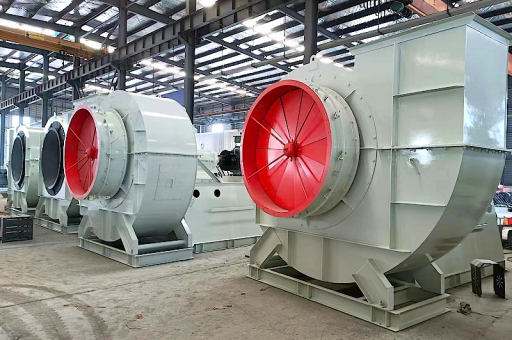
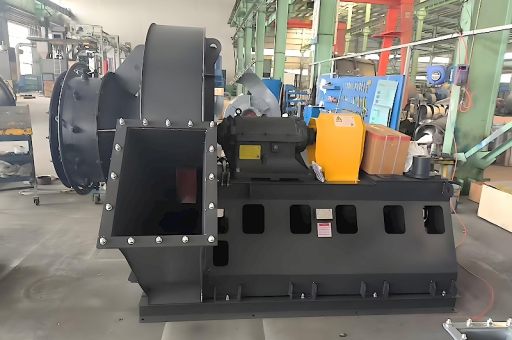
The 4-72-8D Centrifugal Fan is a specific model within the widely used 4-72 series of centrifugal fans. This series is known for its high efficiency, low noise, and stable performance, making it one of the most popular choices for general ventilation and industrial air conditioning systems.
Here is a breakdown of what the model number means and its typical specifications.
Decoding the Model Number: 4-72-8D
-
4-72: This is the series designation.
- 4: Represents the fan's specific pressure coefficient.
- 72: Represents the specific speed of the fan at its highest efficiency point.
- This series is characterized by backward-inclined airfoil blades.
-
8: This indicates the impeller diameter.
- In this series, the number is typically in decimeters (dm).
- Therefore, 8 dm = 800 mm (or 80 cm / ~31.5 inches).
-
D: This indicates the drive type.
- D means the fan is direct-coupled. The fan impeller is mounted directly on the motor shaft, or connected via a coupling.
- Contrast this with C (belt-driven) or A (motor directly mounted on fan housing). A "D" drive usually allows for higher RPMs and doesn't have the maintenance of belts.
Key Characteristics & Construction
- Blade Design: Backward-inclined airfoil blades. These are hollow, aerodynamic blades that are highly efficient (>80% static efficiency). They are non-overloading, meaning the motor power draw will peak and then drop if the system pressure decreases (e.g., if a duct is opened).
- Housing: Typically made of heavy-gauge steel, designed for robust industrial use. The housing has a scroll shape that helps convert velocity pressure into static pressure efficiently.
- Rotation: Can be ordered in clockwise (CW) or counter-clockwise (CCW) rotation, viewed from the drive side.
- Discharge Position: The air outlet can be rotated to various positions (e.g., top horizontal, top angular, bottom horizontal, bottom angular) to suit the ductwork layout.
Typical Specifications for the 4-72-8D
Please note: These are approximate values and vary significantly based on the specific motor RPM, air density, and system resistance (static pressure). Always consult the manufacturer's fan curve for exact data.
- Impeller Diameter: 800 mm
- Airflow Range: Typically 16,000 to 35,000 m³/h (~9,400 to 20,600 CFM)
- Static Pressure Range: Typically 500 to 3,000 Pa (~2 to 12 inches w.g.)
- Speed Range: Typically 1,000 to 1,600 RPM (D-drive relies on the motor's fixed speed, e.g., 4-pole motor at ~1450 RPM or 6-pole motor at ~960 RPM).
- Power Range: Typically 5 kW to 22 kW (7.5 HP to 30 HP)
- Sound Level: In the range of 80-90 dB(A) depending on operating point and motor power.
Common Applications
Due to its high efficiency and medium pressure/high flow capabilities, the 4-72-8D is frequently used in:
- Industrial Ventilation: Exhausting fumes, dust, and heat from factories, warehouses, and workshops.
- HVAC Systems: Large building air conditioning and heating systems.
- Air Handling Units (AHUs): As the main fan for large commercial or industrial AHUs.
- Spray Booths: For paint, finishing, and powder coating booths.
- General Air Supply/Exhaust: In mines, tunnels, and agricultural facilities.
Selection Considerations
- Motor Speed & Power: The "D" drive means the fan speed is locked to the motor's synchronous speed (e.g., 1450 RPM for a 4-pole motor). You must choose a motor with the exact RPM required by your system's operating point. Power is determined by your system's total static pressure and required airflow.
- Fan Curve: This is the most critical document. It plots airflow (Q) against static pressure (P). Your "system curve" must intersect the fan curve at a stable, efficient operating point. An oversized motor can lead to inefficiency and potential motor damage.
- Duct System: The fan must be properly matched to the ductwork. The inlet and outlet conditions should be as smooth as possible to minimize turbulence and noise.
- Environment: If the air is corrosive, dusty, or explosive, the fan housing and impeller must be constructed from compatible materials (stainless steel, coatings, etc.).
Alternatives to Consider
- 4-72-6C: A belt-driven (C) version with a 600mm impeller. Offers more flexibility to change speed via pulley changes.
- 4-72-10D: A direct-drive version with a 1000mm impeller for higher airflow requirements.
- 9-19 Series: For high-pressure, low-flow applications (e.g., pneumatic conveying).
- Y5-47 Series: Specifically designed for boiler induced draft applications.
Summary
The 4-72-8D is an efficient, direct-drive, medium-pressure centrifugal fan with an 800mm backward-inclined impeller. It's a workhorse for industrial and large commercial ventilation, delivering high airflow at moderate pressures. When specifying or troubleshooting, always reference the manufacturer's fan curve to ensure the fan is correctly sized for your specific system's static pressure and airflow requirements.