This article's table of contents introduction:
- Breaking Down the Model Number: 4-72-16D
- Key Features & Design
- Typical Specifications for a 4-72-16D Fan (Approximate)
- Common Applications
- Important Installation & Operational Considerations
- Where to Find the Nameplate
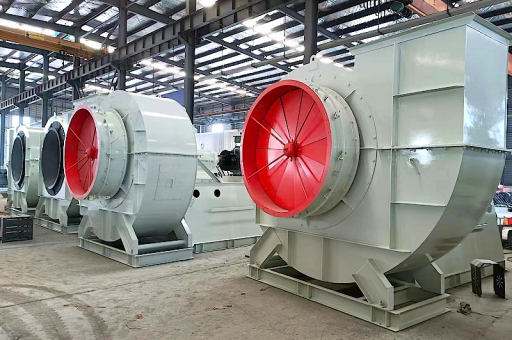
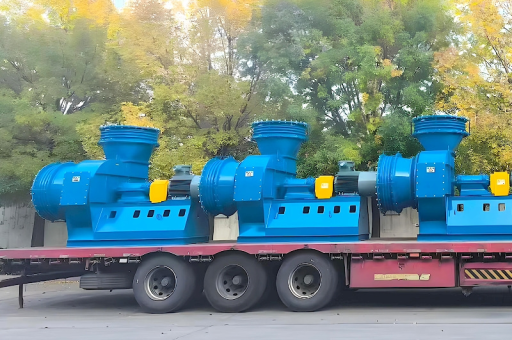
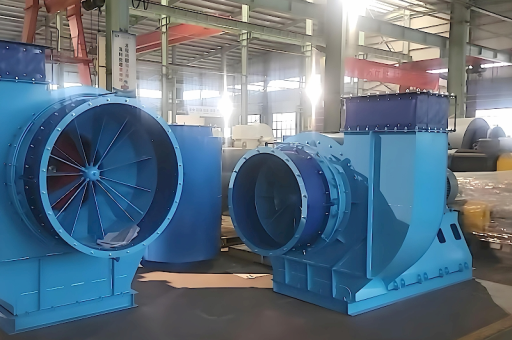
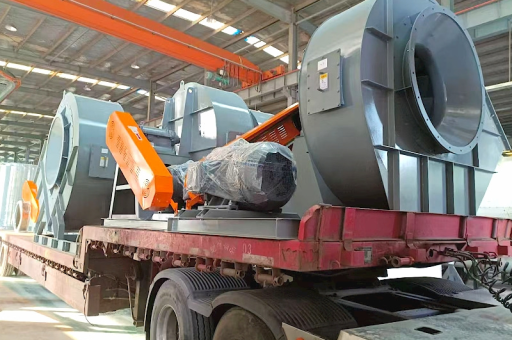
The 4-72-16D is a specific model designation for a large industrial centrifugal fan, commonly used in HVAC, dust collection, and general ventilation systems.
Here is a detailed breakdown of what this model number means, its specifications, and typical applications.
Breaking Down the Model Number: 4-72-16D
This number is a standard code that describes the fan's design, size, and configuration.
-
4 : Design Series / Pressure Coefficient
This indicates the fan is from the "4" series, which is a medium-pressure, backward-inclined (or backward-curved) airfoil blade design. It's one of the most common and efficient designs for general ventilation.
-
72 : Specific Speed (Ns)
This refers to the fan's aerodynamic characteristics. A value of 72 indicates a high-efficiency, backward-inclined blade design. It’s a key metric for engineers to compare fan designs.
-
16 : Impeller Diameter (in inches)
- The fan's impeller (the rotating wheel with blades) is 16 inches in diameter.
- Note: In some older or specific documentation, this might be a coded reference, but in standard "4-72" series fans, this number directly corresponds to the impeller diameter in inches.
-
D : Drive Arrangement
- "D" is a very specific and important designation. It refers to the drive arrangement of the fan.
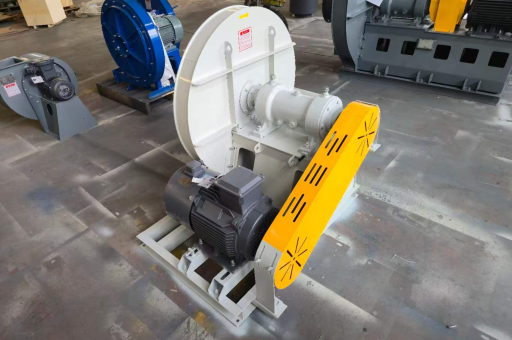
- Arrangement D: The fan impeller is overhung on the shaft and the bearings are located on a support base outside the fan housing. In this arrangement, the fan is typically directly coupled to a motor via a flexible coupling, or driven by a belt drive system. It is a common arrangement for larger industrial fans where the motor is mounted on a separate base or a common baseplate.
Key Features & Design
- Blade Type: Backward-inclined/curved airfoil blades.
- Efficiency: High. The airfoil design is one of the most efficient centrifugal fan designs, suitable for continuous operation.
- Performance Curve: Non-overloading power curve. This means that if the system pressure drops unexpectedly (e.g., a duct opens), the motor will not overload. This is a significant safety and operational advantage.
- Applications: Clean air, general ventilation, HVAC, dust collection (pre-filtered), fume exhaust, and industrial process air.
Typical Specifications for a 4-72-16D Fan (Approximate)
These are general ranges and vary significantly based on speed (RPM) and motor power.
- Airflow (CFM): 1,500 to 6,000 CFM (Cubic Feet per Minute)
- Static Pressure (Inches of Water Gauge): 1" to 6" w.g. (can be higher with a larger motor)
- Motor Power (HP): Typically 1 HP up to 7.5 HP (depending on desired RPM and pressure)
- Speed (RPM): 800 to 2,000 RPM (driven by pulley ratio or direct drive)
- Weight: 150 - 250 lbs (approx.)
Common Applications
- HVAC Systems: Supply and exhaust in commercial and industrial buildings.
- Dust Collection: As the main fan for a centralized dust collection system (often with a cyclone pre-separator).
- Industrial Ventilation: Removing fumes, heat, and airborne contaminants from factories, warehouses, and workshops.
- Painting Booths: Providing air movement for spray painting applications.
Important Installation & Operational Considerations
- Drive System: An "Arrangement D" fan requires a motor, a baseplate or mounting frame, and a coupling (if direct drive) or a belt guard and pulleys (if belt-driven). The fan itself is just the housing and impeller with a shaft protruding.
- Inlet Box: Many "D" arrangement fans can be fitted with an inlet box (often called a "draft fan" configuration). This is a box on the inlet side that allows for a variable inlet vane (VIV) damper for precise airflow control.
- Sound: Backward-inclined fans are generally quieter than forward-curved fans, but at higher speeds, they can produce significant noise. Sound attenuation may be required.
- Maintenance: The "D" arrangement means the bearings are outside the airstream, making them easier to lubricate and maintain, and reducing contamination.
Where to Find the Nameplate
On the fan housing itself, there will be a metal nameplate that provides the exact specifications for that specific fan.
- Manufacturer (e.g., New York Blower, Greenheck, Cincinnati Fan, Twin City Fan)
- Model Number (4-72-16D)
- Impeller Diameter (16")
- Factory RPM and CFM
- Maximum Operating RPM (Critical speed)
- Motor HP and Frame
- Serial Number
Would you like me to provide a sample Bill of Materials (BOM) or a typical performance curve (CFM vs. SP vs. BHP) for this fan size?