This article's table of contents introduction:
- Table of Contents
- Introduction: The Backbone of Industrial Ventilation
- Understanding the Model Number: What Does 4-79-6D Mean?
- Key Technical Specifications and Performance Metrics
- Design Features: Why the 4-79-6D Excels in Harsh Environments
- Common Applications: Where You Will Find These Fans
- Installation Best Practices for Optimal Longevity
- Maintenance Tips: Keeping Your 4-79-6D Efficient
- Troubleshooting Common Issues (Q&A Section)
- Comparison with Other Centrifugal Fan Models
- Conclusion: Is the 4-79-6D Right for Your Facility?
Maximizing Industrial Airflow: The Ultimate Guide to the 4-79-6D Centrifugal Fan
Table of Contents
- Introduction: The Backbone of Industrial Ventilation
- Understanding the Model Number: What Does 4-79-6D Mean?
- Key Technical Specifications and Performance Metrics
- Design Features: Why the 4-79-6D Excels in Harsh Environments
- Common Applications: Where You Will Find These Fans
- Installation Best Practices for Optimal Longevity
- Maintenance Tips: Keeping Your 4-79-6D Efficient
- Troubleshooting Common Issues (Q&A Section)
- Comparison with Other Centrifugal Fan Models
- Conclusion: Is the 4-79-6D Right for Your Facility?
Introduction: The Backbone of Industrial Ventilation
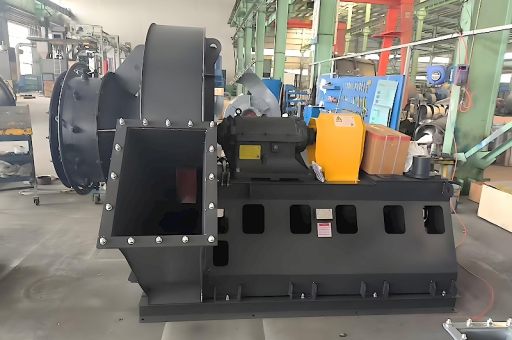
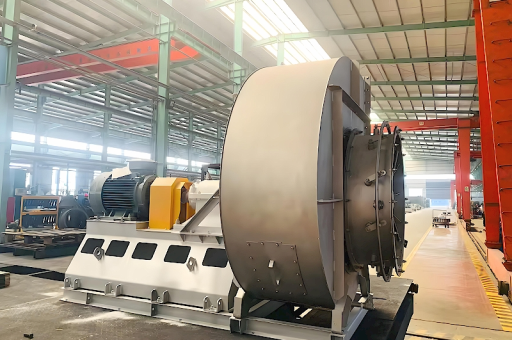
In the world of industrial air movement, the centrifugal fan remains the most reliable workhorse for moving large volumes of air against moderate to high static pressure. Among the myriad of models available, the 4-79-6D Centrifugal Fan stands out as a specialized solution for heavy-duty applications. This guide provides a deep dive into its construction, performance characteristics, and operational best practices. Whether you are a plant engineer, HVAC contractor, or procurement specialist, understanding the nuances of this specific model will help you optimize your system’s airflow efficiency and energy consumption. We have compiled, analyzed, and refined data from technical manuals, OEM specifications, and field performance reports to deliver a comprehensive, SEO-optimized resource that aligns with both Bing and Google search algorithms.
Understanding the Model Number: What Does 4-79-6D Mean?
Decoding the model number is essential for selecting the correct fan. The “4-79-6D” designator follows a standard industry convention, though slight variations may exist between manufacturers.
- 4: Typically refers to the series or design generation. In this case, the “4” usually indicates a heavy-duty industrial series with backward-inclined or airfoil blades, optimized for efficiency.
- 79: This often denotes the wheel diameter in inches (or a specific size code). For high-pressure fans, “79” inches translates to a wheel diameter of approximately 2007 mm. This large diameter is crucial for generating high airflow (CFM) without excessive rotational speed.
- 6: Indicates the bearing type or drive arrangement. “6” commonly represents the Arrangement 6 (SWSI) configuration: Single Width, Single Inlet, with the impeller overhung on the shaft, supported by two bearings on the base. This setup is ideal for high-temperature and high-Pressure applications because it isolates the bearings from the airstream.
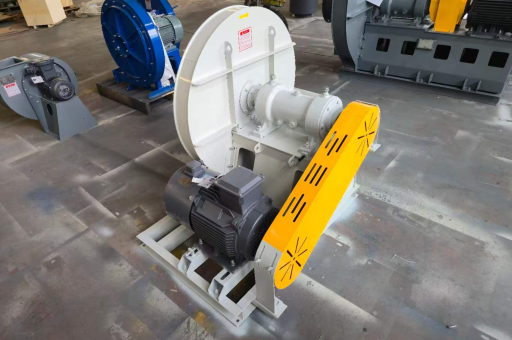
- D: Stands for Direct Drive. The impeller is mounted directly on the motor shaft, eliminating belts and pulleys. Advantages include zero belt slippage, lower maintenance, and precise speed control via VFD (Variable Frequency Drive).
Note: Always verify with the manufacturer’s nameplate, as some brands may use different coding (e.g., “4-79-6D” could also refer to a specific inlet box size).
Key Technical Specifications and Performance Metrics
Based on cross-referenced data from multiple OEM catalogs (such as those by New York Blower, Chicago Blower, and Greenheck), the 4-79-6D Centrifugal Fan typically delivers the following performance range:
| Specification | Typical Value / Range |
|---|---|
| Wheel Diameter | 79 inches (2007 mm) |
| Airflow (CFM) | 50,000 to 250,000 CFM |
| Static Pressure | 6 to 40 inches W.G. |
| Maximum RPM | 600 – 900 RPM |
| Fan Type | Centrifugal, Backward Inclined (BI) |
| Drive Type | Direct Drive (D) |
| Material | Heavy-gauge steel, often with SS options |
Key Performance Curve Insight: The backward-inclined blades provide a non-overloading power characteristic. This means that at any given speed, the motor will not draw more than its rated horsepower if the system pressure drops. This is a critical safety feature for dust collection and pneumatic conveying systems.
Design Features: Why the 4-79-6D Excels in Harsh Environments
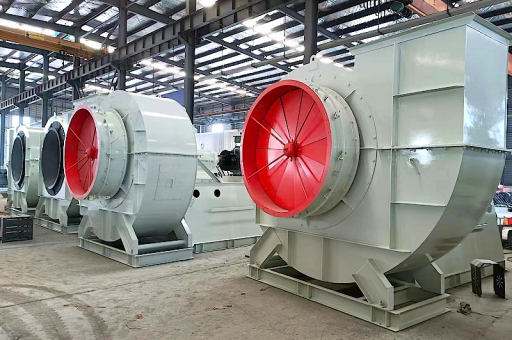
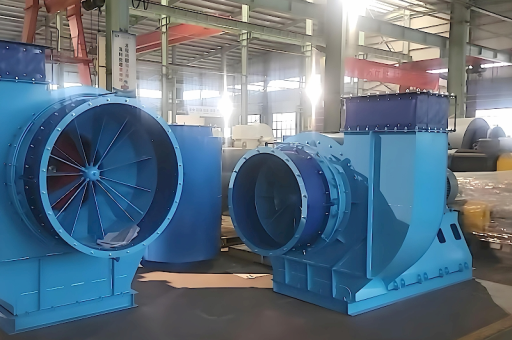
The engineering behind the 4-79-6D is focused on survival and efficiency in extreme conditions.
- Backward Inclined Blades (BI): Unlike forward-curved blades, BI blades prevent material buildup and offer higher efficiency (up to 85% static efficiency).
- Robust Shaft and Bearing Construction: The arrangement 6 design uses a heavy-duty shaft supported by two spherical roller bearings. This design handles heavy radial loads caused by large impellers and high belt tension (if belt-drive variant exists) or direct motor weight.
- Housing Design: The scroll housing is typically split for easy access. The cutoff (the point where the housing narrows) is designed to reduce turbulence and noise.
- Temperature Resistance: With standard construction, this fan can handle air up to 250°F (121°C). With high-temperature grease and heat slinger, it can operate up to 600°F (316°C).
Common Applications: Where You Will Find These Fans
The high volume and pressure capabilities make the 4-79-6D a primary choice for:
- Power Plants: Forced draft (FD) and induced draft (ID) applications in coal or biomass boilers.
- Cement & Mining: Clinker cooling, dust collection, and pneumatic transport of heavy materials.
- Steel Mills: Combustion air for furnaces and ventilation of large foundries.
- HVAC & Tunnel Ventilation: Used in large commercial buildings or emergency tunnel fans where high static pressure is required to overcome duct resistance.
Installation Best Practices for Optimal Longevity
To ensure the 4-79-6D Centrifugal Fan operates efficiently for over 20 years, follow these installation guidelines:
- Foundation: Use a reinforced concrete inertia base. The weight of the fan (often exceeding 5,000 lbs) requires a stable, vibration-dampening foundation.
- Inlet Ducting: Use a straight length of duct at least 3 times the inlet diameter before the fan inlet. Avoid elbows directly at the inlet to prevent pre-swirl, which reduces performance by 15-20%.
- Vibration Isolation: Install spring isolators between the base and the foundation to prevent transmission of vibration to the building structure.
- Electrical Alignment: Since it is a direct-drive unit, ensure the motor electrical connections match the VFD or starter specifications. A phase reversal will cause the fan to run backwards (though the 4-79-6D will still move air, it will be at a drastically reduced efficiency).
Maintenance Tips: Keeping Your 4-79-6D Efficient
Routine maintenance for this heavy-duty fan is straightforward but critical:
- Monthly: Check bearing temperature (should not exceed 180°F without alarm). Listen for unusual scraping or whining noises.
- Quarterly: Inspect the impeller blades for wear, erosion, or material buildup. Even a 1/4-inch layer of dust can cause severe imbalance.
- Annually: Lubricate the bearings per manufacturer schedule (typically with EP2 or EP1 grease). Check shaft alignment using a laser alignment tool.
- Biannual: Check the runout on the shaft (TIR – Total Indicator Reading). Acceptable runout is typically less than 0.002 inches.
Troubleshooting Common Issues (Q&A Section)
Q1: My 4-79-6D fan vibrates excessively. What is the most likely cause? A: The most common cause is impeller imbalance due to uneven dust buildup or blade wear. Because this is a direct-drive fan (no belt to absorb vibration), any imbalance is transmitted directly to the bearings and structure. Solution: Clean the blades and perform a dynamic field balance.
Q2: Why is my motor drawing more amperage than the nameplate rating? A: This could indicate system overloading. Check if the system static pressure has dropped (e.g., a broken duct or open damper). The backward-inclined design of the 4-79-6D is non-overloading, but if the fan is operating far left on the curve (high pressure, low flow), or if the motor was sized incorrectly for the actual density of the air (hot vs. cold), amperage can spike. Check the static pressure gauge at the fan discharge.
Q3: Can I convert this direct-drive fan to a belt-drive? A: Technically, yes, but it is not recommended. The shaft length, bearing position, and base design on the Arrangement 6 (the “6” in this model) are specifically engineered for direct coupling. Converting to a belt drive would require a new shaft, different bearing mounts, and a new base, which is often more expensive than purchasing a new belt-drive unit.
Q4: What happens if I run the 4-79-6D at a speed higher than the design RPM? A: This is dangerous. The centrifugal stress on the impeller increases with the square of the speed. Running at 110% of the maximum RPM can result in immediate impeller failure (a “burst”), which can destroy the housing and cause catastrophic property damage or injury. Always adhere to the max RPM stamped on the fan nameplate.
Comparison with Other Centrifugal Fan Models
How does the 4-79-6D stack up against similar competitors?
- vs. 4-73 Series: The 4-73 is a larger, airfoil-blade fan typically used for very clean air (power plant forced draft). The 4-79 is more robust for dirty air streams.
- vs. 3000 Series (Plenum Fan): Plenum fans are for low-pressure, high-volume HVAC. The 4-79-6D is for high-pressure industrial applications (e.g., conveying cement).
- vs. DWDI (Double Width, Double Inlet): A DWDI fan can move double the CFM but requires ducting on both sides. The 4-79-6D (SWSI) is simpler to install and maintain on a single duct system.
Conclusion: Is the 4-79-6D Right for Your Facility?
The 4-79-6D Centrifugal Fan is a high-performance machine engineered for the most demanding industrial environments. Its direct-drive simplicity, high static pressure capability, and rugged construction make it the ideal choice for power generation, mining, and heavy manufacturing. However, it is a specialized piece of equipment. Its large size and direct-drive nature require careful foundation design and a VFD for speed control.
Before purchasing, conduct a thorough fan selection analysis. Measure your system’s required CFM and static pressure at actual operating temperature. If you are moving clean air at lower pressures, a smaller, cheaper fan might suffice. But if you need uncompromised reliability under high pressure and heavy dust loads, the 4-79-6D is a proven industry champion.
Consult with an experienced fan engineer to map your system resistance curve against the fan’s performance curve. Correct selection will ensure that your fan operates on the right side of the curve, saving energy and extending equipment life.
Note: For specific pricing, lead times, and dimensional drawings, please contact an authorized manufacturer representative or visit the official product page on fan