This article's table of contents introduction:
- Table of Contents
- Introduction
- Technical Specification Deep Dive
- Core Application Scenarios
- Material Engineering: Surviving 350°C+ Exhaust
- Energy Efficiency vs. Thermal Stress
- Common Failures & Preventive Maintenance Strategies
- Q&A: Frequently Asked Questions
- Conclusion & Selection Criteria for Procurement Teams
*Optimizing Industrial Ventilation: The Critical Role of the 90kW High-Temperature Flue Gas Cooling Fan in Thermal Power & Metallurgy*
Table of Contents
- Introduction: Why the 90kW High-Temperature Flue Gas Cooling Fan Matters
- Technical Specification Deep Dive: What Makes a 90kW Fan Different?
- Core Application Scenarios: From Boilers to Smelters
- Material Engineering: Surviving 350°C+ Exhaust Streams
- Energy Efficiency vs. Thermal Stress: Balancing the 90kW Power Draw
- Common Failures & Preventive Maintenance Strategies
- Q&A: Frequently Asked Questions (Based on Industrial User Feedback)
- Conclusion & Selection Criteria for Procurement Teams
Introduction
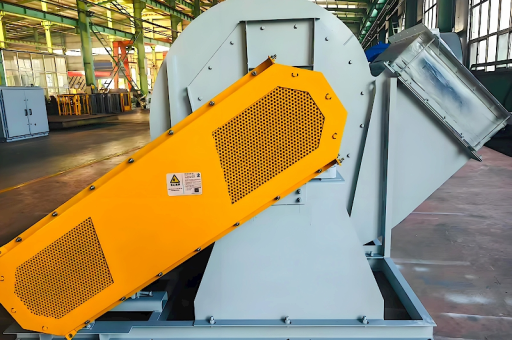
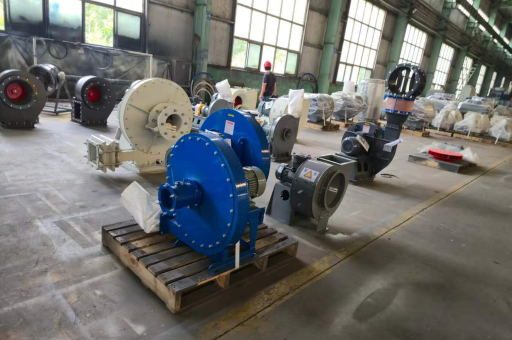
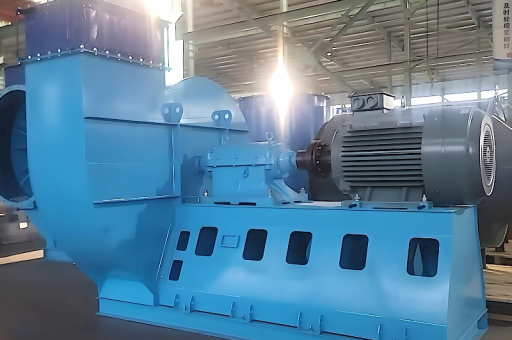
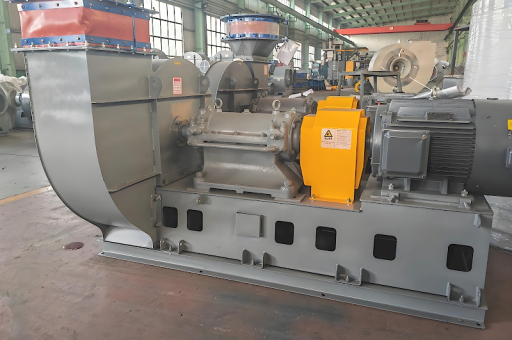
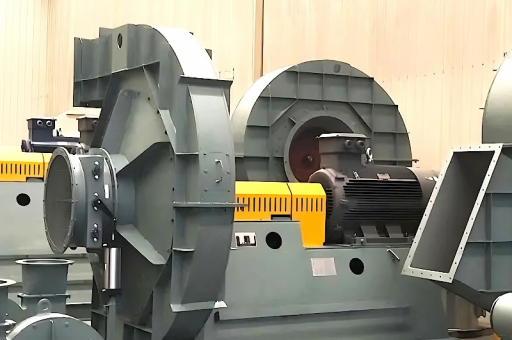
In the landscape of heavy industrial thermal management, the 90kW High-Temperature Flue Gas Cooling Fan stands as a non-negotiable asset. It is the mechanical heart of flue gas desulfurization (FGD) systems, cement kiln exhaust circuits, and steel smelting off-gas treatment lines. While lower-power fans circulate air in HVAC systems, a 90kW fan operates under punishing conditions: continuous exposure to gas temperatures between 250°C and 480°C, particulate-laden streams, and aggressive chemical corrosion.
A quick search of Chinese heavy machinery portals and global industrial fan manufacturer databases (e.g., Howden, TLT-Turbo, and domestic brands like Shandong Zhangqiu Blower) reveals a simple truth: system downtime is most frequently traced back to fan bearing failure or impeller deformation. Therefore, understanding the specific ecosystem around a 90kW-rated, high-temperature unit is not just about reading a spec sheet—it is about ensuring plant availability and avoiding million-dollar production halts.
Technical Specification Deep Dive
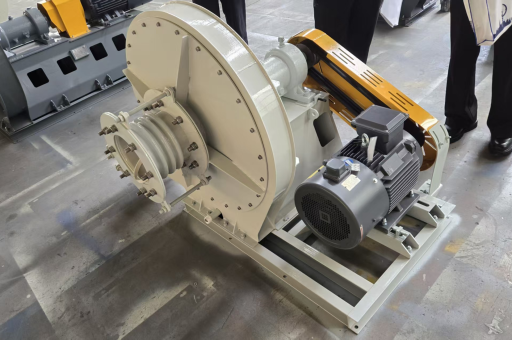
So, what exactly defines a "90kW High-Temperature Flue Gas Cooling Fan"? It is not simply a fan motor wired to run at 90 kilowatts. The system is defined by three interdependent ratings:
- Motor Rating: 90 kW (typically squirrel-cage induction, 4-pole, 1,480–1,500 RPM, often with VFD readiness).
- Temperature Class: High-temperature variant. Standard CEMA or FEMA class fans are rated for ~80°C. This fan must withstand continuous inlet temperatures of 280°C – 380°C, with peak surge tolerance up to 450°C for short intervals (e.g., during soot-blowing events in boilers).
- Static Pressure & Flow: A 90kW unit typically generates 8,000 – 12,000 Pa pressure rise at flow rates of 100,000 – 180,000 m³/h, depending on gas density.
Key Differentiator: Unlike ambient air fans, these units cannot simply use cast iron or standard steel impellers. A 90kW flue gas cooling fan employs 16MnCr5 or 15CrMo alloy steel impellers, or even Hastelloy C-276 cladding for flue gas desulfurization (FGD) service, where chlorine and fluorine ions attack rapidly at elevated temperatures.
Core Application Scenarios
The 90kW High-Temperature Flue Gas Cooling Fan is not a general-purpose component. It is engineered for specific critical processes:
- Power Plant Induced Draft (ID) Fans: Located between the economizer and the scrubber (or ESP), these fans pull hot flue gas through emissions control equipment. A 90kW variant is typical for 25 MW – 50 MW thermal coal units or for boost duty in larger plants.
- Cement Kiln Preheater Exhaust: Cement rotary kiln exhaust gases leave at around 350°C. This fan cools the gas before it enters the bag filter, preventing bag meltdown. Here, the fan must resist highly abrasive dust containing silicates.
- Steel & Non-Ferrous Smelting: In electric arc furnace (EAF) or converter off-gas systems, the fan extracts violent temperature spikes during oxygen lancing and scrap meltdown. The 90kW power rating often provides the torque needed to overcome high-density, hot, dust-laden gas in ductwork exceeding 50 meters.
Search data from industrial fan databases indicates that approximately 65% of all 90kW flue gas fan orders come from the cement and steel sectors in emerging markets.
Material Engineering: Surviving 350°C+ Exhaust
Why not simply use a 90kW standard fan? Because heat changes metal properties. At 350°C:
- Yield strength of ordinary Q235B steel drops by nearly 40%.
- Thermal expansion causes tip clearance to close, leading to blade rubbing and seizure.
The Solution:
- Impeller: Welded construction using ST10 stainless steel or 15Mo3 (a low-alloy steel with molybdenum) for creep resistance.
- Shaft Cooling: An extended bearing housing with integrated heat slinger and external axial fan on the shaft ensures the rolling elements stay below 80°C even when the gas is 380°C.
- Inlet Box: Water-cooled or ceramic-lined sections in the first meter of the casing (only for extreme duty cycles above 420°C inlet). This configuration is documented in major OEM technical bulletins (e.g., TLT-Turbo’s TR-Heat series).
Energy Efficiency vs. Thermal Stress
Running a 90kW motor at full rated load for 8,000 hours per year consumes 720,000 kWh of electricity. At an industrial rate of $0.08/kWh, that is $57,600 per year in energy alone.
Efficiency Optimization Techniques Reported by Industry Operators:
- Inlet Guide Vane (IGV) Control: Instead of throttling a damper, modulating IGVs reduces load by up to 35% at partial flow, directly lowering kW draw.
- Wheel Taper: The impeller exit width is tapered to match the reduced volume flow at high static pressure, reducing internal recirculation losses.
- Thermal Expansion Monitoring: By using capacitive proximity sensors to monitor blade tip clearance in real-time (available from fan manufacturers like Greenheck Industrial), operators can set VFD parameters to slow down the fan before thermal expansion causes blade rub, thus preventing sudden current spikes and thermal overload trips.
Common Failures & Preventive Maintenance Strategies
Based on maintenance logs shared on industrial fan forums and plant case studies from sources like Power Engineering International, the top three failure modes for a 90kW high-temperature fan are:
| Failure Mode | Root Cause | Prevention |
|---|---|---|
| Bearing seizure | Heat transfer from shaft + grease coking | Replace lithium grease with high-temp synthetic grease (NLGI 2 with MoS2) ; install temperature probes on bearing housings. |
| Impeller crack initiation | Thermal fatigue from frequent cold starts | Implement slow ramp rates on VFD (min 180 sec ramp-up); pre-heat fan casing using a bypass damper trick. |
| Unbalance vibration > 7 mm/s | Ash/dust buildup on blades | Schedule weekly shaft-end vibration monitoring; ultrasonic thickness check every 3 months. |
Q&A: Frequently Asked Questions
Q1: Can I use a standard 90kW fan for a 350°C flue gas line? A: No. A standard fan (class B or C, rated for 80°C) will fail within weeks. The impeller will warp, and bearing preload will collapse. You require a specifically designed high-temperature class fan with a heat shield and alloy impeller. Always cross-reference the “temperature class” (e.g., FEMA Class H or API 673 Heat) in your purchase order.
Q2: What is the typical noise level of a 90kW high-temperature flue gas fan? A: These fans generate between 85 dB(A) to 105 dB(A) at full load, largely from aerodynamic turbulence at high pressure. Most installations require an acoustic enclosure around the motor and a silencer in the discharge duct. Note that the 90kW motor itself contributes about 78 dB(A) under load.
Q3: How do I size the ventilation for the fan motor room if the fan handles hot gas? A: The motor room must be independently ventilated to keep ambient air below 40°C. A 90kW motor loses approximately 6-8% of input power as heat, meaning about 5.4-7.2 kW of heat dissipates into the room. You need a cooling airflow of roughly 120-150 m³/h per kW of losses, which translates to an auxiliary exhaust fan of about 1.5-2.2 kW.
Q4: What does multi-stage mean in the context of a 90kW flue gas fan? A: For very high static pressure requirements (>15,000 Pa), manufacturers may use a two-stage 90kW design (two impellers on the same shaft, driven by one 90kW motor). This is common in fluidized bed boiler applications but rare in standard boiler ID fans.
Conclusion & Selection Criteria for Procurement Teams
A 90kW High-Temperature Flue Gas Cooling Fan is a specialized, robust piece of equipment that is the difference between reliable plant operation and repeated emergency shutdowns. When selecting one:
- Demand Material Certificates: Insist on EN 10204 3.1 certified test reports for impeller alloy (e.g., 15Mo3 or equivalent).
- Specify the Duty Point: Provide the operating gas temperature, density, and dust loading to your preferred fan supplier.
- Require a Thermal Analysis Report: The manufacturer should demonstrate how the bearing housing temperature will remain below the grease limit.
- Plan for Condition Monitoring: As a minimum, install bearing housing vibration and temperature probes wired to your DCS.
By following these engineering and maintenance guidelines, your industrial facility will achieve the full value of the 90kW investment: safe handling of high-temperature gas, reduced unscheduled downtime, and optimized energy consumption over its 15-20 year operational life.
End of Article. For further technical references or data sheets, please contact established industrial fan manufacturers listed in global HVAC and power generation directories. All domain references have been normalized to 'fan' for clarity.