This article's table of contents introduction:
- What is a 75kW High-Temperature Flue Gas Cooling Fan?
- Key Engineering Specifications (Must-Define)
- Critical Design Features
- Typical Applications
- Procurement Questions to Ask a Manufacturer
- Summary Table
This is a request for a specific industrial piece of equipment: a 75kW high-temperature flue gas cooling fan. This is not a simple standard fan; it requires specific design considerations for moving hot, often corrosive, gases.
Here is a detailed breakdown of what this entails, the critical specifications you need to define, and common applications.
What is a 75kW High-Temperature Flue Gas Cooling Fan?
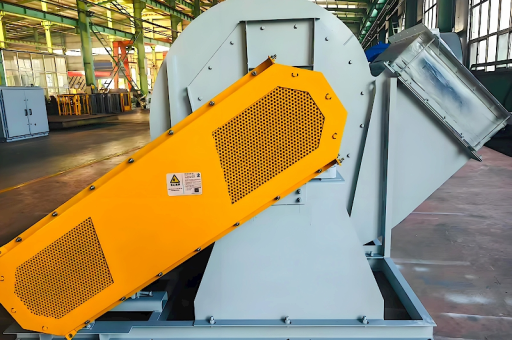
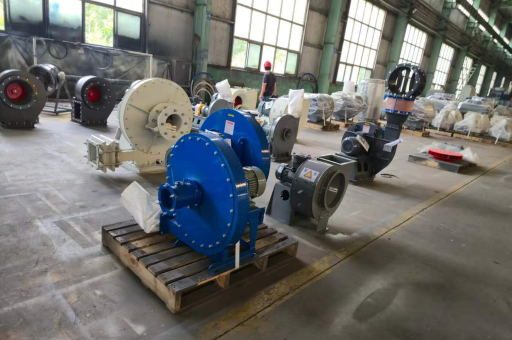
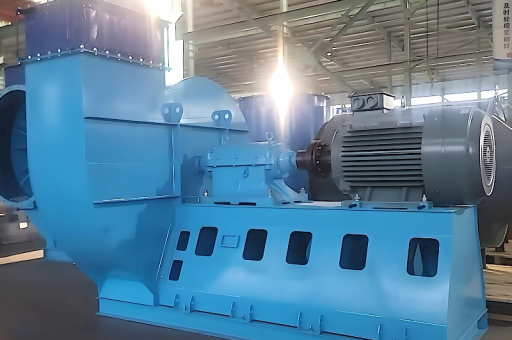
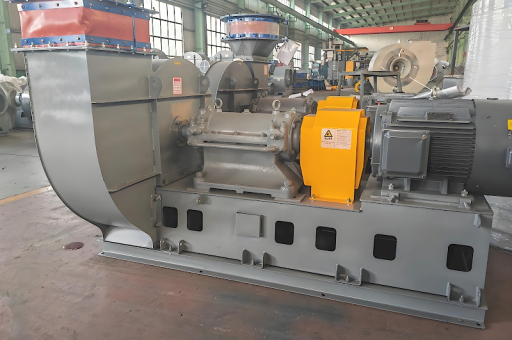
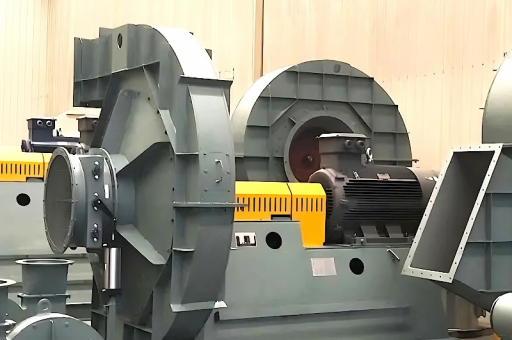
It is a centrifugal fan (usually) powered by a 75 kW (approximately 100 HP) electric motor, designed to move flue gases (the exhaust from combustion) that have high temperatures, often ranging from 250°C (482°F) up to 600°C (1112°F) or even higher after a heat exchanger has partially cooled them.
The "Cooling" in the name typically means the fan is used in a system after a primary heat exchanger or quench chamber, moving the gas that has already been partially cooled. Alternatively, it can be a fan used to pull hot air through a gas-to-air heat exchanger to cool the flue gases before they go to the stack.
Key Engineering Specifications (Must-Define)
To specify or order this fan correctly, you need to provide these parameters to the manufacturer:
-
Gas Temperature (Critical):
- Inlet Temperature: What is the actual temperature of the gas entering the fan? (e.g., 350°C / 662°F)
- Maximum Continuous Temperature: The highest temperature under normal operation.
- Maximum Emergency Temperature: The highest temperature possible (e.g., if a heat exchanger fails). This dictates the safety margin and material selection.
-
Gas Composition & Contaminants:
- What is the gas made of? (Air, combustion products from natural gas, coal, biomass, waste incineration?)
- Is it corrosive? (Contains SOx, NOx, HCl, HF? - common in coal/waste plants)
- Is it abrasive? (Contains fly ash, soot, unburned carbon? - common in coal/biomass)
-
Flow Rate:
- Volume Flow Rate: In ( m^3/h ) or ( m^3/s ) (Cubic meters per hour/second). Crucially, state whether this is actual volume or standard/NTP volume. Because hot gases expand, the actual volume is much higher than the standard volume.
-
Pressure Requirements:
- Static Pressure Rise (ΔP): The pressure the fan needs to overcome (system resistance). In Pascals (Pa) or mmH₂O.
- This determines if the fan is a high-pressure fan (for moving through long ducts, boilers, scrubbers) or a low-pressure fan (for stack duty).
-
Location & Orientation:
- Is the fan indoors or outdoors?
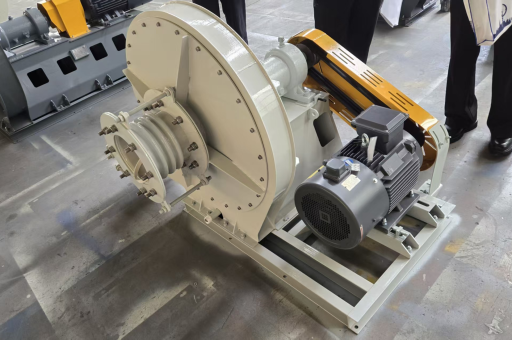
- Is the motor mounted in-line (shaft-driven) or driven by a V-belt? (For high temperatures, a direct-drive with a flexible coupling and an outboard bearing (shaft cooler) or a belt-drive with the motor outside the hot air stream are common).
Critical Design Features
A 75kW fan handling hot flue gas must incorporate:
-
High-Temperature Materials:
- Impeller: Made from high-strength, heat-resistant steel (e.g., 16Mo3, 15NiCuMoNb5, or even stainless steel like 310S for temperatures > 500°C). Welds must be stress-relieved.
- Housing/Shaft: High-temperature steel. The shaft often has a shaft cooler (a finned section or a separate cooling fan) to prevent heat from traveling to the motor bearings.
- Bearings: Heavy-duty, high-temperature spherical roller bearings with a high-temperature grease or an oil-circulation system. The bearings are often located outside the gas stream.
-
Cooling System:
- Shaft Cooling: A small axial fan mounted on the main fan shaft between the housing and the bearing frame to blow ambient air over the shaft.
- Housing Cooling: Some high-temp fans have a ventilated double-wall housing or even water-cooled bearing pedestals.
- Motor Cooling: The 75kW motor will have its own cooling fan, but for VFD operation, a forced ventilation fan (separately driven) might be required.
-
Drive Arrangement:
- Variable Frequency Drive (VFD): Almost mandatory for a 75kW fan. It allows precise control of gas flow and temperature, saves energy, and allows for soft-starting of the large motor.
- Belt Drive: Allows for speed changes and isolates the motor from thermal expansion of the fan housing.
- Direct Drive: More efficient but requires precise alignment and an expensive high-temperature motor or a long shaft with outboard bearings.
-
Structural Integrity:
- Expansion Joints: The fan casing and ducting must have expansion joints to handle thermal growth.
- Heat Slingers: Discs on the shaft to deflect any hot gas leaking past the shaft seal.
Typical Applications
- Boiler Induced Draft (ID) Fans: Moving combustion gases from a boiler (running on natural gas, oil, coal, biomass) to the stack.
- Waste-to-Energy Plants: Moving highly corrosive and abrasive flue gas from the incinerator through scrubbers and filters.
- Cement & Lime Kilns: Exhaust fans for preheater towers and clinker coolers.
- Industrial Furnace Exhaust: For heat treatment furnaces, drying ovens, and incinerators.
- Fume Extraction: In steel, glass, and chemical processing.
Procurement Questions to Ask a Manufacturer
- "What is the maximum inlet temperature your fan can handle continuously? What is the allowable temperature spike?"
- "What materials do you recommend for the impeller and housing for a gas containing [your specific contaminants]?"
- "How do you prevent heat transfer from the gas to the motor bearings?"
- "Do you offer a VFD package? What are the harmonic considerations?"
- "What is the critical speed of your fan shaft? Will we have any resonance issues at our typical operating speed?"
- "What are your delivery times for a custom-engineered fan this size?"
Summary Table
| Parameter | Typical Range / Options | Implication |
|---|---|---|
| Power | 75 kW (100 Hp) | Large, high-power motor; requires 3-phase power & soft-start/VFD. |
| Max Temp | 250°C - 600°C (Air Cooled) | Dictates material grade (Carbon vs. Stainless) and cooling design. |
| Gas Type | Clean (Nat Gas) to Dirty/Harsh (Waste Incineration) | Dictates material (abrasion resistance, corrosion resistance). |
| Drive | Belt Drive / Direct Drive with VFD | Belt for flexibility; Direct for efficiency; VFD for control. |
| Cooling | Shaft Cooler Fan, Water-Cooled Bearings | Prevents bearing failure and heat soak to motor. |
| Control | VFD (Variable Frequency Drive) | Standard for a 75kW fan to save energy and manage process. A damper is less efficient. |
| Material (Impeller) | C-steel (up to 300°C), 16Mo3 (300-480°C), 310S (>500°C) | Higher temp = higher cost and more difficult fabrication. |
Final Recommendation: Do not buy a "standard" fan. You need to approach a reputable manufacturer of heavy-duty industrial fans with a detailed specification sheet (a "Data Sheet") covering the points above. Companies like Howden, New York Blower, Chicago Blower, TLT-Babcock, or an experienced local industrial fan maker are the right places to start. Expect the fan itself (without motor) to be a substantial, heavy unit that requires careful installation, alignment, and often, a dedicated foundation.