This article's table of contents introduction:
- Introduction: What Is the 9-19-9D High-Pressure Centrifugal Fan?
- Core Design and Structural Features
- How It Differs from Standard Centrifugal Fans
- Primary Applications and Industry Use Cases
- Technical Performance Parameters and Selection Criteria
- Installation, Maintenance, and Safety Best Practices
- Frequently Asked Questions (FAQ)
- Conclusion: Why Choose the 9-19-9D for High-Pressure Needs?
** The Ultimate Guide to the 9-19-9D High-Pressure Centrifugal Fan: Design, Applications, and Performance Optimization
Table of Contents
- Introduction: What Is the 9-19-9D High-Pressure Centrifugal Fan?
- Core Design and Structural Features
- How It Differs from Standard Centrifugal Fans
- Primary Applications and Industry Use Cases
- Technical Performance Parameters and Selection Criteria
- Installation, Maintenance, and Safety Best Practices
- Frequently Asked Questions (FAQ)
- Conclusion: Why Choose the 9-19-9D for High-Pressure Needs?
Introduction: What Is the 9-19-9D High-Pressure Centrifugal Fan?
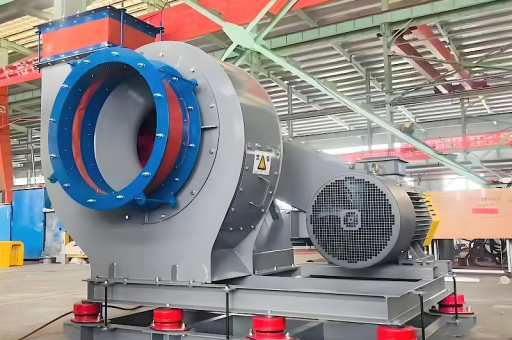
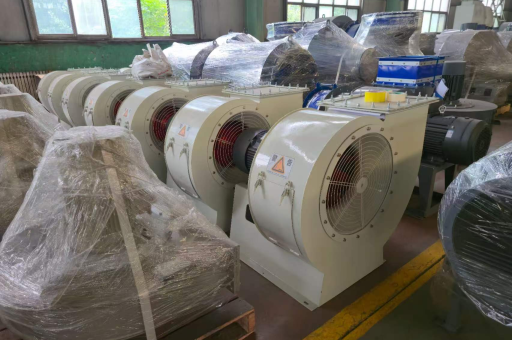
The 9-19-9D High-Pressure Centrifugal Fan is a specialized industrial air-moving device engineered to generate exceptionally high static pressure, typically ranging from 3000 Pa to 15000 Pa or more, depending on the specific configuration. Unlike conventional centrifugal fans that prioritize volume over pressure, the 9-19-9D series is purpose-built for applications requiring concentrated air force—such as pneumatic conveying, forced draft in boilers, and dust extraction in heavy manufacturing.
The "9-19" denotes the fan’s aerodynamic design series, where the forward-curved blades and compact volute casing create a steep pressure curve. The "9D" indicates a direct-drive configuration (motor shaft directly coupled to the impeller), ensuring minimal energy loss and high rotational precision. This fan is recognized in the HVAC and industrial ventilation sectors for its robust construction, efficiency at high speeds, and ability to handle clean or slightly dusty air at moderate temperatures (typically up to 80°C, with optional high-temperature variants reaching 200°C).
Core Design and Structural Features
The 9-19-9D fan is characterized by several distinctive design elements that differentiate it from other centrifugal models:
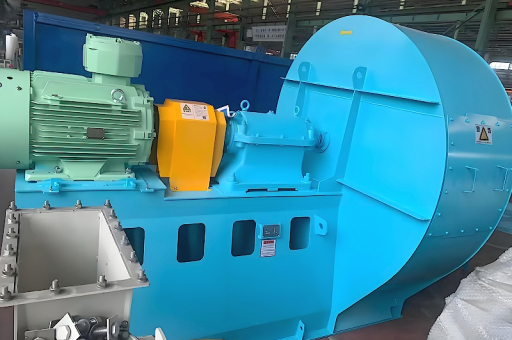
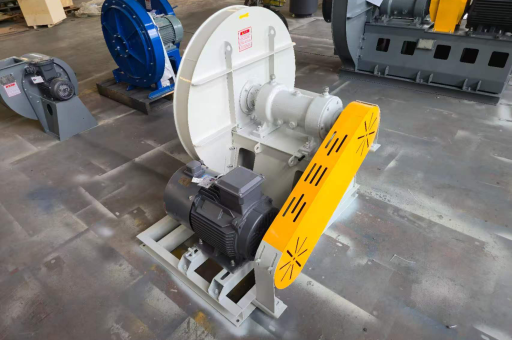
- Forward-Curved Impeller Blades: The blades curve in the direction of rotation, allowing the fan to achieve high pressure at relatively moderate impeller diameters. This design reduces tip losses and improves aerodynamic efficiency under high differential pressure conditions.
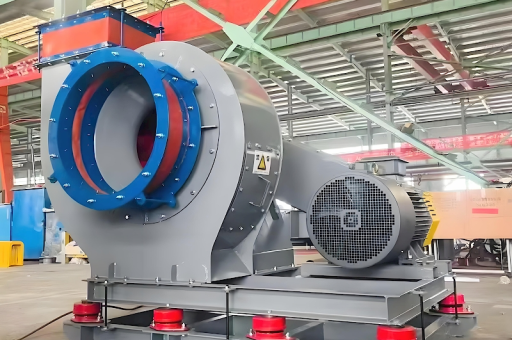
- Heavy-Duty Steel Volute Casing: The spiral-shaped housing is constructed from welded carbon steel or, for corrosive environments, stainless steel. The casing is designed to withstand internal pressures up to 1.5 times the rated value without deformation.
- Direct-Drive (9D) Configuration: The impeller is mounted directly on the motor shaft, eliminating belts, pulleys, and bearings that could introduce mechanical losses or alignment issues. This ensures 100% power transmission and lower maintenance requirements.
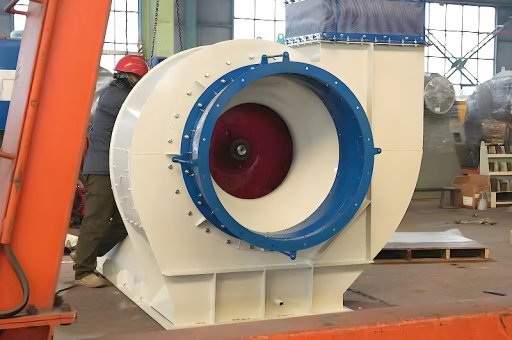
- Integrated Inlet Bell Mouth: A carefully contoured inlet cone guides air smoothly into the impeller eye, reducing turbulence and inlet losses—critical for maintaining high-pressure output.
- Shaft Sealing and Bearing Options: For applications handling aggressive gases, the fan can be equipped with labyrinth seals, carbon ring seals, or purge air systems. Bearings are typically heavy-duty grease-lubricated or oil-lubricated spherical roller bearings.
Key Dimensions: The 9-19-9D is available in multiple impeller diameters (e.g., 400 mm to 1600 mm), with motor power ranging from 75 kW to 90 kW. The number "9" in the series designation often corresponds to a specific specific speed range optimized for pressure rise.
How It Differs from Standard Centrifugal Fans
To understand the value of the 9-19-9D, it is helpful to compare it with common centrifugal fan types:
| Feature | 9-19-9D High-Pressure Fan | Standard Backward-Curved Fan | Standard Forward-Curved Fan |
|---|---|---|---|
| Max Static Pressure | 15,000+ Pa | 2,000–5,000 Pa | 1,000–3,000 Pa |
| Efficiency at High Pressure | 75–82% | 50–65% | 40–55% |
| Blade Design | Forward-curved, short chord | Backward-curved, long chord | Forward-curved, shallow |
| Noise Level | Higher (>85 dB(A) at full load) | Moderate (75–85 dB(A)) | Lower (70–80 dB(A)) |
| Best Application | Pneumatic conveying, boilers | General HVAC, clean air | Low-pressure exhaust |
Key Insight: The 9-19-9D is not a "universal" fan—it excels specifically when the system resistance is high and airflow volume is moderate. Attempting to use this fan for low-pressure, high-volume duties would result in excessive energy consumption and noise.
Primary Applications and Industry Use Cases
The 9-19-9D High-Pressure Centrifugal Fan is widely deployed in environments where overcoming significant resistance is mandatory:
- Pneumatic Conveying Systems: Transporting cement, grains, plastic pellets, or powders through pipelines over long distances. The fan provides the necessary pressure to keep solids suspended in the air stream.
- Boiler Forced Draft (FD) and Induced Draft (ID): Delivering combustion air into industrial boilers or extracting flue gases against furnace backpressure. The direct-drive model ensures stable operation under fluctuating loads.
- Dust Collection and Baghouse Filters: Providing the negative pressure required to pull dust-laden air through high-resistance filter bags. The fan’s pressure capability allows for longer filter life and smaller ductwork.
- Mine Ventilation and Tunnel Ventilation: Supplying fresh air or exhausting fumes in underground environments where duct resistance is extreme.
- Air Knife Systems and Drying Applications: Generating high-velocity air jets for removing moisture from surfaces in printing, packaging, or food processing lines.
Real-World Example: A cement plant replaced multiple low-pressure fans with a single 9-19-9D unit for its pneumatic conveying line, reducing energy consumption by 22% while maintaining a consistent pressure of 11,000 Pa at 6,000 m³/h.
Technical Performance Parameters and Selection Criteria
When specifying a 9-19-9D fan, engineers must carefully match the fan curve to system requirements. Critical parameters include:
- Flow Rate (Q): Typically 2,000–30,000 m³/h for this series. Higher flow requires a larger impeller or increased rotational speed.
- Static Pressure (ΔP): The fan curve is steep—pressure drops significantly as flow increases. Always select a point within the stable operating range (avoid the stall region near maximum pressure).
- Air Density Correction: Standard performance charts are based on air at 20°C, 1.2 kg/m³, and 101.325 kPa. For higher temperatures or altitudes, use the affinity laws: Pressure ∝ Density, Power ∝ Density.
- Speed (RPM): The 9-19-9D typically operates at 2,900–3,600 RPM for direct-drive models. Variable frequency drives (VFDs) can be used for precise flow control, but ensure the motor and shaft are rated for the speed range.
- Noise and Vibration: Expect sound pressure levels of 85–95 dB(A) at 1 meter. Vibration velocity should be below 4.5 mm/s RMS for continuous operation.
Selection Checklist:
- Determine required flow and system resistance (use a pitot tube or manometer on an existing duct).
- Consult the manufacturer’s fan curve for the 9-19-9D model matching your duty point.
- Verify motor power using: P (kW) = (Q × ΔP) / (3600 × η × 1000) , where η is fan efficiency (typically 0.75–0.82).
- Check noise constraints and consider silencers or acoustic enclosures if needed.
Installation, Maintenance, and Safety Best Practices
Installation Requirements:
- Foundation: A rigid, vibration-absorbing base (concrete or steel frame) is mandatory. Use anti-vibration mounts to prevent structure-borne noise.
- Inlet and Outlet Ducting: Provide straight duct runs of at least 3 diameters upstream and 2 diameters downstream of the fan to avoid pressure losses from turbulence.
- Electrical Connections: Ensure the motor starter and cable sizing match the full-load current. Include thermal overload protection.
- Access Doors: Install inspection doors and pressure taps for easy performance monitoring.
Routine Maintenance:
- Weekly: Check bearing temperature (max 85°C), listen for unusual noise, and inspect belt tension (if applicable for non-direct-drive variants).
- Monthly: Clean the impeller blades and inlet bell mouth. Dust accumulation can reduce pressure capability by 15–30%.
- Quarterly: Grease bearings (if grease-lubricated) using the correct lithium-based grease. Check shaft alignment with a dial indicator.
- Annually: Perform a vibration analysis (ISO 10816-3). Replace seals and gaskets as needed.
Safety Protocols:
- Lockout/Tagout (LOTO): Always disconnect power before any inspection or cleaning.
- Personal Protective Equipment (PPE): Wear hearing protection (if noise >85 dB(A)), safety glasses, and gloves when handling the impeller.
- Run-in Procedure: After installation or impeller replacement, run the fan at no-load for 30 minutes to seat bearings and check for imbalance.
Frequently Asked Questions (FAQ)
Q1: Can the 9-19-9D fan handle explosive or flammable gases? A1: Standard models are not ATEX-rated. For explosive environments, specify a spark-resistant construction (e.g., aluminum impeller, copper inlet ring) and ensure the motor is explosion-proof. Fan Housing for such applications must have proper grounding.
Q2: What is the maximum temperature the fan can handle? A2: The standard version operates up to 80°C ambient air. For high-temperature duties (boiler application, drying oven), order the HT (High-Temperature) variant with heat-resistant bearings, a shaft cooling fan, and Viton seals—capable of 200°C continuous.
Q3: Can I use a variable frequency drive (VFD) with this fan? A3: Yes. However, you must ensure the motor is inverter-duty rated (Class F insulation, constant torque rating). Also, do not operate the fan below 20% of maximum speed, as the impeller may experience resonance or inadequate bearing lubrication.
Q4: How do I reduce noise from the 9-19-9D fan? A4: Consider these options: install an inlet silencer (chamber-type), add a discharge muffler, use flexible connectors on ductwork, and mount the fan on vibration isolators. For extreme noise, enclose the entire fan in an acoustic box with forced ventilation.
Q5: What is the typical lifespan of this fan? A5: With proper maintenance (regular greasing, balanced impeller, no over-speed), the 9-19-9D fan can operate for 15–20 years. Bearing replacement is typically needed every 3–5 years depending on operating hours and load.
Conclusion: Why Choose the 9-19-9D for High-Pressure Needs?
The 9-19-9D High-Pressure Centrifugal Fan is not simply a "bigger" fan—it is a specialized engineering solution for systems that demand sustained high static pressure with moderate airflow. Its direct-drive configuration eliminates transmission losses, while the forward-curved blade design delivers maximum pressure per unit of impeller diameter.
Industries ranging from cement production to power generation have relied on this fan series for decades, and with the integration of modern VFD controls and advanced sealing technologies, it remains a top choice for new installations and retrofit projects. However, selection must be performed with care: the fan curve is steep, and off-design operation can lead to instability or excessive wear. Always consult the manufacturer’s performance data and, when in doubt, invest in a professional system resistance measurement.
For your next high-pressure ventilation or conveying project, the 9-19-9D offers proven reliability, predictable performance, and a long service life—provided it is sized, installed, and maintained with the rigor it demands.