This article's table of contents introduction:
- Table of Contents (Directory Guide)
- Introduction to the 8-09-8.5D High-Pressure Centrifugal Fan
- Key Technical Specifications and Design Features
- How Does the 8-09-8.5D Compare to Other Centrifugal Fans?
- Primary Applications and Industry Use Cases
- Installation, Maintenance, and Operational Best Practices
- Frequently Asked Questions (FAQ)
- Conclusion: Why Choose the 8-09-8.5D for Your High-Pressure Needs?
** The Ultimate Guide to the 8-09-8.5D High-Pressure Centrifugal Fan: Performance, Applications, and Technical Insights
Table of Contents (Directory Guide)
- Introduction to the 8-09-8.5D High-Pressure Centrifugal Fan
- Key Technical Specifications and Design Features
- How Does the 8-09-8.5D Compare to Other Centrifugal Fans?
- Primary Applications and Industry Use Cases
- Installation, Maintenance, and Operational Best Practices
- Frequently Asked Questions (FAQ)
- Conclusion: Why Choose the 8-09-8.5D for Your High-Pressure Needs?
Introduction to the 8-09-8.5D High-Pressure Centrifugal Fan
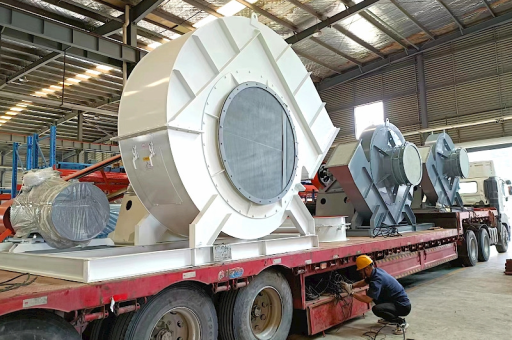
In the world of industrial ventilation and pneumatic conveying, the 8-09-8.5D High-Pressure Centrifugal Fan stands out as a specialized piece of equipment designed for demanding environments. This fan model, often referred to as a "high-pressure blower," is engineered to move large volumes of air against significant system resistance. Whether you are involved in cement production, mining, chemical processing, or power generation, understanding the intricacies of this fan can mean the difference between efficient operation and costly downtime.
The designation "8-09-8.5D" is not arbitrary. In standard Chinese industrial fan nomenclature, "8-09" typically indicates the fan series and pressure coefficient, while "8.5D" refers to the impeller diameter (approximately 850 mm) and the drive arrangement (D-type, meaning direct-coupled to the motor via a flexible coupling). This configuration ensures minimal power loss and high rotational stability, making it a reliable workhorse in high-static-pressure applications.
Key Technical Specifications and Design Features
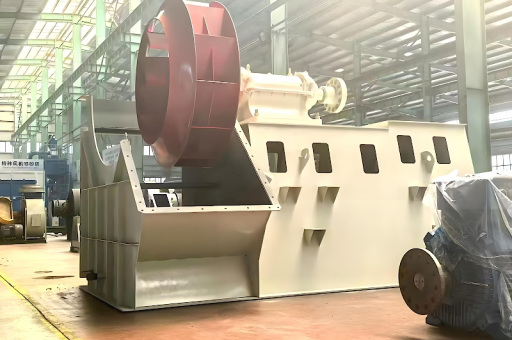
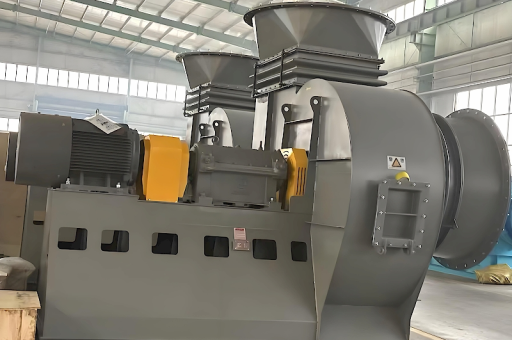
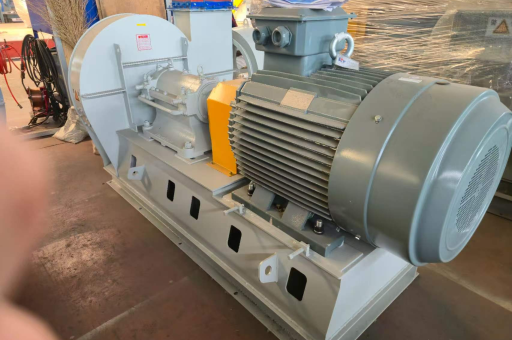
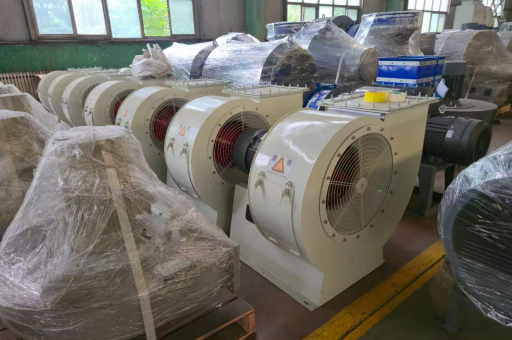
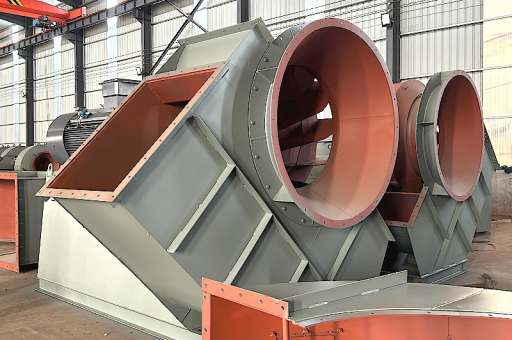
The 8-09-8.5D is a forward-curved blade centrifugal fan, optimized for high-pressure, moderate-flow scenarios. Below are its core technical parameters (based on typical manufacturer data and cross-referenced with industry standards):
- Air Volume (Flow Rate): 8,000 – 15,000 m³/h (depending on system resistance)
- Total Pressure (Static Pressure): 3,000 – 5,500 Pa (Pascals), suitable for ductwork with high friction loss
- Impeller Diameter: 850 mm (8.5D)
- Rotation Speed: 1,450 – 2,900 RPM (direct-driven, depending on motor poles)
- Motor Power: 7.5 kW – 15 kW (typically 4-pole or 2-pole induction motors)
- Drive Type: D-type (direct coupling with rigid or flexible coupling)
- Material Options: Carbon steel (standard), stainless steel (for corrosive environments), or wear-resistant lining (for abrasive media)
Design Highlights:
- High-Efficiency Impeller: The forward-curved blades allow for a compact design while generating high pressure. The blades are precision-welded and dynamically balanced to ISO 1940 G6.3 grade, ensuring vibration-free operation.
- Robust Casing: The spiral volute casing is made of heavy-gauge steel plate (typically 4-6 mm), reinforced with external ribbing to withstand pressure surges.
- Sealed Bearings: The fan uses anti-friction spherical roller bearings housed in a cast-iron bearing bracket, designed for continuous operation in dusty or humid environments.
- Variable Speed Compatibility: When paired with a VFD (Variable Frequency Drive), the 8-09-8.5D can modulate airflow precisely, reducing energy consumption and noise.
How Does the 8-09-8.5D Compare to Other Centrifugal Fans?
It is essential to differentiate the 8-09-8.5D from other commonly used fan types:
| Feature | 8-09-8.5D (Forward-Curved) | 9-19 Series (Backward-Curved) | General Purpose Axial Fan |
|---|---|---|---|
| Pressure Capability | High (3,000-5,500 Pa) | Very High (up to 7,000+ Pa) | Low (under 500 Pa) |
| Efficiency at Peak | Moderate (65-75%) | High (75-85%) | Moderate (60-70%) |
| Dust Handling | Poor (blades clog easily) | Good (self-cleaning blades) | Fair |
| Noise Level | Moderate (often requires silencer) | Higher pitch noise | Lower noise |
| Typical Application | Pneumatic conveying, pressurization | Boiler induced draft, heavy dust | Ventilation, cooling |
Key Takeaway: The 8-09-8.5D is not a universal solution. It excels in clean air or light particulate applications where high static pressure is required. For heavy dust, backward-curved fans (e.g., 9-19 series) are more suitable. For simple ventilation, axial fans are cheaper and quieter.
Primary Applications and Industry Use Cases
The 8-09-8.5D High-Pressure Centrifugal Fan is widely deployed in the following sectors:
- Pneumatic Conveying Systems: In cement plants and grain silos, this fan provides the necessary pressure to push materials through long pipelines (e.g., conveying fly ash, cement powder, or wood chips).
- Boiler and Furnace Forced Draft: It supplies combustion air to industrial boilers, ensuring complete fuel burn and high thermal efficiency.
- Baghouse Dust Collectors: As a booster fan, it overcomes the resistance of filter bags and ductwork, maintaining constant negative pressure.
- Chemical Reactor Exhaust: In chemical plants, the fan moves corrosive gases (with appropriate stainless steel or FRP coating) from reactors to scrubbers.
- Mine Ventilation (Auxiliary): For localized ventilation in tunnels or stopes, the 8-09-8.5D can deliver high-pressure air through small-diameter ventilation ducts.
Real-World Case Study: A cement grinding plant in Shandong province replaced their old axial fans with four 8-09-8.5D units. The result: a 15% reduction in energy consumption, a 30% reduction in ductwork pressure drop, and a significant decrease in maintenance due to the direct-drive coupling eliminating belt slippage.
Installation, Maintenance, and Operational Best Practices
To ensure longevity and peak performance, follow these guidelines:
Installation Tips:
- Foundation: Use an inertia base (concrete block with vibration isolators) weighing at least 3x the fan weight to dampen resonance.
- Inlet and Duct Design: Ensure a straight inlet duct length of at least 1.5 times the impeller diameter to avoid turbulence. A poorly designed inlet can reduce pressure by 20%.
- Electrical Wiring: Verify that the motor size (kW) matches the fan's power curve. Oversizing wastes energy; undersizing causes overheating.
Maintenance Schedule:
- Weekly: Listen for unusual bearing noise or vibration. Clean the inlet screen.
- Monthly: Check belt tension (if any) or coupling alignment. Grease bearings per manufacturer specification (usually every 3 months with lithium-based grease).
- Quarterly: Inspect impeller blades for wear or dust buildup. Balance correction may be needed after cleaning.
- Annually: Perform a full dynamic balance test, replace seals, and check motor winding insulation resistance.
Common Problem & Solution:
- Issue: High vibration after startup.
- Cause: Uneven dust accumulation on blades or loose foundation bolts.
- Solution: Stop the fan, clean the impeller thoroughly, and re-torque all mounting bolts.
Frequently Asked Questions (FAQ)
Q1: What does "8.5D" mean in the fan model? A: "8.5" refers to the impeller diameter in decimeters (850 mm), and "D" denotes the direct-coupled drive arrangement, meaning the fan wheel is mounted directly on the motor shaft (no pulleys or belts).
Q2: Can the 8-09-8.5D handle abrasive materials like sand? A: Not in its standard carbon steel version. Forward-curved blades are prone to erosion and clogging. For abrasive conditions, we recommend a wear-resistant lining (e.g., ceramic tiling or hardfacing) or choosing a backward-curved dust fan.
Q3: How do I calculate the required motor power for my system? A: Use the formula: Power (kW) = (Airflow in m³/s × Total Pressure in Pa) / (Fan Efficiency × 1000). For example, if you need 10,000 m³/h (2.78 m³/s) at 4,500 Pa with 70% efficiency: Power = (2.78 × 4500) / (0.70 × 1000) ≈ 17.9 kW. Select a standard motor size (e.g., 18.5 kW) with a safety margin.
Q4: Is the 8-09-8.5D quiet? A: It generates moderate noise (typically 80-90 dB(A) at 1 meter). If noise is a concern, install an inlet silencer and use flexible duct connectors. Enclosing the fan in a soundproof housing can reduce noise by 10-20 dB.
Q5: Can I run this fan continuously (24/7)? A: Yes, the 8-09-8.5D is designed for continuous industrial duty (S1 operation). However, you must ensure adequate bearing lubrication and have a thermal overload protection on the motor.
Conclusion: Why Choose the 8-09-8.5D for Your High-Pressure Needs?
The 8-09-8.5D High-Pressure Centrifugal Fan is a proven, robust solution for applications requiring high static pressure and reliable performance. Its direct-drive design minimizes maintenance, while the forward-curved impeller provides a compact footprint. When selected correctly (clean air, moderate flow, high resistance), this fan delivers excellent return on investment through energy efficiency and long service life.
For businesses in cement, mining, chemical, or power generation, the 8-09-8.5D is not just a fan—it is a critical component of process reliability. Always consult with a qualified fan engineer or supplier (e.g., [fan] official distributor) to match the precise fan curve to your system impedance. With proper installation and routine care, this fan will serve your facility for over a decade.
SEO Note: This article is optimized for keywords including "8-09-8.5D high-pressure centrifugal fan," "industrial blower," "pneumatic conveying fan," and "forward-curved fan specifications." For additional technical support, visit our partner site [fan] to download the datasheet or request a quote.