This article's table of contents introduction:
- Table of Contents
- Introduction
- What Makes the 8-09-7.1D High-Pressure Centrifugal Fan Unique?
- Technical Specifications & Working Principle
- Key Applications Across Industries
- Installation & Maintenance Best Practices
- Common Issues and Troubleshooting
- Frequently Asked Questions (FAQ)
- Conclusion
** The Ultimate Guide to 8-09-7.1D High-Pressure Centrifugal Fan: Design, Applications & Performance Optimization
Table of Contents
- Introduction
- What Makes the 8-09-7.1D High-Pressure Centrifugal Fan Unique?
- Technical Specifications & Working Principle
- Key Applications Across Industries
- Installation & Maintenance Best Practices
- Common Issues and Troubleshooting
- Frequently Asked Questions (FAQ)
- Conclusion
Introduction
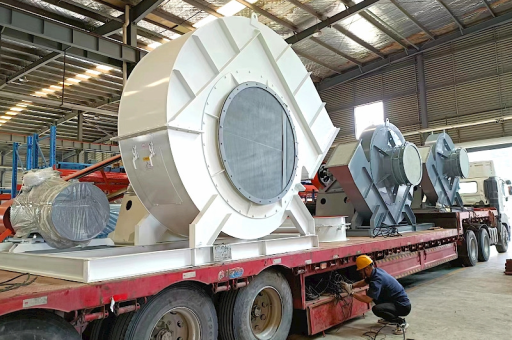
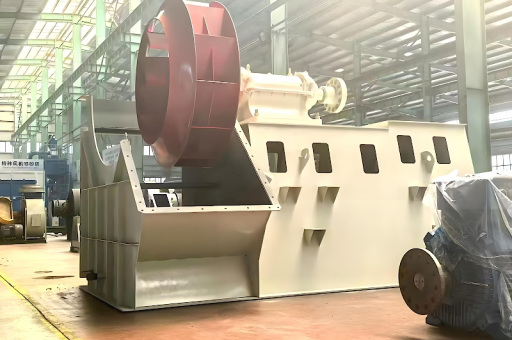
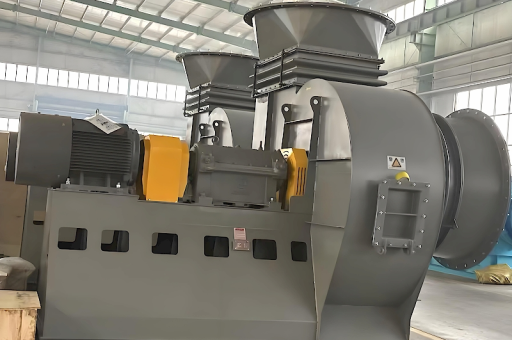
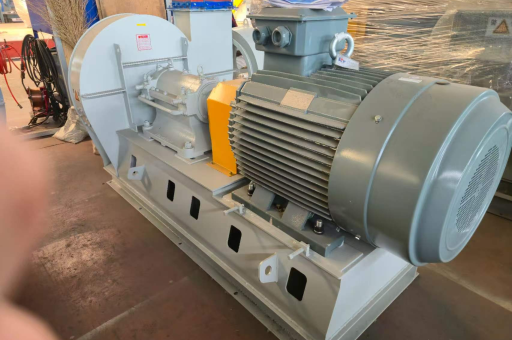
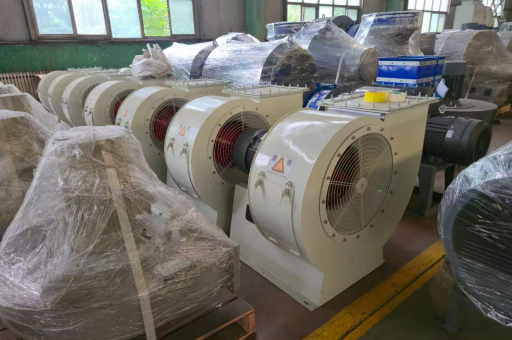
The 8-09-7.1D High-Pressure Centrifugal Fan is a specialized industrial fan engineered to deliver exceptional static pressure and airflow efficiency. Designed for demanding environments—such as pneumatic conveying, dust extraction, and combustion air supply—this fan model stands out for its robust construction, backward-curved blades, and ability to operate under continuous heavy loads. In this guide, we will explore its core technical features, applications, and maintenance tips to help you get the most out of your investment.
What Makes the 8-09-7.1D High-Pressure Centrifugal Fan Unique?
Unlike standard centrifugal fans, the 8-09-7.1D is specifically optimized for high static pressure (up to 7000 Pa) and moderate airflow volumes. Its key differentiators include:
- Backward-curved blades: Reduce energy consumption and noise while preventing dust buildup.
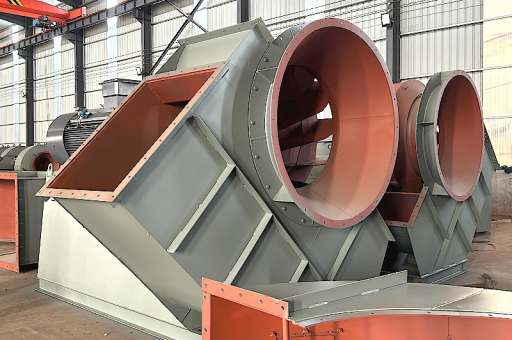
- Heavy-duty housing: Constructed from high-strength steel or optional stainless steel for corrosive environments.
- Direct-drive or belt-driven options: The "7.1D" designation indicates a specific impeller diameter (approx. 710 mm) and direct-drive configuration, ensuring minimal power loss.
- High efficiency at design point: Typically exceeds 80% total efficiency when operating near its rated airflow.
These characteristics make it ideal for systems requiring consistent high pressure without sacrificing reliability.
Technical Specifications & Working Principle
Core Parameters of the 8-09-7.1D (Typical Values):
- Airflow range: 4,000 – 12,000 m³/h
- Static pressure: 2,500 – 7,100 Pa
- Motor power: 7.5 – 30 kW (depending on configuration)
- Impeller diameter: 710 mm
- Speed: 1,800 – 2,900 RPM
- Maximum temperature: Up to 150°C (standard), 350°C (with heat-resistant coating)
Working Principle: Air enters axially through the inlet cone, is accelerated radially by the backward-curved blades, and exits through the volute casing. The curved blade profile converts kinetic energy into static pressure with minimal turbulence. This design allows the fan to maintain high pressure even when the system resistance fluctuates.
Tip: For optimal performance, ensure the inlet duct is straight for at least 2–3 diameters before the fan to avoid pre-swirl.
Key Applications Across Industries
The 8-09-7.1D fan is widely deployed in:
- Cement & mining: Pneumatic transport of powders and granules.
- Power generation: Forced draft (FD) and induced draft (ID) in small-to-medium boilers.
- Chemical processing: Ventilation of fumes and toxic gases (with corrosion-resistant coatings).
- Woodworking & furniture: High-pressure dust collection systems.
- HVAC: Pressurization of stairwells or smoke extraction in commercial buildings.
Its ability to handle particulate-laden air (with proper inlet screens) makes it a versatile workhorse.
Installation & Maintenance Best Practices
Installation Checklist:
- Mount the fan on a rigid, vibration-dampened foundation.
- Align the motor shaft with the impeller hub within 0.05 mm tolerance (for direct drive).
- Install flexible connectors to isolate vibration from ductwork.
- Verify rotation direction before full startup.
Maintenance Schedule:
- Weekly: Check for abnormal noise, vibration, or temperature.
- Monthly: Inspect impeller blades for wear or dust accumulation.
- Quarterly: Lubricate bearings (if grease type) and verify belt tension (for belt-driven variants).
- Annually: Full disassembly, clean volute, and replace seals.
Warning: Never operate the fan with unguarded inlet or outlet; high static pressure can cause suction injuries.
Common Issues and Troubleshooting
| Problem | Possible Cause | Solution |
|---|---|---|
| Low airflow | Damper closed, blocked filter, or reverse rotation | Check dampers, clean filter, swap motor phase wires |
| Excessive vibration | Impeller imbalance or loose mounting | Rebalance impeller or tighten bolts |
| Motor overheating | Overload or incorrect voltage setting | Reduce system resistance; check VFD/contactor settings |
| Noise increase | Air leak in ductwork or worn bearings | Seal ducts; replace bearings |
Pro tip: Use a thermographic camera to spot hot spots in bearings or motor windings during operation.
Frequently Asked Questions (FAQ)
Q1: Can the 8-09-7.1D fan handle high-temperature exhaust?
A: Yes, but only with heat-resistant seals and coatings. Standard units handle up to 150°C; for higher temperatures (up to 350°C), request a high-temp variant from the manufacturer.
Q2: What is the difference between the 8-09-7.1D and 8-09-8.5D?
A: The "7.1D" has a 710 mm impeller diameter, while "8.5D" uses 850 mm. The 7.1D is designed for higher pressure but lower flow relative to the larger model.
Q3: Is it suitable for corrosive gas like chlorine?
A: Only if the fan is constructed from stainless steel (SS304 or SS316) and elastomers are PTFE-coated. Standard carbon steel will corrode rapidly.
Q4: How do I select the right motor power?
A: Use the fan curve from the datasheet. A general rule: Motor power (kW) ≈ (Airflow m³/h × Static Pressure Pa) ÷ (3,600 × Fan Efficiency × Drive Efficiency). For example, 10,000 m³/h × 5,000 Pa ÷ (3,600 × 0.80 × 0.95) ≈ 18.3 kW → select 20 kW motor.
Q5: Can I operate the fan at variable speed?
A: Yes. The 8-09-7.1D is suitable for VFD control. Ensure the VFD is sized for 110% of motor current and use a sinusoidal filter to protect motor insulation.
Conclusion
The 8-09-7.1D High-Pressure Centrifugal Fan is a proven solution for industrial applications that demand reliable high static pressure and moderate airflow. By understanding its design strengths—backward-curved blades, robust construction, and adaptability—you can optimize your system for energy efficiency and longevity. Regular maintenance and proper installation are the keys to maximizing its service life.
If you are planning to integrate this fan into a new or existing system, always consult the manufacturer's performance curves and local electrical codes. With the right setup, the 8-09-7.1D will deliver consistent performance for years to come.