This article's table of contents introduction:
- General Specifications for a 75 kW (100 HP) Blower Unit
- Option 1: The Pneumatic Conveying Fan (Material Handling)
- Option 2: The Wood / Green Waste Chipper Ejector
- To give you specific advice or a quote, please clarify:
It seems you are looking for information on a 75 kW (approx. 100 HP) shredder blower. However, "shredder blower" can refer to two very different machines depending on the industry:
- Industrial Shredding (e.g. paper, document, or e-waste): A pneumatic conveyor system that uses a high-power fan to suck shredded material away from the cutting chamber and transport it to a baler or collection bin. (75 kW is very large for this, typically used in high-volume destruction plants).
- Wood Waste / Mulch Shredding (e.g. forestry, landscaping): The "blower" is the part of a chipper/shredder that ejects the processed chips or leaves into a truck or pile. (75 kW is common for mid-to-large commercial towable or PTO-driven units).
Here is a technical breakdown relevant to both applications, assuming you need the specifications for the motor/fan unit itself.
General Specifications for a 75 kW (100 HP) Blower Unit
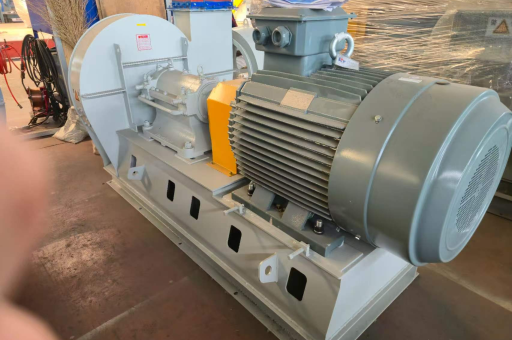
- Motor Power: 75 kW (100 HP)
- Typical Voltage: 400V-690V 3-Phase (Industrial standard) or 480V (North America).
- RPM: Usually 1500 RPM (4-pole motor) or 3000 RPM (2-pole) depending on the fan wheel type.
- Air Flow: Very roughly 30,000 to 50,000 m³/hour (depending on static pressure).
- Static Pressure: Typically 2000 - 5000 Pa (8 – 20 inches WC) for material handling.
Option 1: The Pneumatic Conveying Fan (Material Handling)
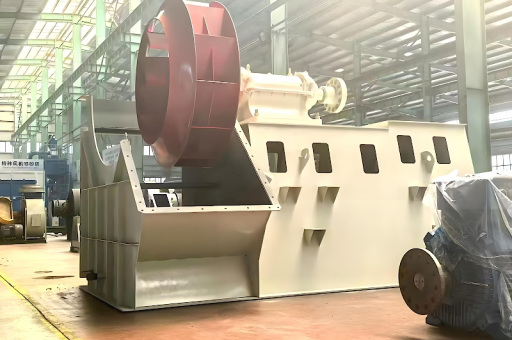
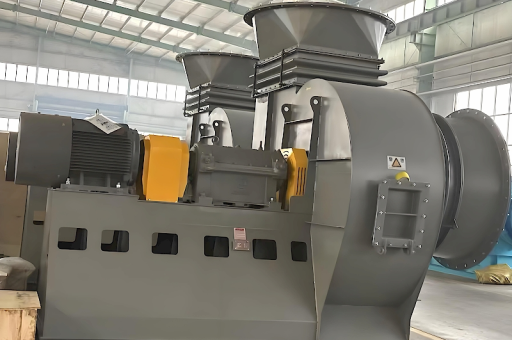
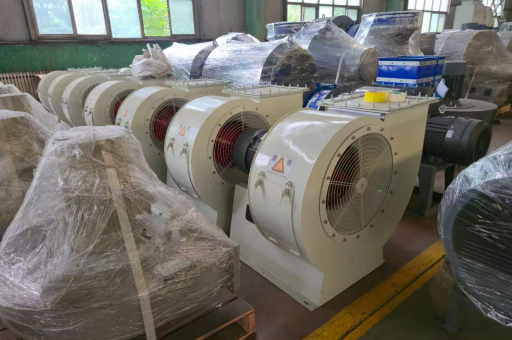
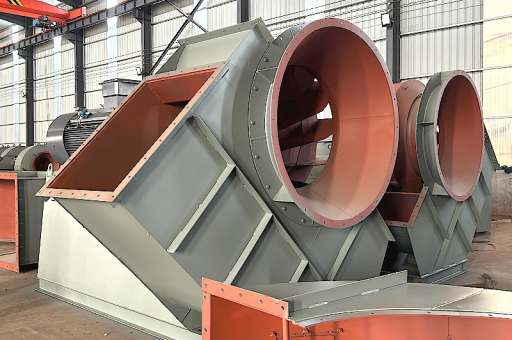
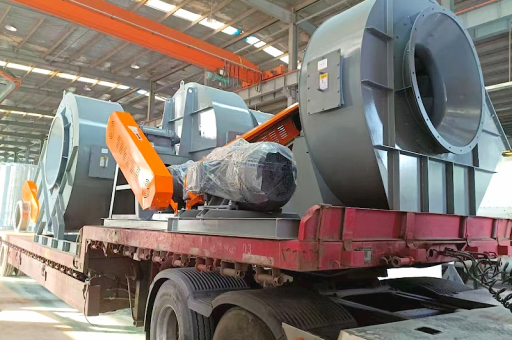
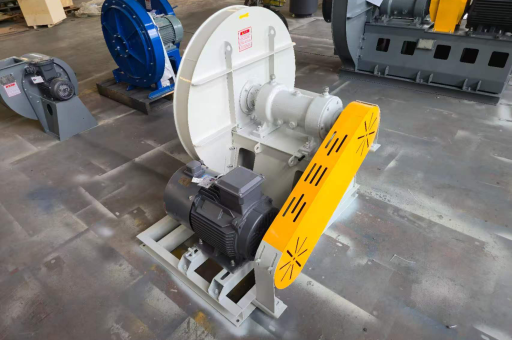
This is the most common interpretation for "shredder blower" in industrial settings. It is a heavy-duty centrifugal fan designed to move paper, plastic, or metal scrap through ducts.
- Type of Fan: Open paddle wheel (radial blade) or back-inclined wheel. Open paddle is better for heavy, abrasive material (it clogs less easily).
- Application: Sucks from the bottom of a granulator/shredder, pushes through cyclone or baler.
- Key Design Feature: Must have a stripper plate or anvil at the fan inlet to prevent stringy material from wrapping around the shaft.
- Connection: Often driven via a V-belt drive (not direct drive) to allow speed adjustment for different material densities and to isolate the motor from shock loads.
Potential Manufacturers for this type:
- Ventiltechnik (Germany)
- Air Spectrum (UK)
- KEB America / Reclaim Fans (USA)
- PRM (UK)
Option 2: The Wood / Green Waste Chipper Ejector
If this is for a diesel or PTO-driven wood shredder (e.g., a Vermeer, Morbark, or Peterson Pacific type machine), the 75 kW is likely the engine output driving the chipper disc, and the blower is a set of fixed fins or a secondary fan.
- Function: Not a separate motor; the fan is mounted on the chipper disc hub. The blades draw a high air volume to throw wood chips 10-30 meters into a truck.
- If standalone (e.g. electric blower): This is used on stationary wood waste systems to move shredded mulch.
- Key Specification: High tip speed (70-100 m/s) to prevent plugging with wet bark. Requires a heavy, balanced wheel.
To give you specific advice or a quote, please clarify:
- What material is being shredded? (Paper, plastic, tires, wood, metal turnings?)
- Where is the blower located? (After the shredder, pulling material? Or is this the blower inside the shredder?)
- What is the required hose diameter or duct size? (Typically 200mm to 400mm for a 75 kW unit).
- What is the target transport distance? (How far must the material be blown? e.g., 20m, 100m).
- New or used / specific brand? (Are you buying a spare part for a known machine, or building a system?)
Safety Note: A 75 kW fan wheel is extremely dangerous. It stores massive kinetic energy. Any system must have a locked rotor brake (reverse current braking) or a mechanical brake to stop it safely during jams. Do not run such a unit without adequate inlet guarding (conforming to ISO 13857 or local standards).