This article's table of contents introduction:
- What the Specification Means
- Typical System Configuration
- How to Select or Evaluate the Fan
- Key Design & Safety Considerations
- Manufacturer Examples (for this size)
- Checklist: If you are buying or maintaining this fan
- Summary
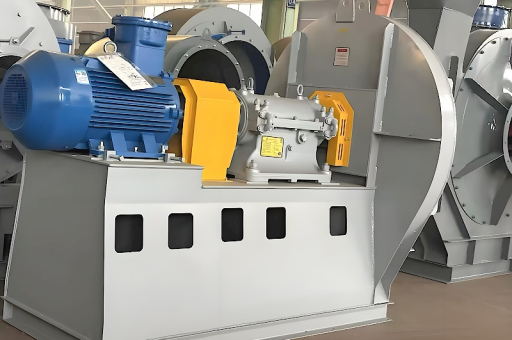
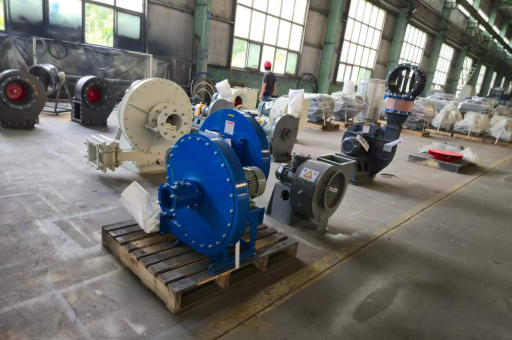
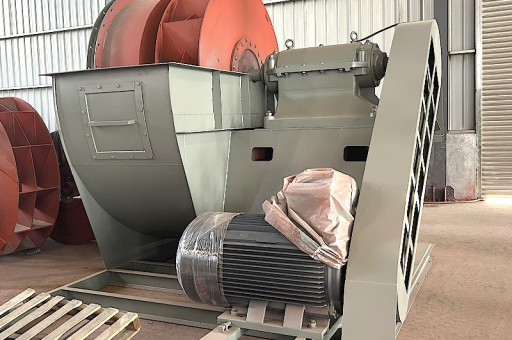
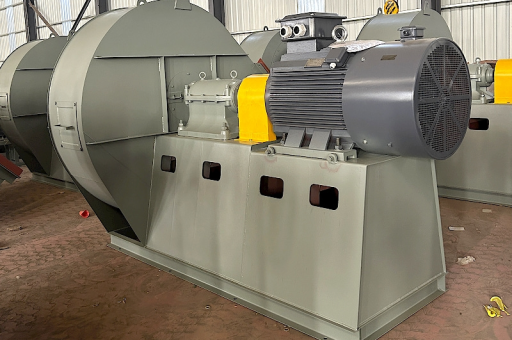
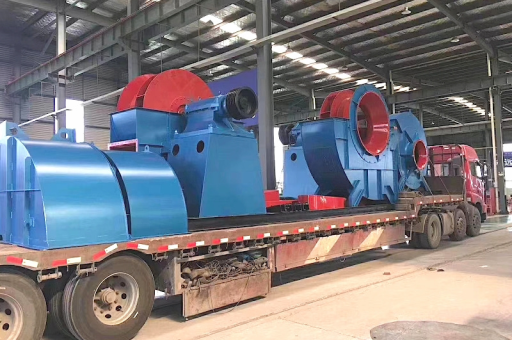
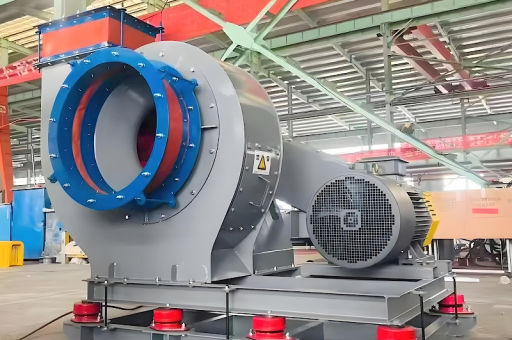
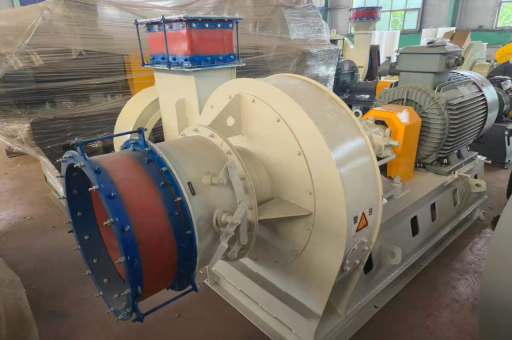
This is a specification for a large industrial exhaust fan. The "37000 m³/h" (Cubic Meters per Hour) is the volumetric flow rate, and "Dust Collector" defines its application.
Here is a detailed breakdown of what this specification means, the typical system it belongs to, and the engineering considerations for selecting such a fan.
What the Specification Means
- Flow Rate: 37,000 m³/h (approximately 21,775 CFM or Cubic Feet per Minute). This is a high-volume fan, typically used in heavy industrial settings such as woodworking, cement plants, mining, or chemical processing.
- Application: It is the exhaust fan for a Dust Collector system. This means it is installed after the dust collector (e.g., a baghouse, cartridge filter, or cyclone) to pull air through the filtration system and expel the cleaned air to the atmosphere or recirculate it.
- Key Performance Parameters (you need to know):
- Static Pressure (SP): This is the resistance the fan must overcome. For a dust collector, this is significant (typically 1,500 – 3,000 Pa or 6 – 12 in w.g. ). The higher the pressure, the more powerful the motor needed.
- Air Density: The fan's performance is rated at standard air density (1.2 kg/m³). If the air is hot or at high altitude, performance will differ.
Typical System Configuration
- Ducted Pickup Points: Hoods or vents at process equipment (grinders, saws, mixers).
- Main Duct: Connects all pickups to the Dust Collector.
- Dust Collector: The filter unit (e.g., pulse-jet baghouse, cartridge filter, cyclone).
- Exhaust Fan (This Component): Placed on the clean air side of the collector. It pulls air through the filter media.
- Exhaust Stack / Silencer: Discharge to atmosphere.
How to Select or Evaluate the Fan
You cannot choose a fan based on flow rate alone. You must match it to the system's resistance. Here is the typical process:
Determine the Required Static Pressure (SP) Calculated by adding:
- Pressure drop across the dust collector (e.g., 1,200 Pa)
- Pressure drop through the ductwork (e.g., 400 Pa)
- Pressure drop through the stack/silencer (e.g., 100 Pa)
- Total Estimated SP ≈ 1,700 Pa (7 in w.g.)
Select the Fan Type
- Centrifugal Fan (Backward Inclined / Airfoil): The most common for this application.
- Pros: High efficiency, stable performance, handles varying loads well.
- Cons: More expensive than forward curved.
- Centrifugal Fan (Radial / Paddle Wheel): Used for heavy dust loads or sticky materials.
- Pros: Very rugged, handles high pressure.
- Cons: Lower efficiency, noisier.
- High-efficiency Backward Curved: Best for energy savings at this flow rate.
Motor Power Calculation A rough estimate:
- Power (kW) = (Flow m³/s) x (Static Pressure Pa) / (Fan Efficiency x Drive Efficiency)
- Flow: 37,000 m³/h = 10.28 m³/s
- SP: 1,700 Pa
- Fan Efficiency: 75% (0.75)
- Drive Efficiency: 95% (0.95)
- Power = (10.28 x 1,700) / (0.75 x 0.95) = 24.5 kW
- Recommended Motor: 30 kW (37 kW if margin needed).
Key Design & Safety Considerations
| Parameter | Recommendation for 37,000 m³/h Dust Collector Fan |
|---|---|
| Motor | 30-37 kW, 3-phase, 380V/415V/480V |
| Speed | Typically 1,000 – 1,800 RPM (driven by pulley or VFD) |
| Drive Type | VFD (Variable Frequency Drive) is highly recommended for soft start, energy savings, and balancing. |
| Construction | Heavy-duty steel housing, corrosion/abrasion resistant if needed. |
| Inlet Box / Damper | Allows for flow control and isolation during maintenance. |
| Safety | Spark-resistant construction (for combustible dust like wood, grain, metal). Damper/Louver at inlet. Vibration switches. |
| Foundation | Requires a robust concrete or steel base to handle vibration. |
| Noise Control | Likely needs a silencer on the discharge to meet OSHA/NR-113 noise limits. |
Manufacturer Examples (for this size)
- Greenheck (e.g., BISW, BIDW series)
- New York Blower (e.g., HPR, HP series)
- Cincinnati Fan (e.g., HP series)
- ABB / Howden (for heavy industrial)
Checklist: If you are buying or maintaining this fan
- Confirm SP: Do you have the target static pressure?
- Mounting: Is it direct drive or belt drive? Belt drive allows speed changes.
- Dust Type: Is the dust combustible? If yes, you need NFPA 701 compliance (explosion venting, spark-resistant construction).
- Location: Indoors or outdoors? Weather protection needed.
- Filters: Ensure the fan is on the clean side of the collector, not the dirty side.
Summary
A 37,000 m³/h Dust Collector Exhaust Fan is a large, high-powered centrifugal fan. Its correct selection depends entirely on the system resistance (Static Pressure). You will need a 30-37 kW motor and likely a VFD for control. If handling combustible dust, strict safety codes apply.