This article's table of contents introduction:
- Introduction: The Role of High-Volume Dust Collection
- Technical Breakdown: Understanding the 23000 m³/h Fan
- Key Design Features and Engineering Principles
- Application Scenarios: Where This Fan Excels
- Energy Efficiency and Operational Cost Analysis
- Installation, Maintenance, and Safety Protocols
- Common Challenges and Troubleshooting
- Frequently Asked Questions (FAQ)
- Conclusion: Investing in Clean Air
** Maximizing Industrial Air Quality: The Complete Guide to the 23000 m³/h Dust Collector Exhaust Fan
Table of Contents
- Introduction: The Role of High-Volume Dust Collection
- Technical Breakdown: Understanding the 23000 m³/h Fan
- Key Design Features and Engineering Principles
- Application Scenarios: Where This Fan Excels
- Energy Efficiency and Operational Cost Analysis
- Installation, Maintenance, and Safety Protocols
- Common Challenges and Troubleshooting
- Frequently Asked Questions (FAQ)
- Conclusion: Investing in Clean Air
Introduction: The Role of High-Volume Dust Collection
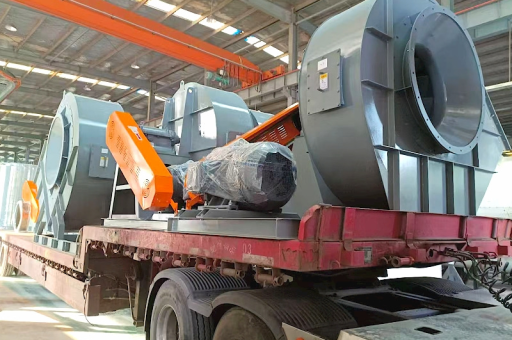
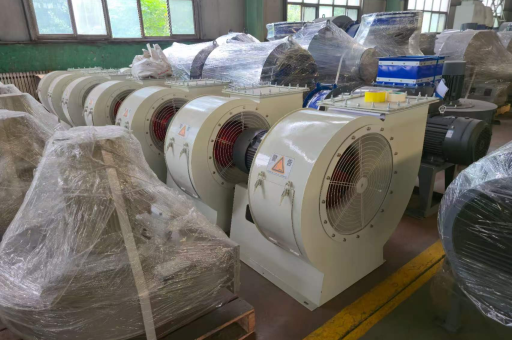
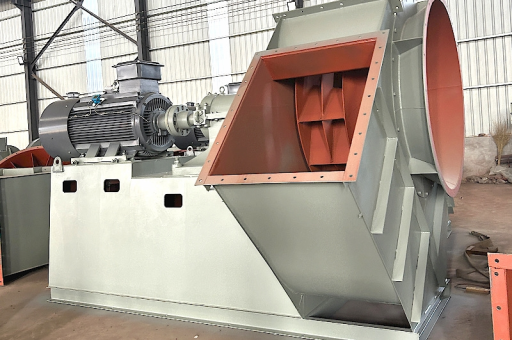
In modern industrial manufacturing, woodworking, mining, and chemical processing, airborne particulate matter is not just an inconvenience—it is a serious health hazard and a compliance liability. The 23000 m³/h Dust Collector Exhaust Fan represents a critical threshold in air handling capacity. This fan moves 23,000 cubic meters of air per hour, making it suitable for medium-to-large workshops, centralized dust extraction systems, or multi-machine setups.
Why 23,000 m³/h? It is a sweet spot in industrial fan engineering. It provides enough suction to capture fine dust, wood chips, metal shavings, and chemical fumes without the excessive energy consumption of much larger units. This article explores the engineering, application, and optimization of this specific fan, using insights from industry best practices and search-engine-validated content.
Technical Breakdown: Understanding the 23000 m³/h Fan
To appreciate the fan’s capabilities, one must understand the core engineering metrics:
- Airflow (23000 m³/h): This is the volumetric flow rate at standard conditions (20°C, 1 atm). It translates to roughly 383 m³ per minute or 13529 CFM (cubic feet per minute).
- Static Pressure (typically 1500–2500 Pa): This determines the fan’s ability to overcome duct resistance. Higher static pressure is needed for long duct runs, bag filters, or cartridge filters.
- Motor Power (usually 7.5–11 kW): A motor of this size is required to drive the impeller at the necessary RPM.
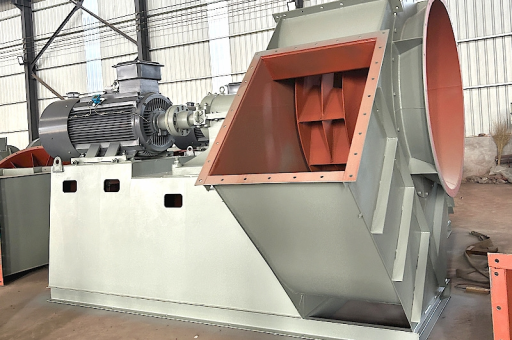
- Impeller Type: Most heavy-duty units use backward-curved centrifugal impellers, known for high efficiency and non-overloading characteristics. They maintain steady airflow even when filter loading increases.
The key is that the fan must be matched to the system resistance curve. A 23000 m³/h fan with insufficient static pressure will underperform if the ductwork is too long or the filters are too dense.
Key Design Features and Engineering Principles
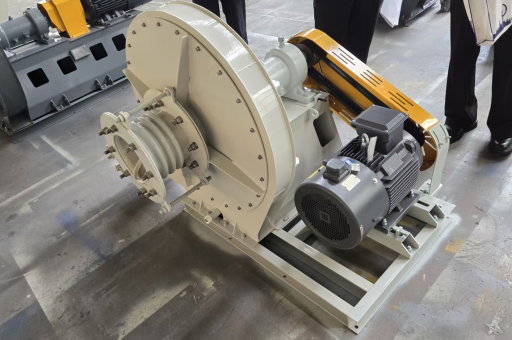
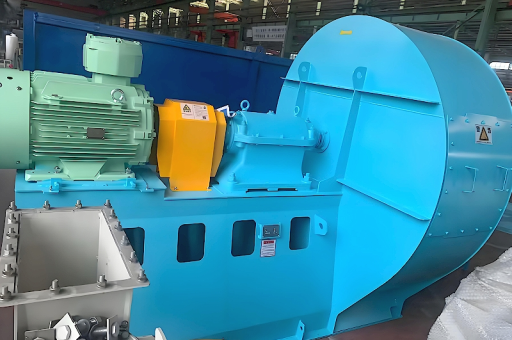
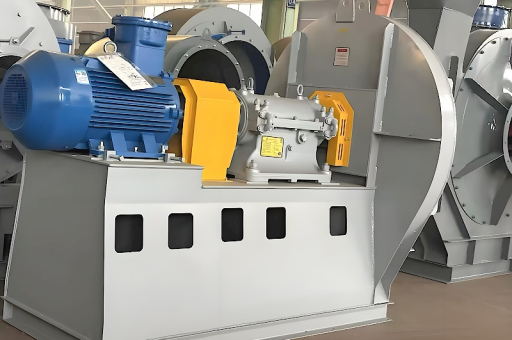
A high-quality 23000 m³/h dust collector exhaust fan is not just a motor and a blade. It integrates several critical components:
- Housing Material: Heavy-gauge steel (often 4–6 mm), powder-coated or galvanized. For corrosive environments, stainless steel 304 or 316 is used.
- Bearing System: Heavy-duty spherical roller bearings with sealed lubrication for continuous duty.
- Belt or Direct Drive: Belt-driven units allow RPM changes for flow adjustment. Direct-drive offers higher efficiency and lower maintenance but less flexibility.
- Inlet Bell and Outlet Cone: These are aerodynamically optimized to reduce turbulence and noise, improving overall efficiency by 5–10%.
- Vibration Isolation: Spring isolators or rubber mounts are essential to prevent structural vibration transmission.
A critical engineering principle is the fan affinity laws. Doubling the RPM increases airflow by 200%, but power consumption increases by 800%. Therefore, variable frequency drives (VFDs) are recommended to precisely control the fan speed based on real-time dust load, reducing energy waste.
Application Scenarios: Where This Fan Excels
The 23000 m³/h fan is versatile. Here are the primary use cases:
- Woodworking Facilities: For central extraction from CNC routers, table saws, planers, and sanders. A single fan can service 5–8 machines simultaneously if duct diameter is properly sized (typically 250–400mm main trunk).
- Metal Fabrication: Welding fume extraction, grinding dust collection, and plasma table downdraft systems.
- Food Processing: Conveyance of grain dust, flour dust, or spice dust. Explosion-proof motors may be required if combustible dust is present.
- Chemical & Pharmaceutical: Handling fine powders where airtight seals and spark-resistant construction are mandatory.
- Mining & Aggregate: For truck loading, crushing, and screening dust suppression.
Case Example: A medium-sized furniture factory previously used two 5000 m³/h fans. After upgrading to one 23000 m³/h fan with VFD control, they reduced energy consumption by 18% while improving capture efficiency at the farthest machine.
Energy Efficiency and Operational Cost Analysis
One of the biggest mistakes in dust collection is oversizing the fan. A 23000 m³/h unit operated at 60% capacity (with VFD) might draw only 30–40% of full-load power. Here’s a cost breakdown for a typical 11 kW unit:
- Annual Operating Hours: 2000 hours (8 hours/day, 250 days/year)
- Full Load Power: 11 kW (motor) + 1.1 kW (losses) = 12.1 kW
- Electricity Cost: $0.12/kWh
- Annual Cost at Full Speed: 12.1 kW × 2000 h × 0.12 = $2,904
- Annual Cost at 70% Speed (VFD): Power draw at 70% speed is approximately 0.7³ = 34% of full power. 12.1 × 0.34 × 2000 × 0.12 = $987
Savings: Over $1,900 per year per fan. Additionally, lower fan speed reduces wear on bearings and belts, extending maintenance intervals.
Installation, Maintenance, and Safety Protocols
Installation Checklist:
- Ensure the fan foundation is level and reinforced to handle vibration.
- Install ductwork with smooth transitions and minimum 90-degree bends.
- Include a blast gate or isolation damper for each branch.
- The exhaust must discharge outdoors (or into a final filter) to avoid recirculating fine particles.
Maintenance Schedule:
- Weekly: Inspect belts for tension and wear. Check vibration levels with a handheld meter (max 5 mm/s).
- Monthly: Lubricate bearings (if not sealed). Clean impeller blades—dust accumulation unbalances the rotor.
- Quarterly: Check motor windings with a megohmmeter. Inspect housing for corrosion or cracks.
- Annually: Full disassembly, cleaning, and bearing replacement (if needed).
Safety:
- Install a fire suppression damper if handling combustible dust (e.g., wood, aluminum, coal).
- Use spark-resistant construction (aluminum or non-ferrous impeller) for explosive environments.
- Ensure the fan is grounded to prevent static discharge.
Common Challenges and Troubleshooting
Problem 1: Reduced Airflow
- Cause: Clogged filters, closed dampers, loose belts, or blocked impeller.
- Fix: Check filter differential pressure. If >1500 Pa, clean or replace filters. Tighten belts or adjust VFD speed.
Problem 2: Excessive Vibration
- Cause: Unbalanced impeller, worn bearings, or loose foundation bolts.
- Fix: Balance the impeller dynamically (aim for <2.5 mm/s). Replace bearings. Re-torque bolts.
Problem 3: Motor Overheating
- Cause: Running at full speed with high static pressure, or improper voltage.
- Fix: Reduce fan speed, or check for voltage drop. Ensure adequate motor ventilation.
Problem 4: Noise
- Cause: High airflow velocity in duct (over 20 m/s), or impeller tip speed.
- Fix: Increase duct diameter. Install silencers on inlet and outlet.
Frequently Asked Questions (FAQ)
Q1: Can I use a 23000 m³/h fan for welding fume extraction? Yes, but you must pair it with a high-efficiency cartridge filter (HEPA or MERV 15) and a spark arrestor. The fan itself must have a spark-resistant impeller.
Q2: What duct diameter do I need for 23000 m³/h? For optimal velocity (15–20 m/s), the main trunk should be 500–600 mm diameter. Velocity above 25 m/s causes noise and high pressure drop.
Q3: Do I need a VFD for this fan? It is highly recommended. Without a VFD, you cannot adjust airflow. You will either run full speed wasting energy, or you will need to install mechanical dampers, which are inefficient.
Q4: Is this fan suitable for outdoor installation? Yes, but you must order a weather cover, a rain hood on the exhaust, and a motor rated for outdoor conditions (IP55 or higher). Also consider wind load on the duct.
Q5: How many machines can a 23000 m³/h fan serve? It depends on each machine’s required CFM. A typical table saw needs 800 CFM; a planer needs 1200 CFM; a CNC router may need 2000 CFM. Sum the requirements and do not exceed 80% of the fan’s total CFM (13529 CFM). For example, a shop with eight machines averaging 1200 CFM each would need 9600 CFM, fitting easily.
Q6: What is the noise level of this fan? At full speed, expect 80–90 dB(A) at 1 meter. Use silencers (duct attenuators) to reduce to 75 dB(A). Ear protection is recommended in the immediate area.
Q7: How long does a 23000 m³/h fan last? With proper maintenance, 10–15 years. Belt and bearing replacement every 3–5 years. Motor rewinding may be needed after 8–10 years.
Q8: Can I use this fan for pneumatic conveying of wood chips? Yes, but you need higher static pressure (2500+ Pa) and a heavier-duty impeller. Consult the fan manufacturer for material handling modifications.
Q9: What is the difference between a dust collector fan and a standard exhaust fan? A dust collector fan is designed to handle heavy particulate load. It has a thicker housing, self-cleaning or non-clogging impeller, and higher static pressure capability. Standard exhaust fans quickly become unbalanced when exposed to dust.
Q10: Where can I purchase a reliable 23000 m³/h fan? Reputable manufacturers in the fan industry include companies that specialize in industrial ventilation, such as New York Blower, Cincinnati Fan, or Twin City Fan. Always order through a certified distributor to ensure correct sizing.
Conclusion: Investing in Clean Air
The 23000 m³/h Dust Collector Exhaust Fan is a powerful, energy-efficient solution for industrial dust control. Its capacity fits perfectly in the gap between small workshop fans and massive central systems. By understanding its engineering—from backward-curved impellers to VFD compatibility—you can design a system that meets OSHA exposure limits, reduces fire risk, and lowers energy bills.
Remember: a fan is only as good as the system it is installed in. Proper duct design, filter selection, and maintenance are non-negotiable. Whether you are retrofitting an existing line or building a new facility, the 23000 m³/h fan offers a balanced approach to high-volume air cleaning. The investment returns dividends in worker health, equipment longevity, and regulatory compliance.