This article's table of contents introduction:
- What the Spec Means
- Critical Technical Parameters (You need to answer these)
- Approximate Engineering Sizing for an 80,000 m³/h Fan
- Common Issues with a Fan this Size
- If you are buying or specifying this fan:
- Summary
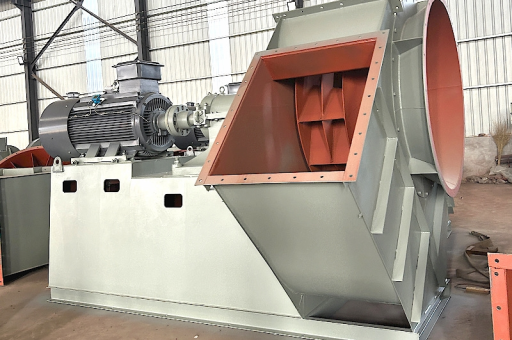
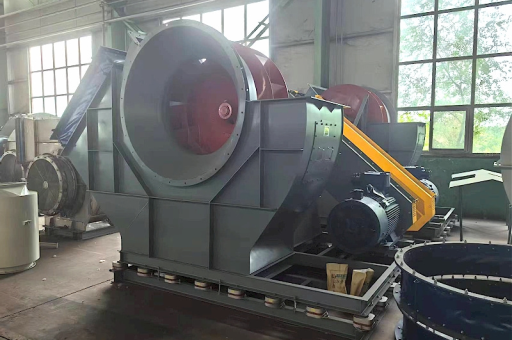
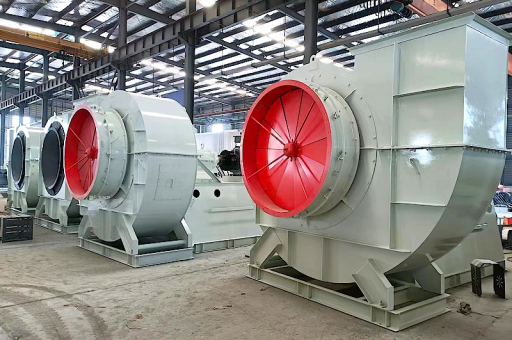
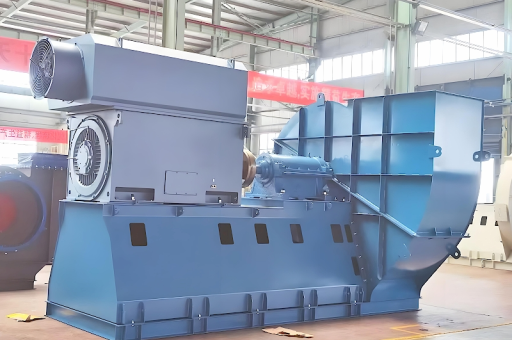
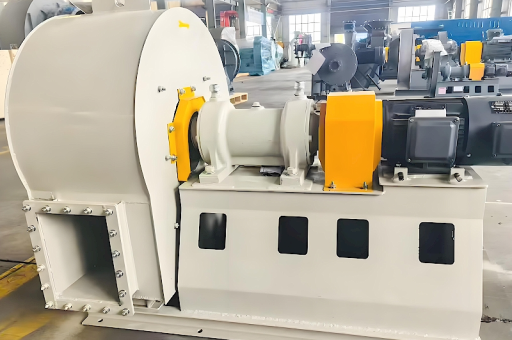
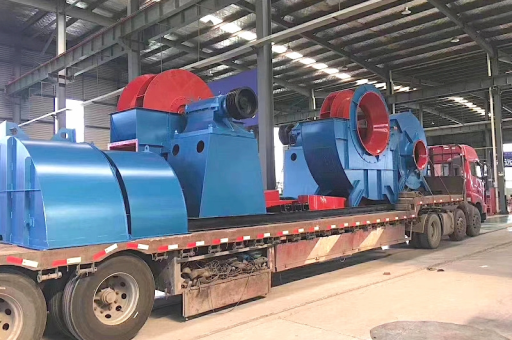
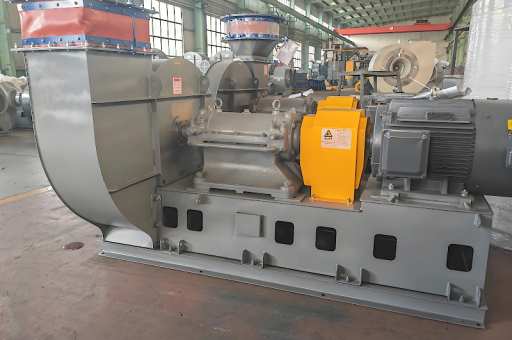
This is a specification for a very large industrial fan, typically used in heavy industries like cement, steel, mining, or large-scale woodworking.
Here is a breakdown of what that specification means, the engineering challenges, and approximate sizing details.
What the Spec Means
-
Flow Rate: 80,000 m³/h (Cubic meters per hour).
- Conversion: This is approximately 47,000 CFM (Cubic Feet per Minute).
- Context: A standard ceiling fan moves about 0.2 m³/s (720 m³/h). This fan moves the volume of an entire 3-bedroom house (approx. 250 m³) every 11 seconds.
-
Dust Collector Exhaust Fan:
- Duty: This is not an HVAC fan. It is a process fan designed to handle dirty, abrasive, or combustible air.
- Type: Typically a Centrifugal Fan (not an axial fan). Specifically, a Radial Bladed or Backward Inclined design.
- System: It sits after the dust collector (baghouse, cartridge filter, or cyclone), pulling air through the filter media. The fan is usually on the "clean side," but must be rated for the potential of dust ingress if a filter breaks.
Critical Technical Parameters (You need to answer these)
You cannot buy a fan based on flow rate alone. You must define the Total Static Pressure and Material Properties.
Static Pressure (SP) — The most important missing number
The fan must overcome the resistance of the dust collector (filter bags), ductwork, and stack.
- Example Range: A typical pulse-jet baghouse might require 1,500 to 2,500 Pa (6 to 10 in. w.g.) .
- If the pressure is higher than the fan can produce, the motor will overload or the fan will stall.
Air Density & Temperature
- Temperature: Is it ambient air (20°C) or process air (100°C+)? High temperature requires a special wheel, shaft cooling, and high-temperature bearings.
- Altitude: Higher altitude = thinner air = less mass flow for the same volume. The motor power requirement drops.
Material & Hazard Classification
- ATEX / Explosion Proof: If the dust is combustible (grain, wood, coal, aluminum), the fan must be spark-resistant (non-ferrous wheel, coated shaft).
- Abrasion: If the air contains sharp particles (e.g., from a sandblaster or metal grinding), the fan casing and impeller need wear lining (ceramic tiles or hardox steel).
Approximate Engineering Sizing for an 80,000 m³/h Fan
Here is a realistic estimate for a medium-pressure industrial fan (e.g., 2,000 Pa static pressure):
| Parameter | Value | Notes |
|---|---|---|
| Flow Rate (Q) | 80,000 m³/h (22.2 m³/s) | |
| Static Pressure (SP) | 2,000 Pa (8 in. w.g.) | Assumption - verify your system |
| Fan Speed (RPM) | 900 - 1,200 RPM | Large fan, direct or belt-driven |
| Impeller Diameter | ~1,600 mm (63 inches) | Backward inclined or radial blade |
| Motor Power (P) | ~75 kW (100 HP) | Calculation: $P = \frac{Q \times \Delta P}{\eta}$ |
| Motor Power (Max) | 90 - 110 kW (125-150 HP) | Add service factor + safety margin |
| Inlet Duct Size | ~900 mm (36 inch) diameter | Velocity ~30 m/s (standard) |
| Weight (Fan + Motor) | ~2,500 - 4,000 kg (5,500 - 9,000 lbs) | Heavy steel construction |
Power Calculation Check: $Hydraulic Power = 22.2 \text{ m³/s} \times 2000 \text{ Pa} = 44.4 \text{ kW}$ Assuming 75% fan efficiency + 95% motor efficiency + drive losses: $Shaft Power \approx 44.4 / 0.75 = 59 kW \implies Motor \approx 75 kW$ (standard size).
Common Issues with a Fan this Size
- Vibration: A 1.6m diameter impeller spinning at 1000 RPM is dangerous. Requires a rigid base, flexible connections on ducts, and a vibration switch for shutdown.
- Startup Current: A 100kW motor at startup draws high current (DOL starting). A Star-Delta starter or Variable Frequency Drive (VFD) is highly recommended.
- Ductwork Support: The duct leading to the fan inlet must be well-supported. A fan of this size can tear a poorly hung duct off its hangers due to negative pressure and vibration.
- Imbalance: Dust buildup on the impeller blades will cause severe imbalance. You need an inspection door or a wash-down system.
If you are buying or specifying this fan:
| Question for the Supplier | Why it matters |
|---|---|
| "What is the design static pressure?" | Without this, the fan is useless. |
| "Is the motor VFD-rated?" | VFDs solve dust buildup and startup issues. |
| "What is the impeller material?" (e.g., Corten, 304SS, Aluminum) | Prevents sparks or corrosion. |
| "Is it Arrangement 1 (direct drive) or Arrangement 9 (belt drive)?" | Belt drives allow speed changes; direct drives are more reliable. |
| "Does it include a shaft seal?" | Prevents air leakage, which hurts efficiency. |
Summary
An 80,000 m³/h dust collector fan is a major capital investment (likely $15,000 - $50,000 USD depending on material and motor). It is not a commodity item. Your #1 priority is to define the Pressure (Pa or inches w.g.) and the Dust Type (ATEX, Abrasive, Temperature).