This article's table of contents introduction:
- The Core Requirement: Airflow
- The Critical Missing Spec: Static Pressure (SP)
- Typical Fan Selection for 42,000 m³/h
- Key Technical Specifications to Provide
- Installation Considerations for this Size
- Summary Table (Example Quotation)
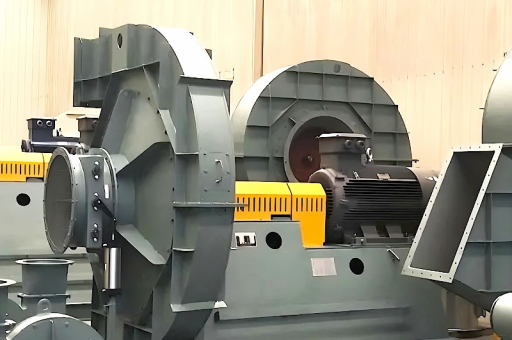
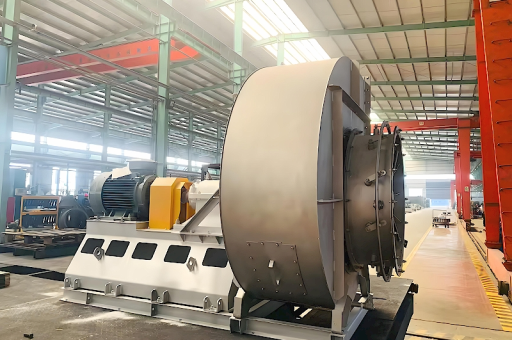
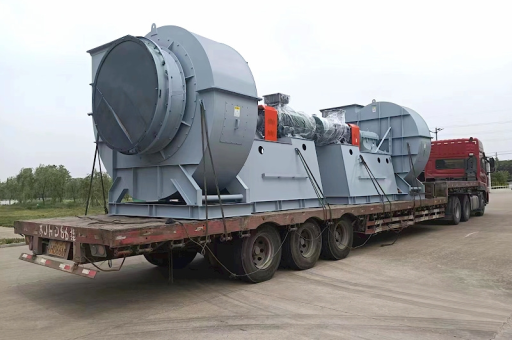
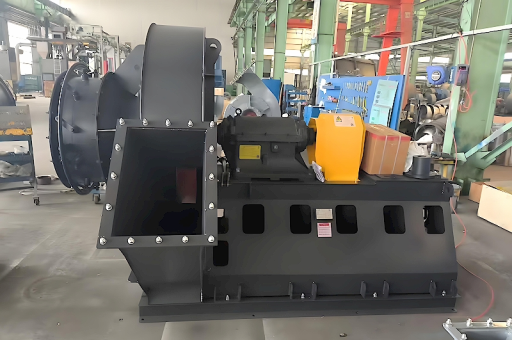
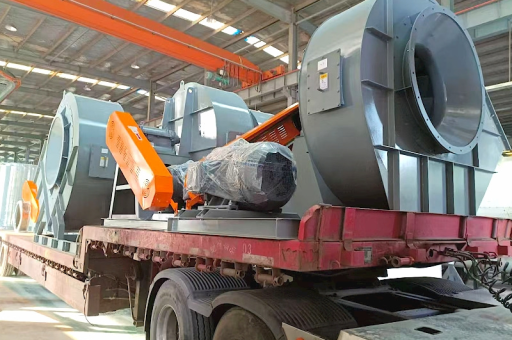
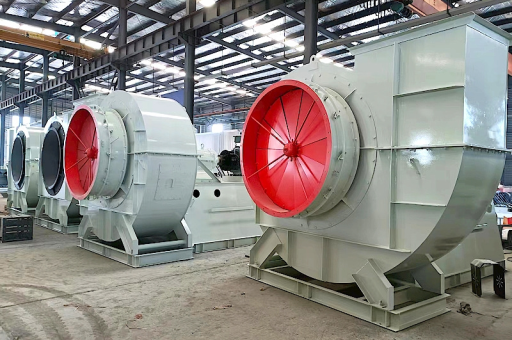
This is a specification for a large industrial exhaust fan, likely used in a dust collection system for heavy manufacturing (e.g., woodworking, cement, metal grinding, or chemical processing).
Here is a technical breakdown of what 42,000 m³/h means and the specifications you need to look for to select or quote this fan.
The Core Requirement: Airflow
- 42,000 m³/h (Cubic meters per hour) is a very high airflow.
- Conversion:
- 42,000 m³/h = 700 m³/min
- 42,000 m³/h = ~24,720 CFM (Cubic Feet per Minute) – This is the standard measurement in the US/Imperial system.
- Use Case: This is typical for a central baghouse or cartridge dust collector serving multiple production lines (e.g., a large woodworking facility with several CNC routers, saws, and sanders).
The Critical Missing Spec: Static Pressure (SP)
You cannot select a fan with just the airflow. The Static Pressure (measured in Pa, kPa, or inches w.g.) determines the motor size and fan type.
For a 42,000 m³/h dust collector fan, typical pressure ranges are:
- Low Pressure (1.5 - 3 kPa / 6" - 12" w.g.): Simple chip transport (wood chips, paper trim). Use a backward-curved or airfoil fan.
- Medium Pressure (3 - 5 kPa / 12" - 20" w.g.): Standard dust collection (sanding dust, general industrial). Use a backward-inclined fan.
- High Pressure (5 - 8+ kPa / 20" - 32" w.g.): Fine dust, long duct runs, or high-vacuum systems (laser cutting, plasma tables). Use a radial blade or high-pressure industrial fan.
You must ask: "What is the required static pressure at 42,000 m³/h?"
Typical Fan Selection for 42,000 m³/h
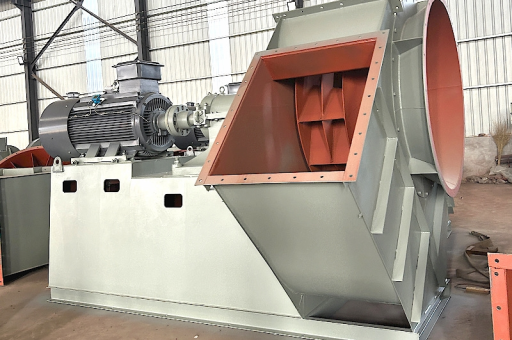
Given the size, this will almost certainly be a Centrifugal Fan (not an axial fan). The impeller diameter would likely be between 1,200 mm and 1,800 mm.
| Fan Type | Typical Use | Motor Power (Estimate) | Wheel Design |
|---|---|---|---|
| Backward Inclined (BI) | General Industrial, Wood Dust | 55 kW – 75 kW (75 - 100 HP) | Efficient, non-clogging for dust. |
| Airfoil (AF) | Low noise, clean air, high efficiency | 45 kW – 55 kW (60 - 75 HP) | Hollow blades (not suitable for sticky dust). |
| Radial Blade (RB) | High pressure, abrasive materials | 90 kW – 130 kW (125 - 175 HP) | Strong, handle sticky/pneumatic materials. |
| Inline/Centrifugal (Plenum) | Roof-mounted general ventilation | 30 kW – 45 kW (40 - 60 HP) | Lower pressure, quieter, less rugged. |
Key Technical Specifications to Provide
When ordering or quoting this fan, ensure the manufacturer provides these details:
- Airflow: 42,000 m³/h (at operating point)
- Static Pressure: Pa (e.g., 3,500 Pa)
- Motor Power: kW (e.g., 75 kW)
- Motor Speed: Most likely 1,470 RPM (4-pole) or 2,950 RPM (2-pole, for high pressure). Duct collector fans often use 4-pole for lower noise and less wear.
- Inlet & Outlet Diameter: Likely DN 800 to DN 1000 (31.5" to 40") depending on pressure.
- Construction:
- Housing: Carbon steel (painted) or stainless steel (for corrosive dust).
- Wheel: Construction steel with hardened wear plates (abrasion resistance).
- Bearings: Heavy-duty spherical roller bearings.
- Drive: Belt-driven (for speed control) or direct-drive (for reliability).
- Temperature: What is the gas temperature? (Standard is 20°C to 80°C).
Installation Considerations for this Size
- Duct size: You need a main duct of at least DN 900 (36") to keep velocities manageable.
- Foundation: A fan of this size will need a heavy concrete inertia base or a structural steel frame with vibration isolators.
- Vibration Monitoring: Highly recommended (accelerometers on the bearings).
- Variable Frequency Drive (VFD): Strongly advised for a 42,000 m³/h fan. A VFD allows for soft-start (reduces electrical strain on a 75kW motor) and fine-tuning of airflow to match the system curve.
Summary Table (Example Quotation)
| Parameter | Value (Example) | Notes |
|---|---|---|
| Model | CXBF-1200-1400 (Example) | Centrifugal Dust Fan |
| Airflow (Q) | 42,000 m³/h | At operating point |
| Static Pressure (Ps) | 4,000 Pa | Medium duty |
| Motor Power | 75 kW | 380V / 660V / 480V (specify voltage) |
| Speed | 1,470 RPM | 4-pole motor |
| Fan Type | Backward Inclined | Self-cleaning for dust |
| Drive | Belt Drive | Allows speed change via pulley |
| Weight | Approx. 2,500 kg | Fan only |
Bottom line: You have the airflow (42,000 m³/h) and the application (Dust Collector). Now you must define the static pressure to get a meaningful motor and fan price. If you guess too low on pressure, the motor will burn out. If you guess too high, you waste energy and money.