This article's table of contents introduction:
- Introduction: What Is a 44000 m³/h Dust Collector Exhaust Fan?
- Key Specifications and Engineering Principles
- Why Choose 44000 m³/h Airflow for Industrial Dust Collection?
- Common Applications Across Industries
- Selection Criteria: Motor, Impeller, and Housing Materials
- Installation, Maintenance, and Safety Best Practices
- Frequently Asked Questions (FAQ)
- Conclusion
** The Ultimate Guide to 44000 m³/h Dust Collector Exhaust Fan: Performance, Selection, and Industry Applications
Table of Contents
- Introduction: What Is a 44000 m³/h Dust Collector Exhaust Fan?
- Key Specifications and Engineering Principles
- Why Choose 44000 m³/h Airflow for Industrial Dust Collection?
- Common Applications Across Industries
- Selection Criteria: Motor, Impeller, and Housing Materials
- Installation, Maintenance, and Safety Best Practices
- Frequently Asked Questions (FAQ)
- Conclusion
Introduction: What Is a 44000 m³/h Dust Collector Exhaust Fan?
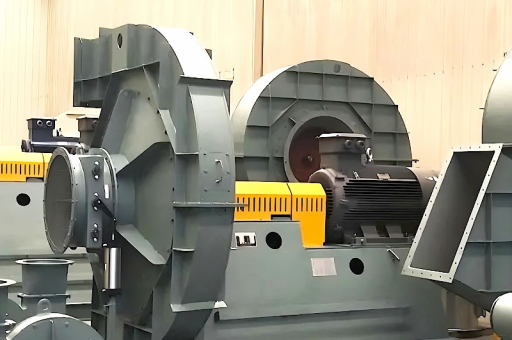
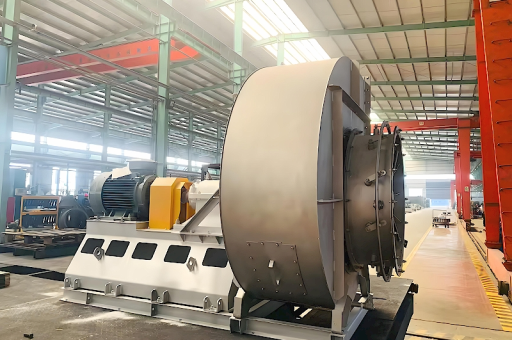
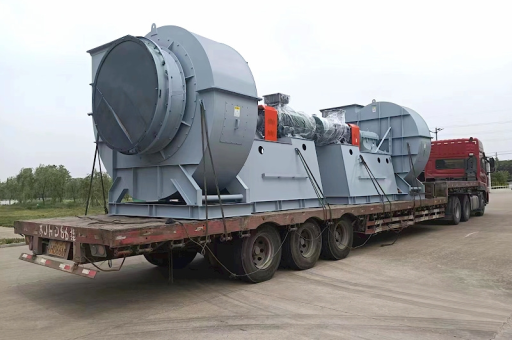
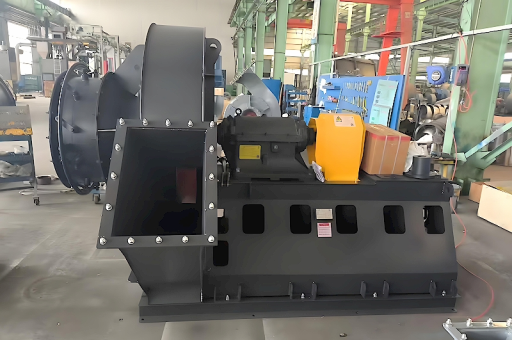
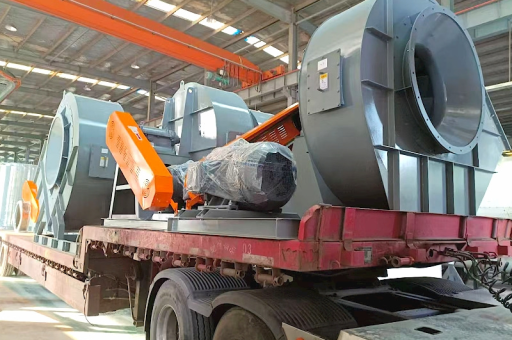
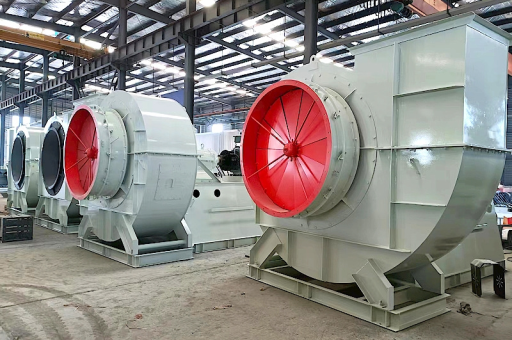
A 44000 m³/h dust collector exhaust fan is a high-capacity industrial ventilation device designed to extract dust, fumes, and particulate matter from manufacturing environments at a volumetric flow rate of 44,000 cubic meters per hour. This class of fan is typically employed in heavy industries such as woodworking, metal fabrication, cement processing, chemical plants, and grain handling facilities.
Unlike standard HVAC fans, a dust collector exhaust fan must handle abrasive, sticky, or explosive dust loads. The 44000 m³/h airflow rating ensures that large volumes of contaminated air are moved efficiently through ductwork, cyclone separators, baghouses, or cartridge filters—maintaining safe air quality and compliance with occupational exposure limits.
This guide compiles information from leading engineering resources, manufacturer datasheets, and field application reports to deliver a comprehensive reference for engineers, plant managers, and procurement specialists.
Key Specifications and Engineering Principles
The performance of a 44000 m³/h dust collector exhaust fan is defined by several critical parameters:
- Flow Rate (Q): 44,000 m³/h (approx. 25,900 CFM)
- Static Pressure: Typically ranges from 1,500 Pa to 3,500 Pa depending on duct resistance and filter loading
- Power Rating: Commonly 30 kW to 55 kW, driven by a three-phase induction motor
- Impeller Type: Backward-curved, radial, or paddle-blade designs are standard for dust handling
- Speed: Usually 1,450 RPM to 2,950 RPM (direct drive or belt-driven)
Engineering Principle: The fan operates based on the affinity laws—flow rate is proportional to speed, pressure to speed squared, and power to speed cubed. For a fixed system, a 44000 m³/h fan at 1,450 RPM delivers higher static pressure than the same fan at lower RPM.
Material Compatibility:
- Housing: Carbon steel (standard), stainless steel (corrosive dust), or abrasion-resistant lined steel
- Impeller: High-strength steel with wear-resistant coating or hardened alloy
Noise Level: Without silencers, sound pressure levels can reach 85–95 dB(A). Acoustic enclosures or dampeners are recommended for indoor installations.
Why Choose 44000 m³/h Airflow for Industrial Dust Collection?
The 44,000 m³/h capacity is not arbitrary. It aligns with common demand patterns in medium-to-large scale facilities:
- Duct Network: A typical trunk duct of 800–1000 mm diameter can handle this flow with acceptable velocity (18–22 m/s) to prevent particle settling.
- Filter Area: For a baghouse with a 1.2:1 air-to-cloth ratio, a 44000 m³/h fan requires roughly 36,667 m² of filter media—a standard configuration for many modular collector units.
- Capture Velocity: At source hoods, this airflow ensures capture velocities of 0.5–1.0 m/s for fine dust, meeting OSHA and EU directives.
Compared to smaller units (e.g., 10000 m³/h), the 44000 m³/h fan reduces the number of fan modules, simplifies duct layout, and offers better energy efficiency per unit of filtered air.
Common Applications Across Industries
Woodworking and Furniture Manufacturing
- Captures sawdust, shavings, and sanding dust from CNC routers, planers, and edge banders.
- Requires spark detection and suppression systems due to combustible wood dust.
Metal Fabrication and Welding
- Extracts welding fume, grinding dust, and plasma cutting smoke.
- Often paired with cartridge collectors with nanofiber filter media.
Cement and Mining
- Handles high-concentration silica and limestone dust.
- Fan housing must be abrasion-resistant; impellers are often replaceable.
Chemical and Pharmaceutical
- Moves toxic or explosive dusts (e.g., active pharmaceutical ingredients, sulfur).
- Requires explosion-proof motors, ATEX certification, and spark-resistant construction.
Grain and Feed Milling
- Controls grain dust which is highly explosive.
- NFPA 61 compliance dictates that the fan must be located after the filter (clean side) or equipped with explosion isolation dampers.
Selection Criteria: Motor, Impeller, and Housing Materials
Motor Selection
- Type: IEC or NEMA standard, TEFC (Totally Enclosed Fan Cooled) preferred
- Voltage: 380V/415V/690V 3-phase, 50/60 Hz
- Protection Class: IP55 minimum; IP66 in washdown environments
- Speed Control: VFD (Variable Frequency Drive) is recommended for modulating airflow during partial load
Impeller Design
- Backward-curved: High efficiency, lower noise, moderate dust handling
- Radial (paddle): Best for heavy dust loads; easier to clean but lower efficiency
- Material: 16MnCr5 steel or AISI 304/316 stainless steel for corrosion resistance
Housing and Coatings
- Standard: 3–6 mm carbon steel plate
- Heavy-duty: 8–10 mm with internal wear plates
- Coating: Epoxy or polyurethane for chemical resistance; galvanized for moisture
Bearing and Shaft
- Heavy-duty spherical roller bearings with regreaseable housings
- Shaft diameter: Minimum 60 mm for 55 kW motors to avoid deflection
Installation, Maintenance, and Safety Best Practices
Installation Checklist
- Ensure foundation or support frame can withstand dynamic load (typically 1.5x fan weight)
- Install flexible connectors at inlet and outlet to isolate vibration
- Provide access doors or panels for impeller inspection
- Use explosion-proof electrical components if dust class is Group D or Group G
Maintenance Schedule
- Weekly: Check belt tension (if belt-driven), listen for unusual noise, measure motor current
- Monthly: Inspect impeller for wear or material buildup; clean housing interior
- Quarterly: Lubricate bearings; verify vibration levels (target < 5 mm/s RMS)
- Annually: Replace filters, balance impeller, test safety devices (e.g., pressure switches, spark detectors)
Safety Measures
- Install a pressure differential gauge across the filter to prevent fan operation in excessive backpressure—can overheat motor or cause impeller stall.
- Use rupture discs or explosion vents on the fan housing if handling combustible dust.
- Adhere to NFPA 68 (explosion venting) and NFPA 69 (prevention systems) standards.
Frequently Asked Questions (FAQ)
Q1: What is the maximum static pressure a 44000 m³/h dust collector exhaust fan can achieve? A: It depends on the impeller design. A backward-curved fan typically generates 2,500–3,500 Pa, while a radial fan can exceed 4,000 Pa. Confirm with the manufacturer’s performance curve for your specific system.
Q2: Can I use a VFD to reduce airflow to 22000 m³/h? A: Yes, but you must check the minimum speed where the fan still generates enough pressure to keep dust entrained (usually > 15 m/s in duct). Operating below 50% speed may cause particle settling in horizontal runs.
Q3: How do I calculate the motor power required for this fan? A: Use the formula: Power (kW) = (Flow m³/s × Pressure Pa) / (Fan Efficiency × 1000). For 44000 m³/h (12.22 m³/s) at 3,000 Pa with 75% efficiency: Power = (12.22 × 3000) / (0.75 × 1000) = 48.9 kW. Add 10% safety margin → 55 kW motor.
Q4: Is a 44000 m³/h fan suitable for explosive dust? A: Yes, if the fan is ATEX or IECEx certified. Look for marking like II 2G Ex h IIC T4 Gb. Also, ensure the impeller is spark-resistant (non-ferrous material or coated).
Q5: How often should I replace the impeller? A: Impeller lifespan varies widely. For abrasive dust (e.g., cement), replace every 2–3 years. For clean wood dust, 5–7 years is typical. Always monitor thickness and imbalance.
Conclusion
The 44000 m³/h dust collector exhaust fan is a robust workhorse in industrial ventilation. Proper selection involves matching flow and pressure to duct and filter design, choosing materials resistant to wear and corrosion, and integrating safety features for combustible dust compliance.
By following installation best practices and a proactive maintenance schedule—including regular inspections, vibration monitoring, and lubrication—this fan can deliver reliable performance for a decade or longer.
Final Recommendation: Always request a certified performance curve from the manufacturer and conduct a system design review with a licensed mechanical engineer before procurement. For any technical inquiries regarding your specific dust load, consult the fan supplier’s application engineering team.