This article's table of contents introduction:
- The Core Function
- Why it's NOT a Standard Centrifugal Fan
- Key Design & Material Requirements
- Problems You Will Face (And How to Fix Them)
- Common Fan Types
- Selection Guide (When Ordering)
- Summary
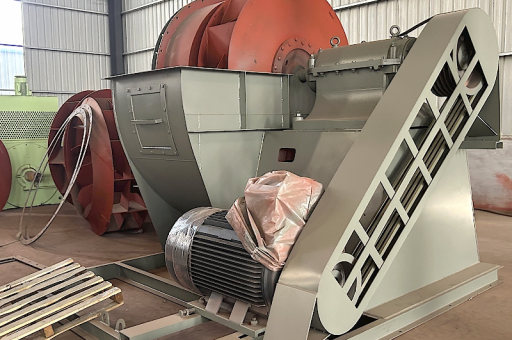
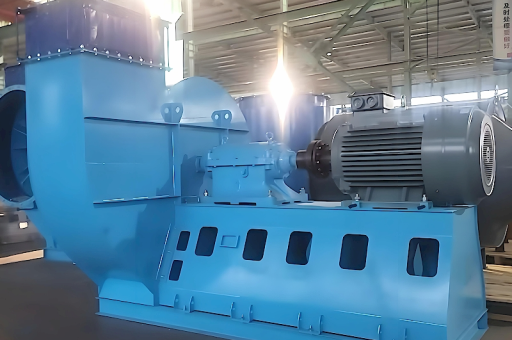
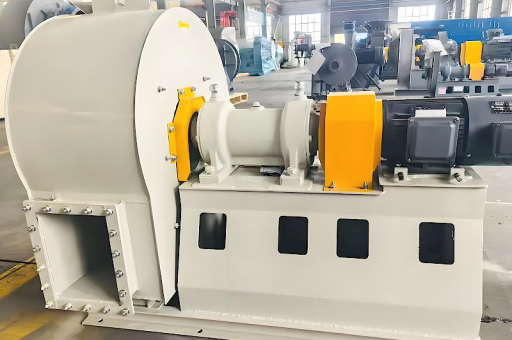
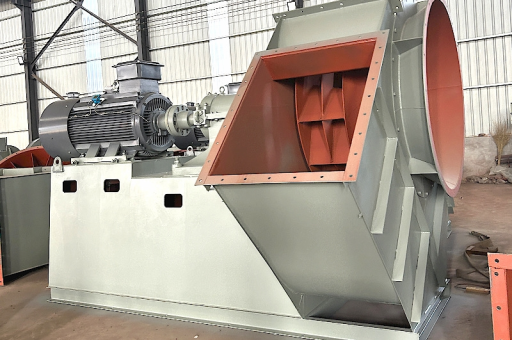
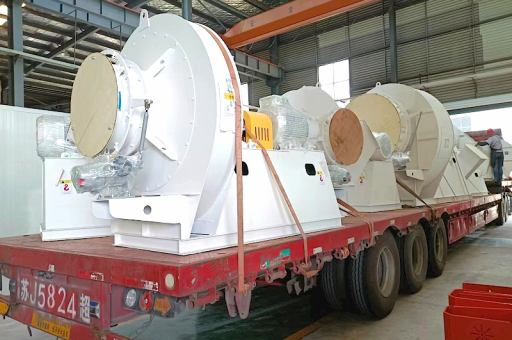
"Pyrolysis Gas Fan" is a critical piece of equipment in waste-to-energy and chemical recycling plants (such as those processing tires, plastic, biomass, or oil sludge).
It is specifically designed to handle the hot, corrosive, and condensable gases produced during the pyrolysis process (thermal decomposition in an oxygen-free environment).
Here is a comprehensive breakdown of what it is, its function, and the key design challenges.
The Core Function
The primary functions of a pyrolysis gas fan are:
- To extract and transfer pyrolysis gases from the reactor to the condensing system or gas treatment units.
- Maintain a slight negative pressure (vacuum) inside the reactor to prevent oxygen from entering (which would cause an explosion) and to facilitate the release of gas.
- To overcome system resistance (pressure drop) caused by pipes, condensers, scrubbers, and heat exchangers.
Why it's NOT a Standard Centrifugal Fan
Standard industrial fans fail quickly in this application. Pyrolysis gas is a highly unpleasant mix:
- Hot: Gas enters the fan typically at 150°C to 350°C (300°F to 660°F). Standard fans are not rated for this.
- Corrosive: The gas contains sulfuric acid (from sulfur in tires), hydrochloric acid (from PVC plastic), and organic acids.
- Condensable: Heavier hydrocarbons (wax, tar, oil mist) will condense on the fan blades if the temperature drops, causing imbalance, vibration, and blockage.
- Explosive: The gas contains hydrogen, methane, carbon monoxide, and volatile organic compounds (VOCs). Any spark from the fan can cause a catastrophic explosion.
Key Design & Material Requirements
To survive, a pyrolysis gas fan must be specially engineered:
| Feature | Requirement | Reason |
|---|---|---|
| Material | Stainless Steel (SS304, SS316, or duplex) or High-Nickel Alloy (Hastelloy). | Corrosion resistance against acid gases. |
| Impeller Design | Radial or Paddle-blade design (not backward-curved). | Reduces the build-up of sticky tar/oil deposits. Open impellers are common. |
| Shaft Seal | Mechanical seal (with pressurized nitrogen barrier) or High-temperature packing. | Prevents toxic/explosive gas from leaking into the atmosphere. |
| Motor Rating | Explosion-proof (Ex-d or Ex-e) motor, IP56 or higher. | Prevents ignition of explosive gas. |
| Drive Type | V-belt drive or Variable Frequency Drive (VFD). | Allows speed control to match gas production rates. |
| Treatment | Optional but common: Water spray or steam injection at the fan inlet. | To cool the gas and dilute deposits, reducing tar accumulation on blades. |
Problems You Will Face (And How to Fix Them)
Even with a good fan, operational issues are common:
- Tar Accumulation: The #1 problem. As the gas cools, tar sticks to the impeller.
- Solution: Use a VFD to run the fan periodically at full speed to "sling" off deposits, or install a water spray system just before the fan.
- Burned Bearings: High temperature from the shaft conducts heat to the bearings.
- Solution: Use extended bearing housings, heat slingers, and external air or water cooling.
- Shaft Shutting Down (Seal Failure): Leakage of toxic gas.
- Solution: Use a double mechanical seal with a nitrogen purge (the most reliable method).
- Vibration: From imbalance due to deposits or thermal distortion.
- Solution: Install vibration sensors with auto-shutdown to protect the fan and the plant.
Common Fan Types
While the centrifugal (radial) fan is most common, the specific type depends on the plant's condition:
- Inline Centrifugal Fan: Most common. Efficient for high-pressure applications (need to push gas through the condenser train).
- Roots Blower: Used for low-pressure, high-volume transport (less common, very noisy, but good for very low-vacuum systems).
- Side Channel Blower: Rare in pyrolysis due to high temperature and tar issues.
Selection Guide (When Ordering)
If you need to purchase a pyrolysis gas fan, provide the manufacturer with THIS data (not just "model A"):
- Gas Temperature (Inlet): °C (e.g., 250°C)
- Gas Composition: (e.g., "From tire pyrolysis - includes H2, CH4, CO, H2S, SO2")
- Volume Flow: m³/hr (at actual inlet conditions)
- Pressure Difference (ΔP): kPa (e.g., 5-15 kPa typical)
- Required Inlet Pressure: (Gauge - usually -0.5 kPa to -2 kPa)
- Dust/Tar Content: (Estimate in mg/Nm³)
- Corrosive Elements: (Specifically: Sulfur? Chlorine? )
Summary
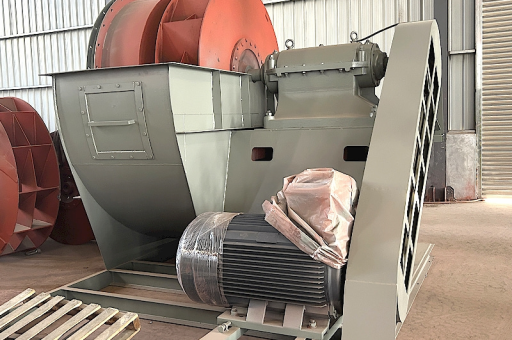
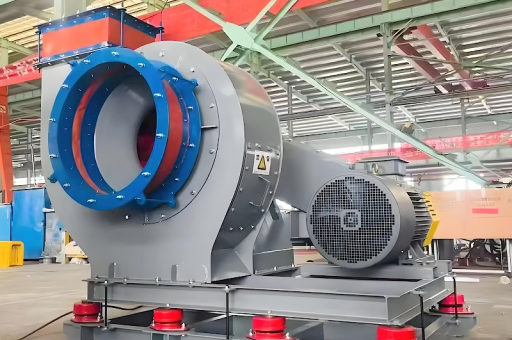
A pyrolysis gas fan is a high-temperature, explosion-proof, corrosion-resistant centrifugal fan with an open impeller to handle dirty, sticky gas. Its most critical features are the mechanical seal (for safety) and the design of the impeller (to minimize tar build-up).
Pro Tip: If your budget is tight, you can use a high-temperature induced draft (ID) fan from a boiler system (e.g., for coal plants), but you must add a pre-cyclone to remove heavy tar before the fan, and the material must be changed to SS316 or higher if the feedstock contains chlorine (PVC).