This article's table of contents introduction:
- The Core Problem: Why Chlorine is So Destructive
- Critical Material Selection (The "Recipe" for Success)
- Design & Construction Features
- Key Selection Criteria (Ask These Questions)
- Common Applications & Fan Types
- Risks & Warning Signs
- Maintenance Best Practices
- Conclusion: How to Specify a Chlorine Fan
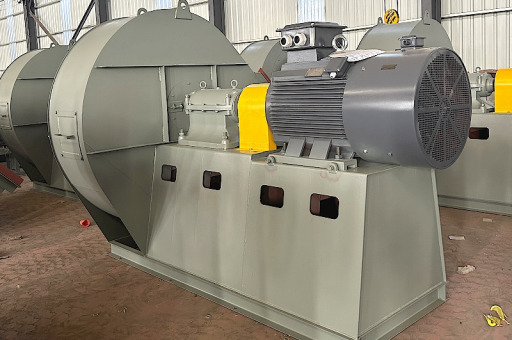
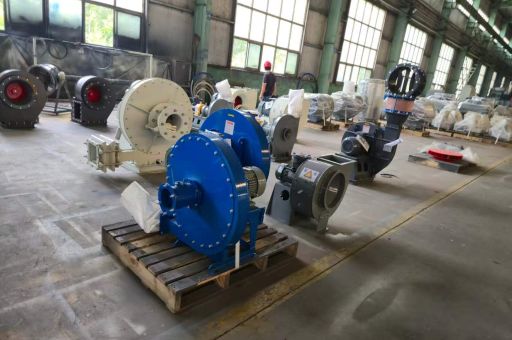
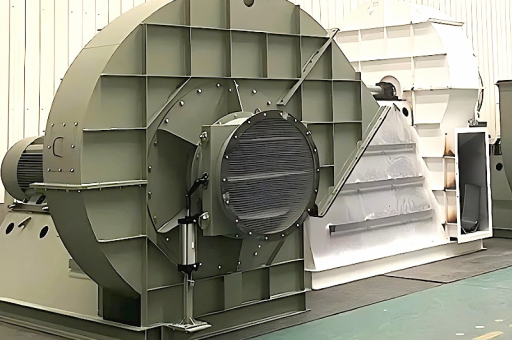
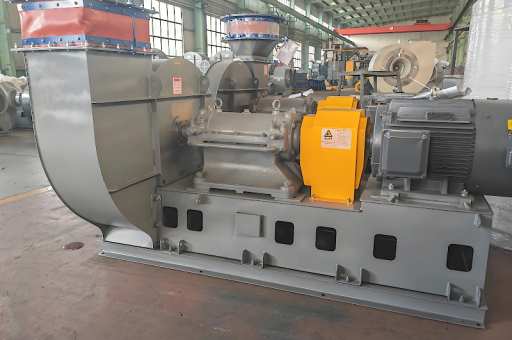
Here is a comprehensive guide to Chlorine Corrosion Resistant Fans, covering the unique challenges of handling chlorine gas and the specific materials and designs required.
The Core Problem: Why Chlorine is So Destructive
Chlorine is highly oxidizing and, critically, it forms hydrochloric acid (HCl) and hypochlorous acid (HOCl) when it comes into contact with moisture (even humidity). This creates a "chloride stress corrosion cracking" nightmare for standard metals like stainless steel (even 304 and 316).
Key Failure Modes:
- General Corrosion: Rapid dissolution of unprotected metals.
- Pitting: Localized deep holes in passive metals.
- Stress Corrosion Cracking (SCC): Staining and catastrophic failure, especially in austenitic stainless steels.
- Hygroscopic Deposits: Chlorine salts can form on fan surfaces, drawing in moisture and creating a perpetually corrosive film.
Critical Material Selection (The "Recipe" for Success)
There is no "one-size-fits-all" material. The choice depends on temperature and moisture content.
| Material Grade | Max Temp (Dry) | Max Temp (Wet/Moist) | Key Characteristics | Typical Use Case |
|---|---|---|---|---|
| FRP (Fiberglass Reinforced Plastic) | 200°F (93°C) | 180°F (82°C) | Excellent chemical resistance, lighter, lower cost. Requires a corrosion barrier (vinyl ester resin). | Dilute chlorine applications, scrubber exhaust, low to medium temp. |
| PVC / CPVC | 150°F (65°C) | 140°F (60°C) | Excellent for wet chlorine, poor for dry. | Low temperature wet chlorine, fume hoods. |
| PVDF (Kynar®) | 280°F (138°C) | 250°F (121°C) | Highest chemical purity, excellent resistance to both wet & dry. | High temperature pure chlorine, semiconductor fabs. |
| Hastelloy C-276 | 2000°F (1093°C) | Very High | Nickel-based alloy. Resistant to pitting & SCC. EXPENSIVE. | High temperature, high pressure, or where plastic is not possible (e.g., thermal hazard). |
| Monel 400 | 800°F (427°C) | 600°F (316°C) | Good for dry chlorine; FAILS catastrophically in moist chlorine. | Never use in wet chlorine. Specific dry gas applications. |
| Alloy 20 (Carpenter 20) | 1000°F (538°C) | 400°F (204°C) | Good for sulfuric/chlorine mixtures. | Chemical processing with mixed acids. |
The Golden Rule: NEVER use 304 or 316 Stainless Steel for chlorine service (even dry). Dry chlorine can react violently with these alloys.
Design & Construction Features
-
Impeller Design:
- Open or Semi-Open: Easier to clean and less prone to chloride buildup between blades.
- Backward Curved: More efficient and less prone to loading with particulate.
- Solid Plastic vs. Welded Metal: Solid plastic (machined from billet or molded) avoids weld lines that are weak points for chemical attack.
-
Housing:
- Drain Points: Essential to prevent liquid pooling (especially acid).
- Thick Wall Thickness: Allow for corrosion allowance.
- Lined Metal: Sometimes a steel housing is lined with PVDF or PTFE for pressure retention with chemical resistance.
-
Shaft Protection:
- Shaft Sleeves: The shaft is often steel (for strength), but completely isolated by a thick plastic sleeve (FRP or PVDF).
- Sealing: Double mechanical seals or magnetic drive to prevent chlorine gas from escaping along the shaft.
-
Motor:
- TEFC (Totally Enclosed Fan Cooled): Standard, but must be sealed from corrosive atmosphere.
- Purge/Vent: For chlorine, a TEAO (Totally Enclosed Air Over) or a Chem Duty motor with a corrosion-resistant paint (e.g., epoxy) is common.
- Backplate Isolation: A solid splash guard between the fan housing and the motor prevents corrosive mist from reaching the motor bearings.
-
Fasteners:
- All bolts, nuts, and washers must be Hastelloy C-276 or Titanium. Never use galvanized steel or standard stainless steel.
Key Selection Criteria (Ask These Questions)
- What is the chlorine concentration? (ppm or %)
- Is the chlorine dry or wet? (Dewpoint temperature / relative humidity).
- What is the gas temperature? (Operating and peak).
- Is there any moisture carryover? (Droplets from scrubbers)
- Any other chemicals present? (H2S, SO2, HCl, NaCl)
Common Applications & Fan Types
| Application | Recommended Fan Material | Fan Type |
|---|---|---|
| Chlorine Scrubber Exhaust | FRP (Vinyl Ester) | Centrifugal (Radial or Backward Inclined) |
| Bleach Plant Ventilation | FRP or PVDF | Axial (Tubeaxial) for general ventilation; Centrifugal for ducted systems. |
| Electrolysis Cell Room | FRP or PVDF | Centrifugal, explosion-proof motor (H2 gas may be present). |
| Water Treatment (Chlorine Gas Feed) | PVDF or Hastelloy C-276 | Centrifugal, low volume, high static pressure. |
| Semiconductor (Etch/Deposition) | PVDF or PFA (full fluoropolymer) | High purity centrifugal; magnetic drive. |
Risks & Warning Signs
- Fire/Explosion: Dry chlorine can react with oil, grease, or organic matter in the fan violently. NEVER use Teflon tape or lubricants near chlorine.
- Wet/Dry Junction: The interface where dry chlorine meets moisture is the most corrosive zone.
- UV Degradation (FRP): If outdoors, FRP must have a UV-resistant gel coat or paint.
- Static Electric Discharge: FRP is non-conductive. For explosion-proof (Class I, Div 1), the fan must have conductive fillers (carbon black) or be metal.
Maintenance Best Practices
- Visual Inspection (Monthly): Look for pitting, discoloration, blisters (in FRP).
- Vibration Analysis: Corrosion changes balance.
- Thickness Testing (Annually): On FRP or metal housings (ultrasonic).
- Drain Port Cleaning: Ensure drains aren't clogged with salt deposits.
- Seal Flush System: Verify the liquid flush to the mechanical seal is flowing.
Conclusion: How to Specify a Chlorine Fan
"I need a FRP centrifugal fan with a vinyl ester corrosion barrier, an open backward-curved impeller, a TEFC chemical duty motor with epoxy paint, all external fasteners in Hastelloy C-276, and a dual mechanical seal with a flush plan. The fan must be capable of handling wet chlorine gas at 150°F with a 30% concentration."
Avoid: 304/316 stainless steel, galvanized steel, aluminum. Use: FRP (Vinyl Ester), PVDF (Kynar), Hastelloy C-276, Monel (dry only).