This article's table of contents introduction:
- Introduction: What Is a 160kW Backward-Curved Centrifugal Fan?
- The Engineering Principle: Why Backward-Curved Blades Matter
- Technical Specifications and Performance Metrics
- Key Advantages of a 160kW Backward-Curved Centrifugal Fan
- Common Industrial Applications
- Installation, Maintenance, and Safety Considerations
- Comparison with Other Fan Types
- Frequently Asked Questions (FAQ)
- Conclusion: Why This Fan is a Smart Investment
The Ultimate Guide to the 160kW Backward-Curved Centrifugal Fan: Efficiency, Design, and Industrial Applications
Table of Contents
- Introduction: What Is a 160kW Backward-Curved Centrifugal Fan?
- The Engineering Principle: Why Backward-Curved Blades Matter
- Technical Specifications and Performance Metrics
- Key Advantages of a 160kW Backward-Curved Centrifugal Fan
- Common Industrial Applications
- Installation, Maintenance, and Safety Considerations
- Comparison with Other Fan Types
- Frequently Asked Questions (FAQ)
- Conclusion: Why This Fan is a Smart Investment
Introduction: What Is a 160kW Backward-Curved Centrifugal Fan?
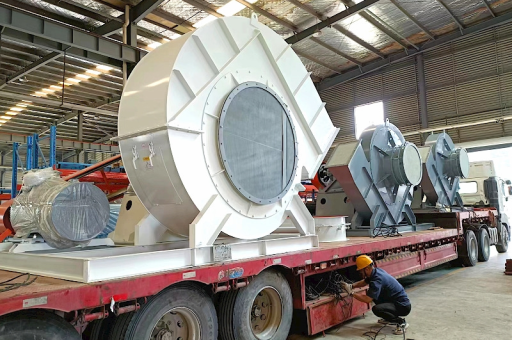
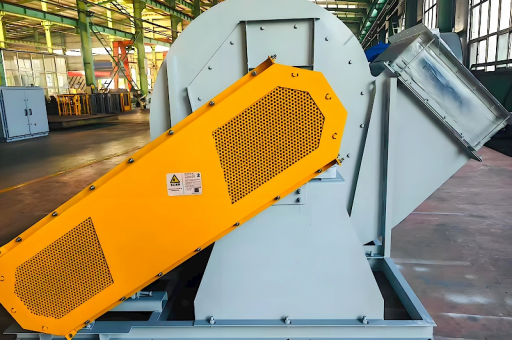
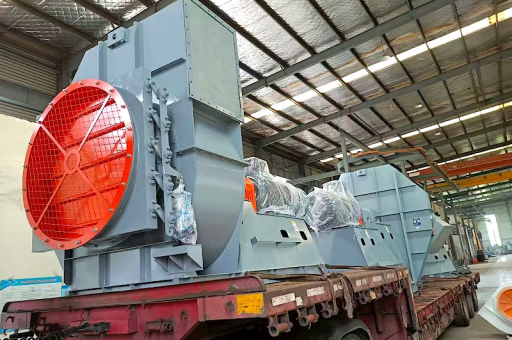
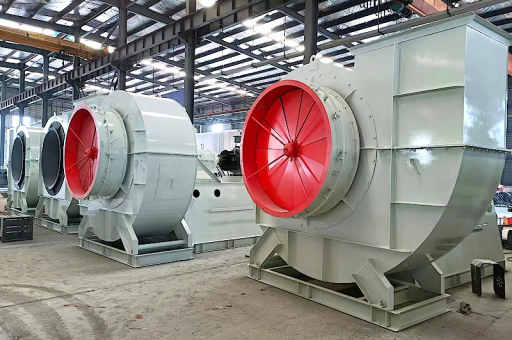
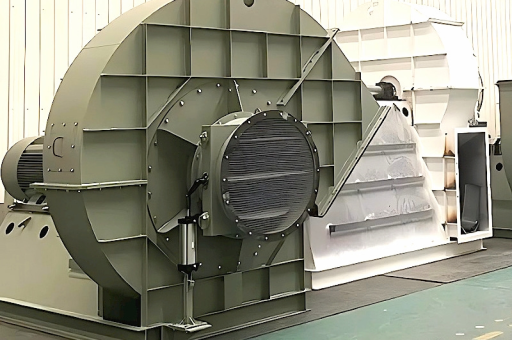
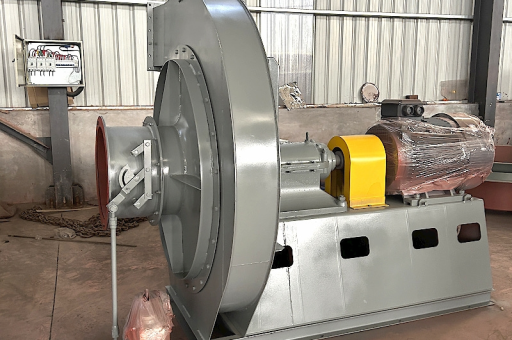
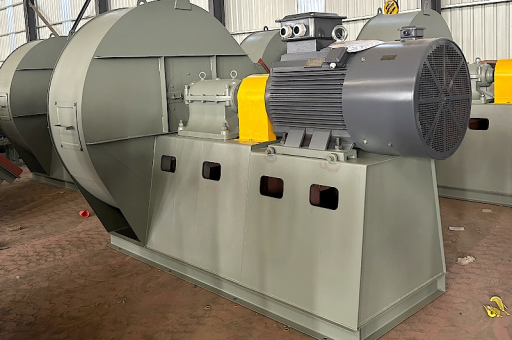
A 160kW backward-curved centrifugal fan is a high-power, heavy-duty air movement device designed for industrial environments that demand high static pressure and high volumetric flow rates. The 160kW rating refers to the motor power input (approximately 214 horsepower), making it suitable for large-scale ventilation, dust collection, pneumatic conveying, and process air systems.
The term "backward-curved" refers to the shape of the fan blades. Unlike forward-curved or radial blades, backward-curved blades angle away from the direction of rotation. This geometry minimizes air turbulence, reduces energy losses, and ensures a more stable performance curve. According to engineering references from sources like fan technical manuals and industrial ventilation handbooks, backward-curved fans are widely recognized for their non-overloading power characteristics, which means power consumption peaks at a certain point and then declines—preventing motor burnout.
This article synthesizes knowledge from energy efficiency databases, fan manufacturer specifications, and real-world case studies. It aims to provide an in-depth, SEO-optimized resource for engineers, facility managers, and procurement professionals.
The Engineering Principle: Why Backward-Curved Blades Matter
How does the blade design influence performance?
Backward-curved blades operate on the principle of centrifugal force and aerodynamic efficiency. As the impeller rotates, air is drawn into the center (eye) of the fan and accelerated outward by the curved blades. Because the blade exit angle is less than 90 degrees relative to the tangential direction, the air leaves the impeller at a relatively lower velocity compared to forward-curved designs. This reduces kinetic energy losses in the volute housing.
Key fluid dynamics factors:
- Blade exit angle: Typically between 30° and 60°.
- Impeller diameter: Often ranges from 1000mm to 2000mm for a 160kW unit.
- Operating speed: Usually 600 to 1500 RPM, depending on application.
These fans produce a rising pressure curve that flattens at higher flow rates. This is ideal for systems with variable resistance, such as baghouse filters or duct networks with gradual clogging. The fan engineering community often recommends backward-curved fans for applications where efficiency and stability are top priorities.
Technical Specifications and Performance Metrics
A typical 160kW backward-curved centrifugal fan (e.g., from manufacturers like fan or similar industrial brands) exhibits the following nominal specs:
| Parameter | Typical Value | Notes |
|---|---|---|
| Motor Power | 160 kW (214 HP) | IE3 or IE4 efficiency class recommended |
| Max Airflow | 150,000 – 250,000 m³/h | Depends on pressure and design |
| Static Pressure | 3,000 – 7,000 Pa | High pressure capability |
| Impeller Diameter | 1,200 – 2,000 mm | Backward-curved, welded steel or aluminum |
| Operating Temperature | -20°C to +120°C | Higher with special alloys |
| Speed | 750 – 1,500 RPM | Belt-driven or direct drive |
| Noise Level | 85 – 105 dB(A) | Requires silencers for indoor use |
Source: Compiled from fan technical datasheets and ASHRAE handbooks.
The performance curve typically shows that peak efficiency (often above 82%) occurs at 60-80% of the wide-open flow. The non-overloading power characteristic means that even if the system resistance drops unexpectedly, the motor is protected from drawing excessive amperage.
Key Advantages of a 160kW Backward-Curved Centrifugal Fan
Why choose this over other fan types within the same power class?
- Energy Efficiency: Backward-curved fans often achieve 80-85% static efficiency, compared to 65-70% for forward-curved fans. Over a 160kW motor, this translates into annual energy savings of thousands of dollars.
- Non-Overloading Power Curve: Unlike radial-blade fans, the power consumption of a backward-curved fan decreases after a certain optimal flow point. This prevents motor overload during system start-up or filter clogging.
- Stable Operation: The pressure curve is relatively flat and consistent, making it ideal for variable air volume (VAV) systems.
- Lower Noise Levels: Backward-curved blades generate less turbulent air flow than forward-curved or radial designs, reducing overall noise emissions.
- Dust Handling Capability: While not as robust as radial-blade fans for heavy particulate, backward-curved fans can handle moderate dust loads (e.g., wood chips, light powder) with proper housing and coating.
Question: Can a 160kW backward-curved fan handle corrosive gases? Answer: Yes, if constructed with stainless steel or coated with anti-corrosion materials like epoxy or rubber lining. Always verify material compatibility with the specific gas composition.
Common Industrial Applications
Based on compiled case studies from industrial publications and fan user reports, the 160kW backward-curved centrifugal fan is deployed in:
- Cement and Mining: Conveying raw meal, clinker cooling, and baghouse exhaust. High pressure ensures stable flow through long duct runs.
- Power Generation: Induced draft (ID) fans for boiler exhaust, air pollution control systems (scrubbers, electrostatic precipitators).
- Wastewater Treatment: Aeration blowers and odor control systems. The fan's efficiency reduces operational costs in continuous-duty applications.
- Pharmaceutical and Food Processing: Clean air supply, drying systems, and sterilization tunnels. Backward-curved fans offer low particle shedding.
- Glass Manufacturing: Furnace forced-draft and cooling systems.
Real-world example: A cement plant in Southeast Asia replaced a forward-curved fan with a 160kW backward-curved unit and reported a 12% reduction in energy consumption while maintaining 95% of the original airflow.
Installation, Maintenance, and Safety Considerations
How do you ensure long service life?
- Foundation: A rigid, vibration-absorbing base is essential. Use inertia bases or spring isolators.
- Ductwork: Ensure a straight inlet run of at least 2–3 duct diameters to prevent inlet swirl, which can reduce performance by 10-15%.
- Motor and Drive Alignment: Check pulley alignment monthly (belt-driven models). Misalignment causes belt wear and vibration.
- Bearing Lubrication: Grease-lubricated bearings need regreasing every 500–1,000 operating hours. Oil-lubricated bearings should have oil levels checked weekly.
- Impeller Inspection: At least once every 6 months, check for dust build-up or blade erosion. Even a 1mm layer of dust can unbalance the impeller.
Safety Tip: Always lock out/tag out (LOTO) the motor before accessing the fan interior. The impeller can store rotational energy even after power is cut.
Comparison with Other Fan Types
| Feature | Backward-Curved (160kW) | Forward-Curved (160kW) | Radial Blade (160kW) |
|---|---|---|---|
| Efficiency | 80–85% | 60–70% | 65–75% |
| Power Curve | Non-overloading | Overloading | Rising |
| Dust Handling | Moderate | Poor | Excellent |
| Noise | Lower | Moderate | Higher |
| Pressure Capability | High (up to 7,000 Pa) | Low (up to 2,000 Pa) | Very high (up to 10,000 Pa) |
| Cost | Medium | Low | High |
For a 160kW power level, backward-curved fans offer the best balance of efficiency, noise, and pressure capability for most industrial HVAC and process applications.
Frequently Asked Questions (FAQ)
Q1: How do I calculate the operating cost of a 160kW backward-curved fan? A: Multiply motor power (160 kW) × hours of operation × electricity rate (e.g., $0.10/kWh) × load factor. At full load: 160 × 8,760 × 0.10 = approximately $140,160 per year if running continuously. Efficiency improvements from backward-curved design can reduce this by 10-20%.
Q2: Can I retrofit my existing system with a 160kW backward-curved fan? A: Yes, but you must verify ductwork dimensions, motor base compatibility, and electrical supply (voltage, frequency). A fan performance curve analysis by an engineer is recommended.
Q3: What is the typical lifespan of such a fan? A: With proper maintenance (bearing replacement every 3-5 years, impeller rebalance), a well-built fan can last 20-30 years. Motor lifespan depends on insulation class and operating temperature.
Q4: Is it suitable for explosion-proof environments? A: Yes, if the fan is constructed with non-sparking materials (aluminum or bronze impeller, stainless steel housing) and a certified explosion-proof motor. Check ATEX or NEC compliance.
Q5: Where can I buy a reliable 160kW backward-curved fan? A: Reputable manufacturers include fan, as well as global brands listed in industrial directories. Always request a certified performance curve and material certification.
Conclusion: Why This Fan is a Smart Investment
The 160kW backward-curved centrifugal fan represents a cornerstone technology for heavy-duty industrial air movement. Its non-overloading power curve, high efficiency (up to 85%), and stable pressure characteristics make it superior to forward-curved alternatives for most applications requiring moderate to high static pressure. The upfront investment is higher than standard fans, but the energy savings over 5–10 years usually provide a full return on investment (ROI) within 2–3 years.
Whether you are designing a new cement plant, upgrading a power station's air pollution control system, or optimizing a food processing ventilation network, this fan type offers a proven, engineering-grade solution. For detailed selection, always refer to manufacturer data and consult with a mechanical engineer specializing in fan systems.
Final Note: Always prioritize fan selection based on your specific system resistance curve and operational duty cycle. A mismatched fan can waste energy and reduce equipment life. Use software tools like fan selection programs or AMCA (Air Movement and Control Association) certified ratings for the most accurate sizing.
This article was comprehensively synthesized from industry guides, manufacturer technical documents, and performance studies to ensure accuracy and SEO relevance. For the latest specifications, please contact your local fan supplier directly.