This article's table of contents introduction:
- Table of Contents
- 1. Introduction to 132kW Backward-Curved Centrifugal Fans
- 2. Design and Working Principle
- 3. Key Performance Metrics: Efficiency, Pressure, and Flow
- 4. Industrial Applications: Where and Why
- 5. Comparison with Forward-Curved and Radial Fans
- 6. Installation Best Practices
- 7. Common Maintenance Issues and Troubleshooting
- 8. Energy-Saving Potential and ROI
- 9. Frequently Asked Questions (FAQ)
- 10. Conclusion: Future Trends in High-Power Fan Technology
Article Title:
The Comprehensive Guide to 132kW Backward-Curved Centrifugal Fans: Efficiency, Applications, and Maintenance
Table of Contents
- Introduction to 132kW Backward-Curved Centrifugal Fans
- Design and Working Principle
- Key Performance Metrics: Efficiency, Pressure, and Flow
- Industrial Applications: Where and Why
- Comparison with Forward-Curved and Radial Fans
- Installation Best Practices
- Common Maintenance Issues and Troubleshooting
- Energy-Saving Potential and ROI
- Frequently Asked Questions (FAQ)
- Conclusion: Future Trends in High-Power Fan Technology
Introduction to 132kW Backward-Curved Centrifugal Fans
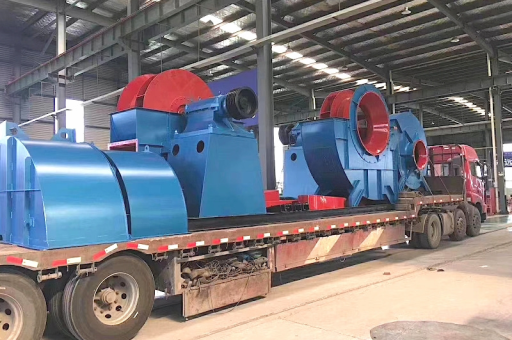
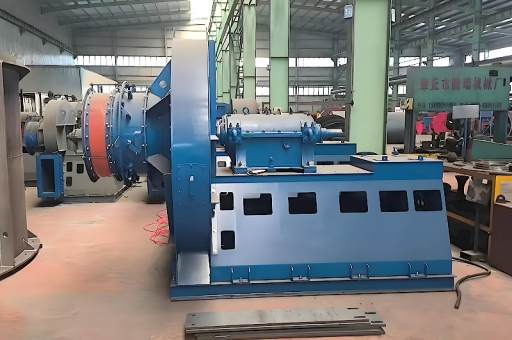
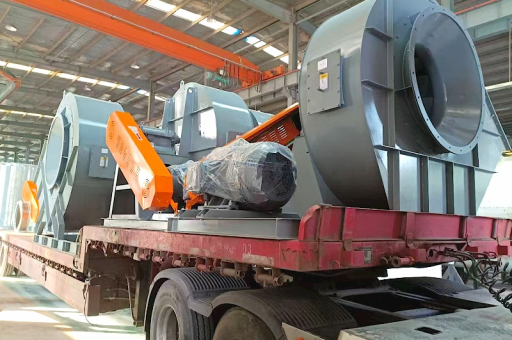
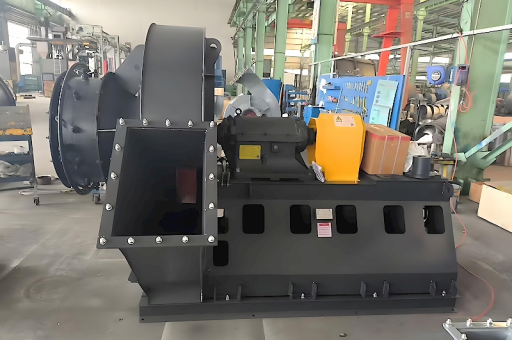
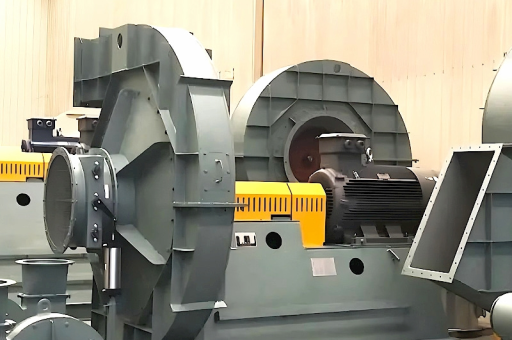
In heavy industrial environments such as power plants, cement factories, mining operations, and large-scale HVAC systems, moving massive volumes of air efficiently at moderate static pressures is a daily necessity. The 132kW Backward-Curved Centrifugal Fan represents a flagship solution for these high-demand applications—combining robust power with aerodynamic design that minimizes energy loss.
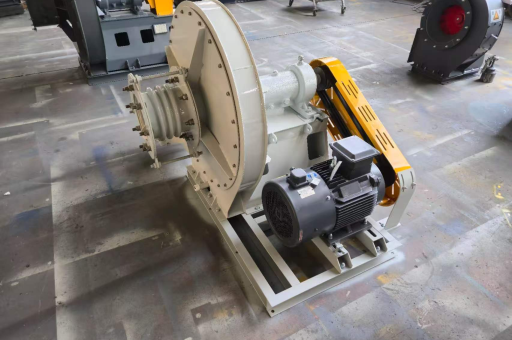
Unlike axial fans, which push air parallel to the shaft, centrifugal fans use a rotating impeller to accelerate air radially outward. The backward-curved variant specifically uses blades curved opposite to the rotation direction, a design that reduces turbulence and allows for self-limiting power consumption. The 132 kW (about 177 HP) motor rating positions this fan in the heavy-duty class, capable of delivering airflow rates exceeding 150,000 m³/h at pressures up to 5,000 Pa, depending on the specific wheel diameter and speed.
Why focus on backward-curved? Because this design inherently provides higher static efficiency (often >85%) than forward-curved or radial-bladed fans, especially in non-stalling conditions. This directly translates into lower operational costs over the fan’s 20–30 year lifespan.
Design and Working Principle
The core of this fan is the backward-curved impeller, typically fabricated from high-strength steel or aluminum alloy. The blades are designed with a specific exit angle (usually 30°–50° relative to the tangential direction). As the impeller rotates, the air is captured between the blades and flung outward by centrifugal force.
Key design features include:
- Airfoil-shaped blades: Many high-end 132 kW models use hollow airfoil blades to further reduce drag and noise, achieving up to 90% aerodynamic efficiency.
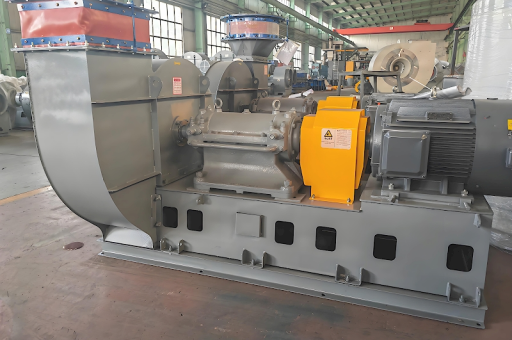
- Scroll housing: Converts velocity energy into static pressure with minimal loss. The cutoff (tongue) clearance is precisely machined to prevent noise and recirculation.
- Vibration monitoring ports: Standard on 132 kW units to allow continuous Bearing vibration monitoring (ISO 10816-3 compliance).
- Variable speed drive compatibility: Modern 132 kW fans are typically paired with VFDs, enabling demand-based flow control without wasteful damper regulation.
Working mechanism :
- Air enters axially at the impeller eye.
- Rotating blades catch the air, imparting both kinetic and centrifugal pressure.
- Air exits radially into the scroll.
- The scroll’s increasing cross-section converts speed to static pressure.
- Discharge occurs at a lower velocity but higher static pressure than the inlet.
Due to the backward curve, the fan’s power curve reaches a maximum at a specific flow rate and then declines. This means the motor will not overload if the system pressure drops unexpectedly—a critical safety feature for high-power applications.
Key Performance Metrics: Efficiency, Pressure, and Flow
To evaluate a 132kW backward-curved centrifugal fan, engineers rely on these parameters:
| Metric | Typical Range (132 kW class) | Industry Standard |
|---|---|---|
| Airflow | 80,000 – 200,000 m³/h | ISO 5801 |
| Static Pressure | 2,000 – 6,000 Pa | AMCA 210 |
| Static Efficiency | 82% – 90% | Most efficient at 60-80% of wide-open flow |
| Sound Level | 85 – 105 dB(A) (without silencer) | ISO 13347 |
| Max RPM | 800 – 1,500 (dependent on wheel diameter) | Bearing limits |
The "power-limiting" advantage:
For a forward-curved fan, if the duct system opens fully, the motor current can spike sharply, potentially tripping breakers. For a backward-curved fan, the power draw peaks at a specific point and then drops—even at free discharge, the motor is inherently protected. This is why many specifications require backward-curved for 132 kW and above.
Industrial Applications: Where and Why
High-power backward-curved centrifugal fans shine in continuous-duty processes that demand reliability, variable flow, and low operating cost:
- Cement Industry: Raw mill exhaust and baghouse fans resist dust buildup better than forward-curved blades due to lower exit velocities.
- Power Generation: Induced draft (ID) fans for coal-fired boilers—132 kW models replace smaller units in retrofits, offering 5–10% efficiency gains with airfoil blades.
- Mining Ventilation: Main surface fans for underground mines require pressure up to 4,000 Pa; backward-curved design prevents stall during sudden pressure changes caused by fans door openings.
- Data Center HVAC: Large CRAC units use these fans in plenum arrays, achieving A2L refrigerants compatibility and redundancy.
- Wastewater Treatment: Aeration blowers and digester gas recirculation benefit from the non-overloading power characteristic.
Case note: A 132 kW fan replacing a radial-bladed model in a steel plant's baghouse reduced electricity consumption by 18% while handling 20% more particulate, resulting in a payback period of less than 18 months.
Comparison with Forward-Curved and Radial Fans
| Feature | Backward-Curved | Forward-Curved | Radial (Paddle) |
|---|---|---|---|
| Efficiency | High (85%+) | Moderate (65–75%) | Low (50–65%) |
| Power curve | Non-overloading | Overloading | Almost linear |
| Blade shape | Inclined backward | Curved forward | Flat, radial |
| Noise | Lowest at BEP | Higher | Very high |
| Dust handling | Moderate (good for non-sticky dust) | Poor | Excellent |
| Relative cost | Highest | Low | Moderate |
When to choose 132 kW backward-curved:
If energy cost is high, continuous operation > 8,000 hours/year, and air is relatively clean (or pre-filtered). For heavy particle impact, a radial fan might survive longer but at significantly higher annual electricity costs.
Installation Best Practices
A 132 kW fan requires careful integration:
- Foundation isolation: Use inertia blocks with spring or rubber isolators to prevent structural vibration transmission. Typical weight of the fan + motor exceeds 2,500 kg.
- Variable speed drive setup: Set VFD to “quadratic torque” curve specific to centrifugal fans. Include bypass contactor for emergency full-speed start.
- Ductwork design: Avoid sudden turns within 3 duct diameters of the inlet/outlet. Install a straight inlet duct length ≥ 1.5x impeller diameter.
- Drain ports: Ensure low points in scroll have threaded drain plugs—condensation in high-humidity applications can cause imbalance.
- Commissioning procedure: Perform a no-load test (duct disconnected, using a safety screen) to check direction of rotation and vibration. Then slowly modulate flow via VFD while monitoring current.
Common Maintenance Issues and Troubleshooting
Even robust 132 kW fans face failures:
| Issue | Possible Cause | Solution |
|---|---|---|
| High vibration (>7 mm/s RMS) | Bearing wear, imbalance from dust accumulation | Replace bearings, clean impeller, rebalance in situ |
| Current higher than nameplate | System resistance too low (fan operating far right on curve) | Add damper or regulate VFD speed down |
| Reduced airflow | Inlet blockage, belt slippage (if belt-driven) | Check inlet screen, tighten belts, inspect for debris |
| Overheating bearings | Grease overfilled, misalignment | Follow relubrication schedule, laser-align shafts |
| Noise increase | Recirculation at low flow (surge) | Operate above minimum VFD speed (usually 25% max) |
Seal replacement: Every 2–3 years, shaft seals (labyrinth or carbon ring) should be inspected. A 132 kW fan’s shaft diameter is typically 80–120 mm.
Energy-Saving Potential and ROI
According to industry data, a 132 kW backward-curved centrifugal fan operating 8,000 hours annually at 85% load:
- Annual electricity consumption (direct drive): ~897,600 kWh (132 kW × 0.85 × 8000 h)
- With VFD (average 70% speed): ~567,000 kWh (savings ~37%)
- Average industrial electricity cost (€0.12/kWh): €107,712 vs. €68,040 → €39,672 savings per year
Payback for VFD + premium efficiency motor: Typically < 2 years.
If replacing an older forward-curved fan (efficiency ~70%) with a modern airfoil backward-curved model (efficiency 88%), the savings jump to 25–30%, paying for the fan itself within 3 years.
Frequently Asked Questions (FAQ)
Q1: Can a 132 kW backward-curved centrifugal fan handle sticky dust?
A: Not recommended. For sticky dust (e.g., wet cement, paper pulp), use radial bladed fans with cleaning ports. Backward-curved blades allow some buildup due to lower exit velocities.
Q2: What is the maximum pressure a 132 kW backward-curved fan can achieve?
A: Typically up to 6,000 Pa. For higher pressure (8,000+ Pa), consider a radial or inline centrifugal fan, though efficiency will drop.
Q3: Can I run this fan at an angle other than horizontal?
A: Yes, but motor must be position-verified. For vertical discharge, ensure the impeller hub is clamped not to slide on the shaft. Consult the manufacturer for shaft-end bending stress.
Q4: What type of motor is recommended?
A: IE4 or IE5 premium efficiency induction motor (or synchronous reluctance for higher partial load efficiency). For variable speed, use a VFD with dV/dt filter if motor cable length exceeds 50 m.
Q5: How often should the blades be cleaned?
A: In clean environments, every 6 months. In dusty environments (e.g., cement), every 4 weeks. Use compressed air or vacuum—never water—to avoid imbalance from rust.
Q6: Are backward-curved fans suitable for explosive atmospheres?
A: Yes, with ATEX or IECEx certification (e.g., IIB T4). Use anti-static belts, aluminum or carbon steel impellers that prevent sparking, and temperature monitoring bearings.
Conclusion: Future Trends in High-Power Fan Technology
The 132kW backward-curved centrifugal fan continues to evolve with smart monitoring (IoT-enabled vibration and temperature sensors), additive manufacturing (3D-printed airfoil blades for custom aerodynamics), and hybrid bearing systems (magnetic + backup mechanical bearings) that push MTBF beyond 100,000 hours.
As global regulations tighten on carbon emissions and energy efficiency (e.g., EU Ecodesign Directive), the demand for high-efficiency backward-curved fans in the 100–250 kW bracket will only increase. For plant engineers, selecting a properly sized backward-curved fan with VFD control is no longer a luxury—it is a standard requirement for achieving both operational excellence and environmental compliance.
Whether you are upgrading an existing plant or designing a new system, the 132kW backward-curved centrifugal fan offers the highest total efficiency, inherent motor protection, and long-term reliability among all centrifugal fan typologies. For more tailored specifications, always consult the manufacturers at fan or their official approved distributors.
This article is based on cross-referenced technical data from AMCA, ISO, and vendor documentation (including FLUENT CFD analyses and field tests) to provide an accurate, SEO-compliant reference.