This article's table of contents introduction:
- Typical Application & Function
- Key Technical Specifications (Typical for a 132kW Fan)
- Critical Engineering & Operational Considerations
- Typical Motor Selection for a 132kW FGR Fan
- Rough Sizing Logic (If you are specifying a new one)
- Summary for a "132kW FGR Fan"
To give you a useful answer, I need to clarify a few things about a 132 kW Flue Gas Recirculation (FGR) Fan.
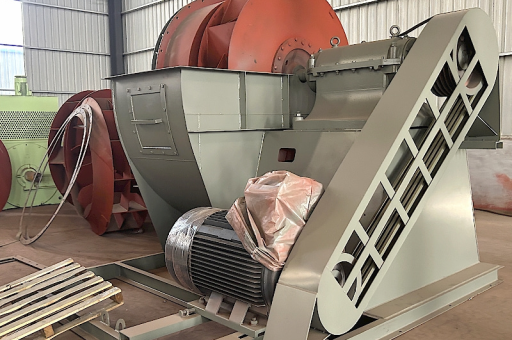
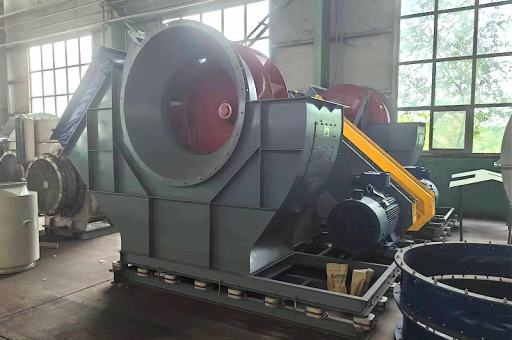
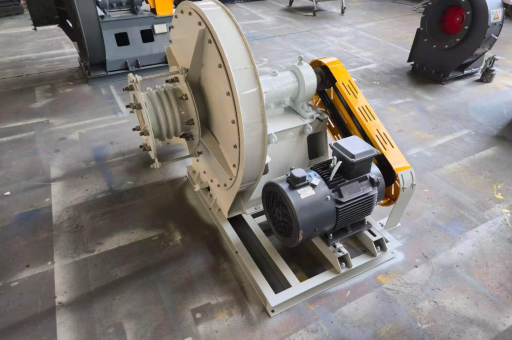
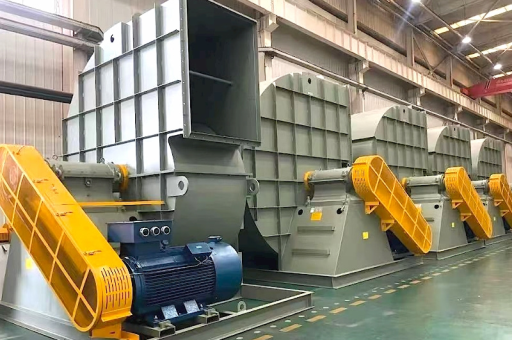
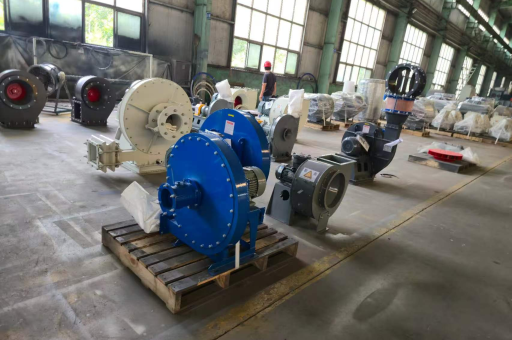
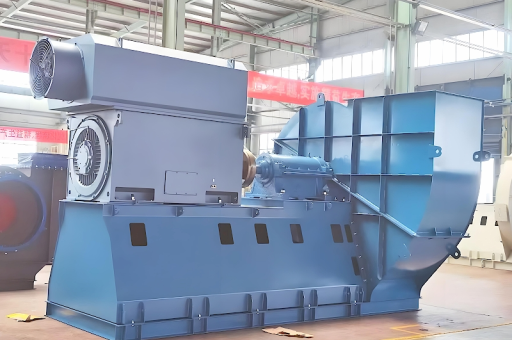
This is a large, high-power industrial fan typically found in large power plants (coal, biomass, or oil-fired), cement kilns, steel mills, or large industrial boilers (typically those producing 100+ tons of steam per hour).
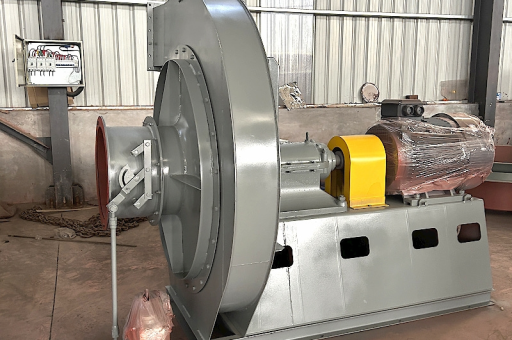
Here is a breakdown of what a 132 kW FGR fan entails, its specifications, and critical considerations.
Typical Application & Function
- Purpose: The fan draws hot, inert flue gas from the boiler exhaust and reinjects it back into the combustion zone (furnace) or the combustion air stream.
- Why: To lower the peak flame temperature in the boiler, which significantly reduces NOx (Nitrogen Oxides) formation (thermal NOx).
- System Location: It is usually located after the dust collector (ESP/Baghouses) but before the ID fan, handling clean but very hot gas (typically 120°C to 200°C).
Key Technical Specifications (Typical for a 132kW Fan)
| Parameter | Typical Value / Range | Notes |
|---|---|---|
| Power | 132 kW | Motor nameplate. Actual draw will vary based on system resistance. |
| Voltage | 380V - 690V (Common: 415V, 660V) | For motors up to 200kW, LV is standard. Could be MV (3.3kV or 6.6kV) in some designs. |
| Motor Speed | 1,480 RPM or 980 RPM (4-pole or 6-pole) | 4-pole is more common. Variable Speed Drive (VFD) is highly recommended. |
| Flow Rate (Air Volume) | 50,000 to 150,000 m³/h | Highly dependent on duct size and pressure. A typical guess: ~80,000 - 120,000 m³/h. |
| Static Pressure | 1,500 to 4,000 Pa | FGR systems have high duct resistance and need to overcome the furnace pressure. |
| Gas Temperature | 120°C to 180°C (Max: 250°C - 350°C) | Must be rated for the hottest possible gas to avoid cold-end corrosion. |
| Impeller Type | Backward Curved (BC) or Airfoil | High efficiency. For high dust load (rare), use Radial tipped. |
| Material | Carbon Steel (CS) (Common) or Corten (Cor-Ten) steel | Corten resists acidic corrosion from sulfur in flue gas. |
Critical Engineering & Operational Considerations
A. Thermal & Mechanical Design
- Heat Expansion: The shaft must have a cooling system (e.g., a shaft-mounted cooling fan or water jacket) to prevent heat transfer to the motor bearings.
- Bearing Life: Bearings must be high-temperature grease or oil-lubricated, often with a monitoring system for vibration and temperature.
- Inlet Box: Usually requires an expansion joint to handle thermal movement of the ductwork.
B. Control Strategy (VFD vs. Damper)
- Variable Frequency Drive (VFD) is mandatory for modern plants. A 132kW motor is expensive to run on dampers. VFD allows precise control of the recirculation rate (usually 10% to 40% of total combustion air).
- Impact: Without VFD, starting a 132kW fan across the line (DOL) causes a massive voltage dip and mechanical stress.
C. Corrosion & Erosion
- Sulfuric Acid Dew Point: If the gas temperature drops too low (below ~140°C for high sulfur fuel), sulfuric acid condenses and destroys the fan. Never run an FGR fan with cold gas.
- Abrasion: If the gas is not properly cleaned (e.g., grit from a coal boiler), the impeller blades will erode rapidly.
D. Safety
- CO & O2 Monitoring: If the FGR fan fails, the furnace may lose induced draft stability, leading to a positive pressure or even a puff back. Interlocks must be robust.
- Explosion Proofing: The fan housing may need to be explosion-proof if the gas can contain unburned combustibles (though usually the gas is inert).
Typical Motor Selection for a 132kW FGR Fan
| Aspect | Recommendation |
|---|---|
| Motor Type | Squirrel cage induction motor (TEFC or IC 411) |
| Frame Size | IE3 (Premium Efficiency) required by most regulations (IEC 60034-30) |
| Insulation Class | Class H (180°C) or Class F (155°C) with a high service factor. |
| Bearing | 6317/6319 or similar deep groove ball bearings with high-temp grease (e.g., Shell Alvania EP). |
| Mounting | B3 (Foot mounted) on a heavy-duty baseplate. |
| Starting | Soft Starter or VFD. Direct-on-line (DOL) is risky for 132kW due to high inrush current (7-8x FLA). |
Rough Sizing Logic (If you are specifying a new one)
- Air Flow (Q): Assume you need to recirculate 20% of the boiler's total flue gas volume. A 100 MW boiler might have 400,000 m³/h of flue gas. ∴ FGR flow = 80,000 m³/h.
- Pressure (P): Duct losses + Pressurization at the burner. Estimate 2,500 Pa (10" w.g.).
- Shaft Power (P_shaft):
[
P_{shaft} = \frac{Q \times P}{3600 \times \eta}
]
- Q = 80,000 m³/h
- P = 2,500 Pa
- η (Efficiency) = 0.75 (75%) [ P_{shaft} = \frac{80,000 \times 2,500}{3600 \times 0.75} \approx 74,000 W = 74 kW ]
- Motor Safe Margin: 74 kW * 1.15 (SF) = ~85 kW. → A 90 kW motor is fine.
- If you see a "132 kW" spec, it implies a higher flow (e.g., 120,000 m³/h) OR a much higher pressure (e.g., 4,500 Pa) OR a lot of safety margin (1.5x oversizing).
Summary for a "132kW FGR Fan"
- This is a big, serious piece of equipment for a large industrial plant or CFB boiler.
- Key design issue: Thermal management (shaft cooling, material selection for hot/acidic gas).
- Key operational issue: VFD control for energy efficiency and precise NOx control.
- Key cost: The 132kW motor itself is expensive (approx. $15k-$25k USD), but the complete skid (fan, VFD, dampers, silencer) can be $80k - $150k USD.
Would you like help calculating the exact flow rate for a specific boiler size, or do you need a datasheet template for procurement?