This article's table of contents introduction:
- Core Characteristics of a Backward-Curved (BC) Fan
- Typical Performance at 185 kW
- Primary Applications
- Typical Components & Accessories
- Key Selection & Design Considerations
- Summary Table
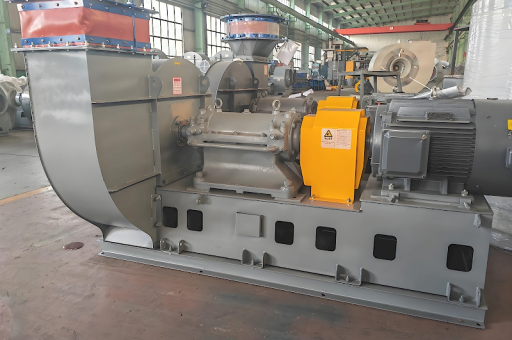
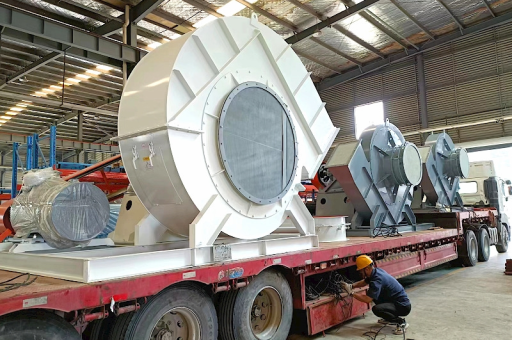
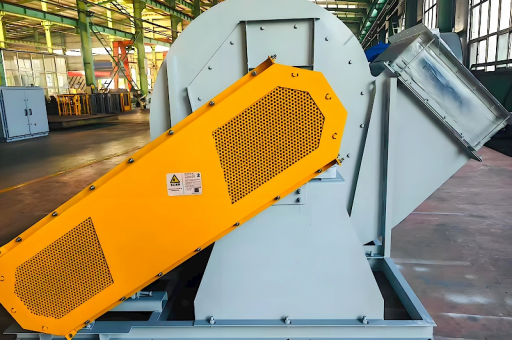
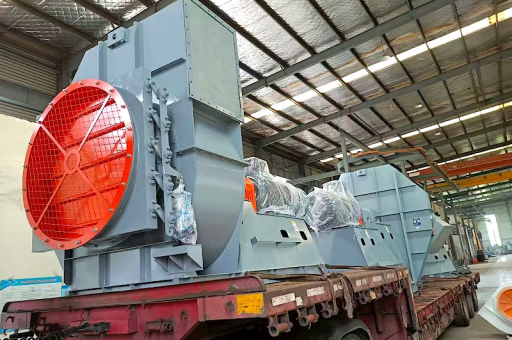
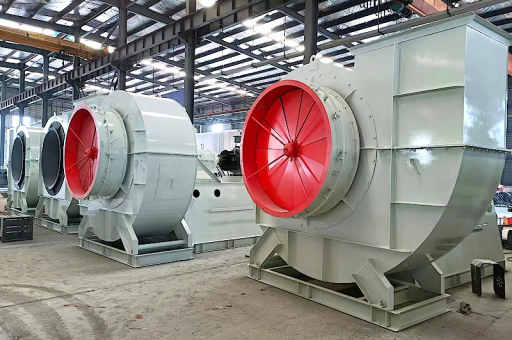
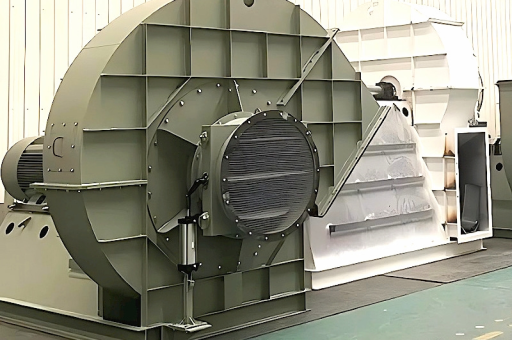
This is a very specific piece of industrial equipment. A 185 kW (approximately 250 HP) Backward-Curved Centrifugal Fan is a heavy-duty, high-efficiency air mover typically used in large-scale industrial processes.
Here is a detailed breakdown of what this fan is, its key characteristics, and where it is used.
Core Characteristics of a Backward-Curved (BC) Fan
- Blade Design: The blades curve away from the direction of rotation.
- Efficiency: BC fans are the most efficient type of centrifugal fan (typically 75-85% static efficiency). A 185kW motor indicates a very large airflow or high-pressure requirement.
- Power Curve: This is a critical safety feature. BC fans have a non-overloading power curve. This means the motor's power draw peaks at a certain point and then drops off as static pressure decreases (or airflow increases). You cannot overload the motor even if the system ductwork is completely open.
- Speed: A 185kW BC fan will almost certainly be driven by a variable frequency drive (VFD) for precise control and energy savings. Direct-on-line (DOL) starting is possible but less common at this power level due to high inrush current.
- Construction: Built for 24/7 industrial use.
- Housing: Heavy-gauge steel, often with bolt-together modular construction for large sizes. Shaft seals and drain connections are standard.
- Wheel: Heavy-duty, often with a reinforced backplate and hub. Stress-relieved and dynamically balanced to ISO 1940 G6.3 or better.
- Shaft: Large diameter, turned, ground, and polished to minimize stress risers.
- Bearings: Split pillow block spherical roller bearings (e.g., SKF, FAG) with heavy-duty housings. Grease or oil lubrication.
- Motor: 185kW (250 HP), typically 4-pole (1,800 RPM synchronous in 60Hz, 1,500 RPM in 50Hz), TEFC or ODP enclosure.
Typical Performance at 185 kW
The exact performance (airflow vs. pressure) depends on the fan's specific design, aerodynamic class, and impeller diameter. However, a realistic range for a well-designed 185kW BC fan is:
- Airflow: 50,000 to 150,000 CFM (Cubic Feet per Minute) or 85,000 to 255,000 m³/h
- Static Pressure: 10 to 40 inches w.g. (Water Gauge) or 5 to 10 kPa
- Speed: 1,200 to 1,800 RPM (If 4-pole motor) or 900 to 1,200 RPM (If 6-pole motor with a bigger impeller).
Key Performance Fact: A BC fan is ideal for High Volume / Medium Pressure applications. It is not suitable for high-pressure, low-volume applications (use an Airfoil or High-Pressure Radial fan for that).
Primary Applications
A fan of this size and power is a capital investment and is found in critical processes:
- Cement Plants: Kiln exhaust, clinker cooler air supply, baghouse dust collector fans.
- Steel Mills: Sinter plant exhaust, cast house ventilation, baghouse fans for electric arc furnaces (EAF).
- Power Plants: Induced draft (ID) fans for boilers burning coal or biomass, primary air (PA) fans.
- Mining & Minerals: Mine ventilation, material handling (conveyor belt dust collection).
- Chemical & Petrochemical: Reactor exhaust, furnace recirculation, fume extraction.
- Large Commercial HVAC: Very large AHUs (Air Handling Units) for stadiums, airports, or data centers (though 185kW is on the very high end for HVAC).
- Cement / Petrochemical: Dust collection for large silos and milling circuits.
- Wood Products: MDF (Medium-Density Fiberboard) dryers, large cyclone collectors.
Typical Components & Accessories
A 185kW fan system is not just the fan and motor. It includes:
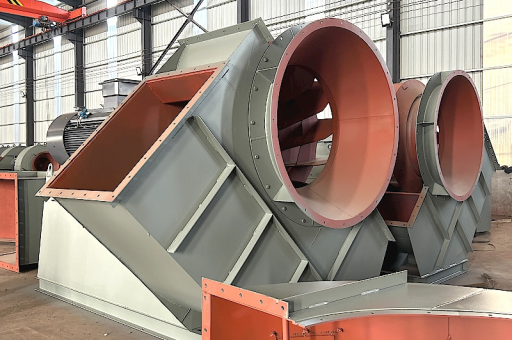
- Inlet Box: A 90-degree turn from the ductwork into the fan eye, often with turning vanes to reduce turbulence and noise.
- Inlet Guide Vanes (IGVs): Variable pitch vanes at the fan inlet for capacity control. More efficient than a damper.
- Variable Frequency Drive (VFD): The most common and most efficient control method for this power level.
- Coupling: Flexible coupling (e.g., Falk, Lovejoy, or elastomeric) to connect motor and fan shaft. Torsionally soft couplings are common to manage torque spikes.
- Baseplate: A heavy-duty fabricated steel I-beam base to mount the fan, motor, and possibly the VFD.
- Vibration Isolation: Inertia base and spring isolators for floor-mounted units.
- Silencer / Sound Attenuator: Necessary to meet workplace noise regulations (85 dBA or less).
- Access Doors & Drains: For inspection, cleaning, and maintenance.
- Ductwork: Transition pieces, expansion joints, and dampers on inlet and outlet.
Key Selection & Design Considerations
If you are specifying or maintaining this fan, consider these factors:
- Air Density: Performance curves are typically based on standard air (70°F / 21°C, 0.075 lb/ft³). If the air is hot (e.g., boiler exhaust at 400°F), the brake horsepower (BHP) required will drop significantly, but the motor must still be sized for the cold start condition or use a VFD to ramp up.
- Motor Starting: Direct-on-line (DOL) starting of a 185kW motor will draw 6-8x full-load current. A VFD or soft starter is highly recommended to reduce electrical stress.
- Bearings: At this power and speed, bearing life is critical. Specify heavy-duty spherical roller bearings with a minimum L10 life of 100,000 hours.
- Material of Construction: Carbon steel is standard. For corrosive gases (e.g., SO₂, HCl), use 316L stainless steel or FRP coating. For abrasive dust (e.g., cement, fly ash), use hardened steel, wear liners, or ceramic coating on the wheel.
- Spark Resistance: If handling combustible dust or fumes (e.g., in a chemical plant or coal mill), a spark-resistant construction (AMCA Type A, B, or C) is mandatory.
Summary Table
| Feature | Detail for 185kW BC Fan |
|---|---|
| Motor Power | 185 kW (250 HP) |
| Typical Flow Range | 50,000 - 150,000 CFM |
| Typical Pressure Range | 10 - 40 in. w.g. |
| Efficiency | 80-85% |
| Control Method | VFD (Preferred) or Inlet Guide Vanes |
| Common Applications | Cement, Steel, Power, Mining, Chemical |
| Key Design Issue | Non-overloading power curve (safe) |
| Motor Type | 4-pole or 6-pole , TEFC or ODP |
Bottom Line: A 185 kW Backward-Curved Centrifugal Fan is a high-power, high-efficiency workhorse for heavy industrial air and gas handling. Proper selection of the VFD, bearings, and materials is essential for reliability and longevity.