This article's table of contents introduction:
- Key Specifications for a 180,000 m³/h Dust Collector Fan
- The Crucial Power Calculation
- Common Design & Safety Considerations for this Size
- What to do next (Actionable Steps)
I understand you're looking for information or specifications related to a 180,000 m³/h Dust Collector Exhaust Fan.
This is a very large industrial fan, typically used in heavy industries like cement plants, steel mills, mining operations, or large woodworking facilities.
Here is a breakdown of what such a fan system entails, including typical specifications, motor power, and key considerations.
Key Specifications for a 180,000 m³/h Dust Collector Fan
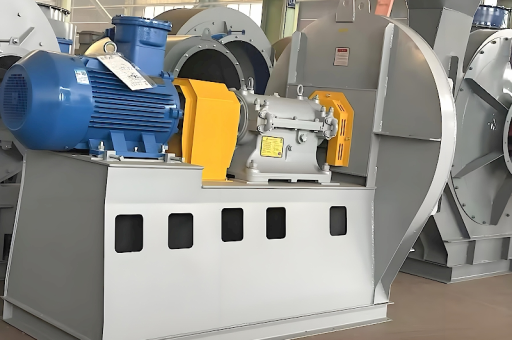
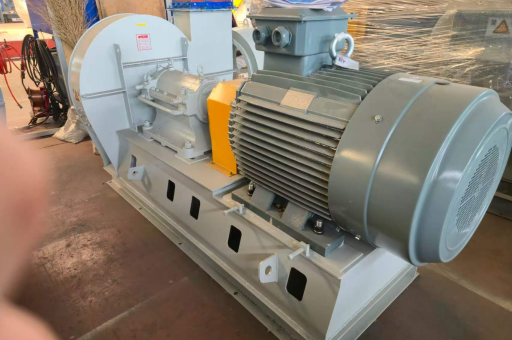
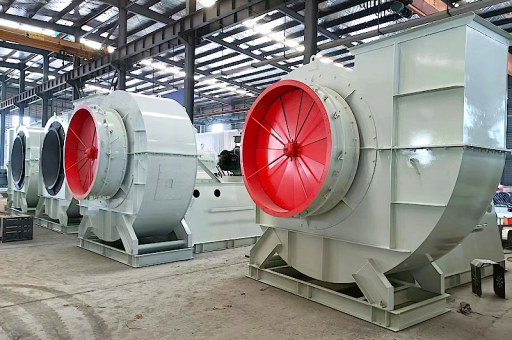
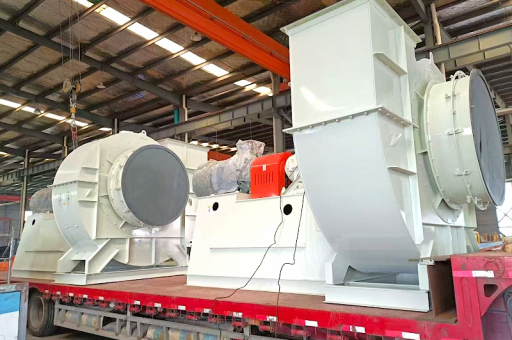
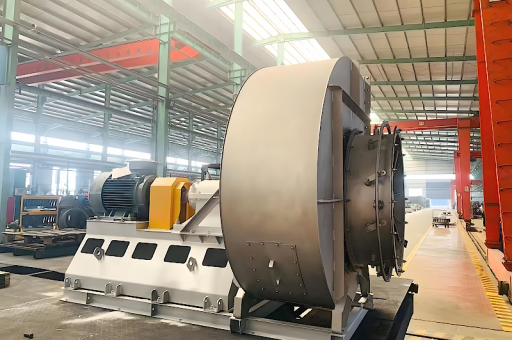
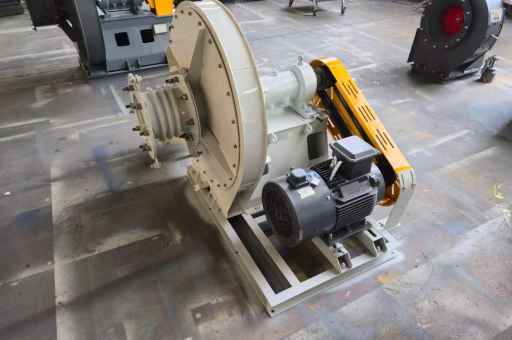
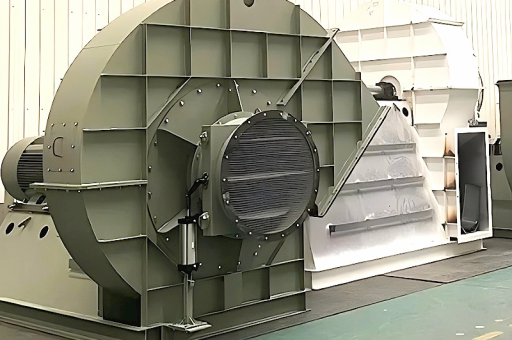
A fan of this size is almost always a centrifugal fan (specifically for dust collection, often an industrial exhaust fan or ID fan).
| Parameter | Typical Value / Range | Notes |
|---|---|---|
| Flow Rate (Volume) | 180,000 m³/h (≈ 106,000 CFM) | The primary requirement. |
| Static Pressure | 2,000 – 4,000 Pa (8 – 16 inches w.g.) | Highly dependent on the dust collector (baghouse, cartridge, cyclone) and ductwork resistance. Lower for cyclones, higher for baghouse filters. |
| Fan Type | Centrifugal (Backward Inclined, Radial, or Airfoil) | Backward Inclined is common for high efficiency. Radial is used for heavy dust loads. Airfoil is for highest efficiency but not for sticky dust. |
| Drive Type | Belt Drive or Direct Drive | Belt drive is more common for this size to allow speed adjustment and motor sizing flexibility. |
| Motor Power | 75 kW – 185 kW (100 HP – 250 HP) | Critical calculation. This is the biggest cost factor. See power calculation below. |
| Rotation Speed | 600 – 1200 RPM | Depends on the fan impeller diameter and required pressure. |
| Impeller Diameter | 1,500 mm – 2,500 mm (60” – 100”) | A very large wheel. |
| Inlet / Outlet Size | 1,000 mm – 1,400 mm (40” – 56”) Dia. | Requires large ductwork transitions. |
The Crucial Power Calculation
You cannot buy a fan just based on flow. The Static Pressure of your system determines the motor size.
Formula (approximate):
Fan Power (kW) = (Flow (m³/s) × Pressure (Pa) / Fan Efficiency) / 1000
Example:
- Flow: 180,000 m³/h = 50 m³/s
- Pressure: Assume your system requires 3,000 Pa (e.g., for a pulse-jet baghouse)
- Fan Efficiency: Assume 75% (0.75)
Power (kW) = (50 m³/s × 3000 Pa) / 0.75 / 1000
Power (kW) = 150,000 / 0.75 / 1000
Power (kW) = **200 kW**
Result: For a moderately efficient system, you would need a 200 kW motor (approx. 270 HP) . If the pressure is lower (e.g., 2,000 Pa), the power drops to ~130 kW.
Motor Sizing Estimate Based on Common Applications:
| Application | Typical Static Pressure | Estimated Motor Power |
|---|---|---|
| Large Cyclone | 1,500 – 2,000 Pa | 90 – 130 kW (120 – 175 HP) |
| Pulse-Jet Baghouse | 2,500 – 3,500 Pa | 150 – 200 kW (200 – 270 HP) |
| High-Efficiency Cartridge | 3,000 – 4,500 Pa | 180 – 250 kW (240 – 335 HP) |
Important: You must measure your system pressure or get a guarantee from the dust collector manufacturer.
Common Design & Safety Considerations for this Size
- VFD (Variable Frequency Drive) is Highly Recommended. Starting a 200 kW fan across-the-line creates enormous electrical stress. A VFD allows for soft-start, speed control for balancing, and energy savings.
- Abrasion Protection. With dust-laden air at this volume, the fan impeller and housing will wear out rapidly if not protected. Options:
- Wear liners (replaceable steel or ceramic tiles).
- Hardfacing (welding hard metal onto impeller blades).
- Lower tip speed (larger diameter, slower RPM fan).
- Vibration & Balance. A fan this large must be dynamically balanced to ISO G2.5 or G6.3 grade. It requires a robust foundation (concrete inertia base) and vibration monitoring (accelerometers) for the control system.
- Isolation. Inlet and outlet must have flexible connectors (expansion joints) to prevent vibration from transmitting to ductwork.
- Access Doors & Drain. The fan housing must have adequate access doors for inspection and cleaning. A drain plug at the bottom is essential for condensation or cleaning.
- Clean Air vs. Dirty Air. This fan is often placed on the clean side (after the filter) for baghouses to protect the fan from dust. If it's a "dirty air fan" (before the filter, for a cyclone), it needs heavy-duty construction.
- Sound. This fan at full speed will generate very high noise levels (over 100 dBA). You will likely need an industrial silencer (sound attenuator) on the inlet and/or outlet, and the fan room/housing must be sound-proofed.
What to do next (Actionable Steps)
If you are sourcing this fan, you need to provide the following to a fan manufacturer:
Required Information for a Fan Quote:
- Volume: 180,000 m³/h
- Static Pressure (System Resistance): Pa (Get this from your filter supplier or measure it)
- Air Temperature: °C (Is it hot process gas or ambient?)
- Dust Type & Concentration: (e.g., Cement dust 50 g/m³, Wood chips)
- Altitude: m (Affects air density and motor power)
- Motor Voltage & Frequency: (e.g., 400V / 50Hz or 690V / 60Hz)
Where to source this: Contact specialized industrial fan manufacturers. Look for brands or suppliers like:
- New York Blower (USA)
- Howden (Global)
- FläktGroup / Woods (Europe)
- Robinson Fans (USA)
- TLT-Turbo (Global)
- Local heavy industrial fan fabricators in your region (e.g., China: Shanghai NX Fan or similar; India: Aerovent, Dynamic Fan).
Warning: Do not buy a random 180k m³/h fan without knowing your system pressure. You will either get a motor that is too small (burns out) or a motor that is too large (wastes immense energy and is expensive). This is a massive investment (likely $30,000 - $100,000+ for the fan, motor, and drive). A proper fan selection software is required to match the fan curve to your system curve.