This article's table of contents introduction:
- Fan Type (The "Wheel")
- Key Engineering Parameters
- Estimated Power Consumption (The "Motor Size")
- Physical Size (Dimensions)
- Auxiliary Requirements (Don't forget these)
- Typical Applications for 200,000 m³/h
- Summary Checklist for Procurement
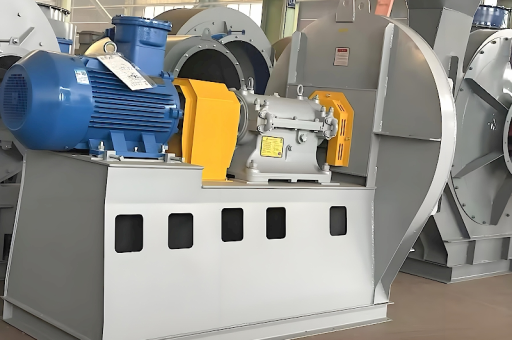
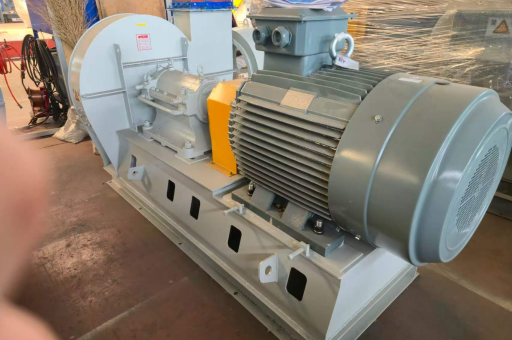
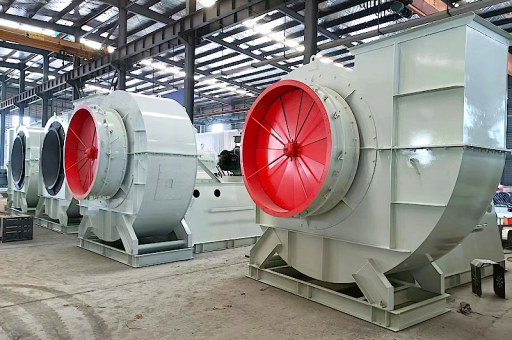
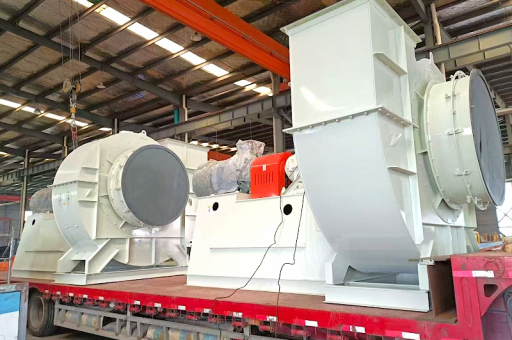
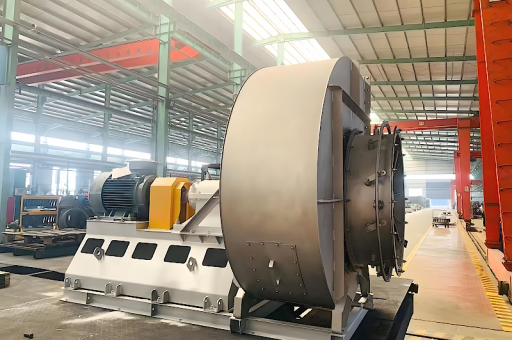
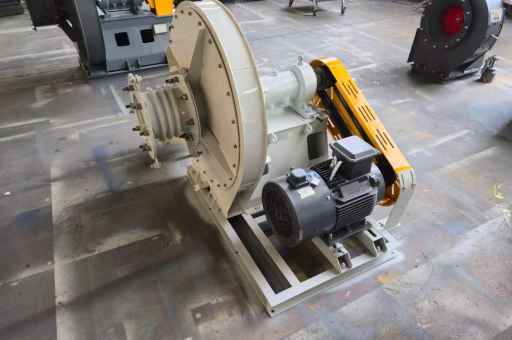
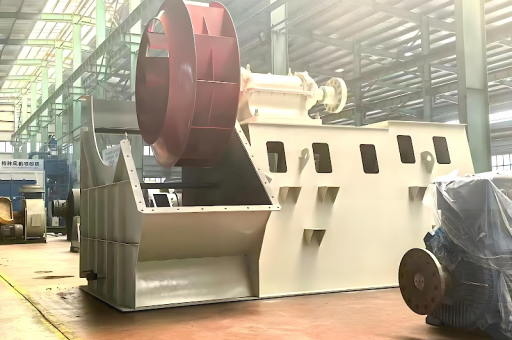
This is a request for a very large industrial exhaust fan, typically used for central dust collection in heavy industries like woodworking, mining, cement, or chemical processing (e.g., a baghouse or cartridge collector).
A "200,000 m³/h" flow rate is equivalent to ~117,700 CFM (Cubic Feet per Minute).
Here is the technical breakdown of what is required to specify, select, and operate a fan of this scale.
Fan Type (The "Wheel")
For 200,000 m³/h at medium to high pressure (typical for dust collection ductwork), you almost always need a Backward Inclined (BI) or Airfoil (AF) centrifugal fan.
- Backward Inclined (BI): Most common for dust. Handles particulate better than an airfoil. Less efficient than AF but more rugged.
- Airfoil (AF): Highest efficiency (85-90%). Used for clean air or fine dust. The blades are hollow; if they erode, the fan becomes unbalanced instantly.
- Radial (Paddlewheel): Only if the dust is very heavy/sticky. Extremely inefficient for 200k m³/h; the motor would be massive.
Key Engineering Parameters
To get a real quotation from a manufacturer (e.g., Howden, New York Blower, Chicago Blower, Clarage, twin city fan), you must provide:
- Volume: 200,000 m³/h (Confirmed)
- Static Pressure (SP): This is the critical missing number.
- Low Pressure (500–1000 Pa / 2-4" wg): Very large, slow fan. Cheap to run.
- Medium Pressure (1500–2500 Pa / 6-10" wg): Typical for industrial ductwork.
- High Pressure (3000–4000 Pa / 12-16" wg): Long duct runs, high pressure drop filters.
- Gas Density: Is it air at 20°C? Or hot gas (e.g., 120°C from a dryer)? Density changes affect motor power dramatically.
- Dust Type: Is it wood chips, cement powder, welding fume, or explosive dust? This affects the impeller material and spark resistance.
Estimated Power Consumption (The "Motor Size")
This is a massive electrical load. At 200,000 m³/h:
| Static Pressure | Estimated Motor Power | Voltage |
|---|---|---|
| 1,500 Pa (6" wg) | ~110 – 130 kW | 380V / 415V / 480V |
| 2,500 Pa (10" wg) | ~180 – 200 kW | 480V / 690V / 3.3kV |
| 3,500 Pa (14" wg) | ~250 – 280 kW | 3kV / 6.6kV |
Critical Note: At this size, a Variable Frequency Drive (VFD) is almost mandatory. A Direct-On-Line (DOL) start for a 200kW motor will cause a massive voltage dip on your grid. A VFD also allows trimming the fan speed to exactly match the system resistance.
Physical Size (Dimensions)
A 200,000 m³/h fan is not small.
- Impeller Diameter: ~1.5 m to 2.5 m (5 to 8 feet) depending on pressure.
- Inlet / Outlet Size: ~DN 1200 to DN 1600 (1.2m to 1.6m diameter ducts).
- Overall Footprint: 4m x 3m (13ft x 10ft) minimum.
- Weight: 3,000 kg to 8,000 kg (including motor and base).
- Foundation: Requires a heavy concrete inertia base with vibration isolators.
Auxiliary Requirements (Don't forget these)
- Vibration Monitoring: Mandatory. This fan will shake itself apart if the impeller gets a dust build-up. You need accelerometers wired to a vibration switch or PLC.
- Access Door / Inspection Cover: You will need to clean the impeller periodically.
- Inlet Box Damper or Inlet Guide Vanes (IGV): For controlling airflow without a VFD (older technology) or as a backup.
- Bearing Temperature Sensors (RTDs): Heavy-duty fans need thermal protection on bearings.
- Sound Enclosure: A 200kW fan running at 1,500 RPM produces over 95 dB(A). An attenuator or silencer on the discharge will likely be required by noise regulations.
Typical Applications for 200,000 m³/h
- Central Baghouse for a MDF (Medium Density Fiberboard) plant.
- Main exhaust for a large cement grinding station.
- Iron ore or coal grinding mill exhaust.
- Large chemical fluid bed dryer exhaust.
Summary Checklist for Procurement
To get a price, send this minimum data to a fan company:
Requirement:
- Flow: 200,000 m³/h at fan inlet conditions
- Static Pressure: [Unknown - Need value] Pa
- Air Temperature: [Unknown - Need value] °C
- Altitude: [Unknown - Need value] m (affects air density)
- Motor: [Voltage], [Motor Enclosure: TEFC or CACA]
- Duty: Continuous (24/7) or Intermittent
- Mounting: Indoor or outdoor
If you do not know the static pressure, you must hire a mechanical engineer or HVAC consultant to calculate the duct system pressure drop. Choosing the wrong pressure results in a fan that either cannot move the air (undersized) or shakes the ductwork apart (oversized).