
This article's table of contents introduction:
- The Name Decoded
- Key Characteristics of a Building Ventilation SWSI Centrifugal Fan
- How it Works (Simple Physics)
- Common Applications in Building Ventilation
- Advantages & Disadvantages
- Comparison to Similar Fans
- When to Specify a Building Ventilation SWSI Centrifugal Fan
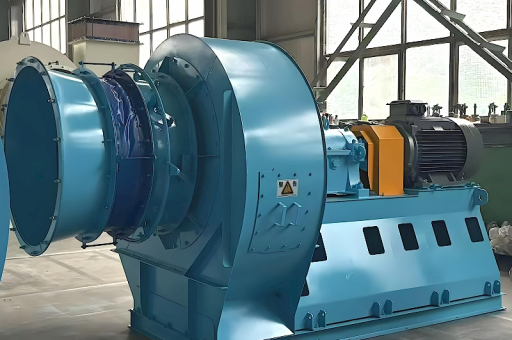
This is a highly specific piece of industrial HVAC equipment. Let's break down exactly what a Building Ventilation Single Width Single Inlet (SWSI) Centrifugal Fan is, its characteristics, and where it is used.
The Name Decoded
- Building Ventilation: This indicates the primary application. These fans are designed for general air movement in commercial, industrial, and institutional buildings (e.g., offices, schools, warehouses, factories).
- Single Width (SW): The fan wheel (impeller) has a single row of blades. This is in contrast to "Double Width" (DW), where the wheel has two rows of blades working like two fans side-by-side. Single width generally means a narrower wheel overall.
- Single Inlet (SI): Air enters the fan from only one side of the wheel. This is in contrast to "Double Inlet" (DI), where air enters from both sides.
- Centrifugal Fan: This is the core technology. The air enters the fan axially (along the shaft) and is discharged radially (at a 90-degree angle) by centrifugal force generated by the spinning wheel.
Key Characteristics of a Building Ventilation SWSI Centrifugal Fan
- High Static Pressure (ESP): Compared to an axial fan (like a tube-axial or propeller fan), a centrifugal fan is much better at overcoming system resistance, such as long duct runs, filters, heating/cooling coils, and dampers. This is its primary advantage.
- Relatively Low Airflow (CFM) for its size: Due to the "Single Width" design, the airflow is lower than a comparable "Double Width" fan of the same wheel diameter. It is a more compact unit.
- Efficient & Reliable: Well-suited for continuous operation. The design is robust and handles varying conditions well.
- Directional Discharge: The discharge can be configured in several ways (Up-blast, Down-blast, Horizontal, etc.) to suit the ductwork layout.
- Housing Types:
- Arrangement 1 (AR 1): The wheel is directly mounted on the motor shaft. Most common for smaller, compact units.
- Arrangement 10 (AR 10): The wheel is mounted on its own shaft with bearings, driven by a belt and pulley system from a motor. This allows for speed changes (changing pulley diameter) to adjust airflow and static pressure, and it's easier to maintain the motor.
How it Works (Simple Physics)
- Inlet: Air is drawn into the center of the spinning wheel (the "eye") through the single inlet opening.
- Wheel: The wheel spins, and the blades (typically backward-curved or forward-curved) fling the air outward by centrifugal force.
- Volute (Scroll Housing): The air exits the wheel and enters a specially shaped "volute" housing. This housing gradually increases in cross-sectional area towards the discharge. As the air slows down in this expanding space, its velocity (kinetic energy) is converted into pressure (static energy).
- Discharge: The high-pressure air exits through the outlet, ready to push through the ductwork.
Common Applications in Building Ventilation
- Exhaust Systems: Removing stale air, fumes, or heat from bathrooms, kitchens, labs, or manufacturing areas.
- Supply Systems: Bringing in fresh, conditioned (filtered, heated, cooled) outdoor air.
- General Make-Up Air: Replacing air that has been exhausted.
- Dust & Fume Collection: Often used as the primary mover in smaller dust collection systems or as a booster fan.
- Industrial Drying: Moving heated air over materials.
- Filtered Return Air: Used in some HVAC systems to move air from a space back to the air handler.
Advantages & Disadvantages
Advantages:
- High Pressure: Excellent for overcoming duct and filter resistance.
- Stable Performance: Maintains consistent airflow against changing system pressures.
- Quiet Operation: Generally quieter than an axial fan of equivalent pressure and flow.
- Robust & Reliable: Simple design, easy to maintain.
- Compact Size: The "Single Width" design makes it a relatively small unit for its pressure capability.
Disadvantages:
- Lower Airflow per size: For very high CFM requirements, a Double Width or an axial fan would be a more compact choice.
- Slightly More Complex: The housing is more complex than a simple axial fan.
- Lower Efficiency at low static pressure: If the system resistance is very low, a less expensive axial fan can be more efficient.
Comparison to Similar Fans
| Feature | SWSI Centrifugal | DWSI Centrifugal | Axial Fan (e.g., Vane-axial) |
|---|---|---|---|
| Airflow (CFM) | Low to Medium | High | Very High |
| Static Pressure | High | High | Low to Medium |
| Efficiency | Good | Very Good | Good (at high flow) |
| Noise | Quiet | Quieter | Louder |
| Space Required | Compact (narrow) | Wider (two inlets) | Long (inline) |
| Cost | Moderate | Higher | Lower |
When to Specify a Building Ventilation SWSI Centrifugal Fan
You would choose this fan when:
- You need moderate to high static pressure (e.g., > 1.5" WC / 375 Pa).
- You have long or complex ductwork.
- You need to install filters, coils, or dampers in the system.
- Space is limited in width (the "Single Width" advantage).
- Reliability and quiet operation are important.
In summary: The Building Ventilation Single Width Single Inlet Centrifugal Fan is a workhorse for moving air against significant resistance in commercial and industrial buildings. It offers a compact, reliable, high-pressure solution for a wide range of exhaust, supply, and process applications where a standard axial fan won't cut it.





