
This article's table of contents introduction:
- Table of Contents
- Introduction: The Convergence of Biomass Energy and Air Movement
- Chapter 1: Understanding the Core Components – Biomass Fuel Systems
- Chapter 2: Why High-Pressure Centrifugal Fans Are Non-Negotiable
- Chapter 3: The Enemy Within – Corrosion in Biomass Environments
- Chapter 4: Anticorrosion Strategies – Materials, Coatings, and Design
- Chapter 5: The Quest for Long Lifetime – Maintenance and Engineering
- Q&A Section – Expert Answers to Critical Questions
- Chapter 6: Future Trends – Smart Fans and Sustainable Wind Turbine Integration
- Conclusion: The Blueprint for Durable, High-Performance Systems
*Maximizing Efficiency & Longevity: The Role of Anticorrosion High-Pressure Centrifugal Fans in Biomass Fuel Systems*
Table of Contents
- Introduction: The Convergence of Biomass Energy and Air Movement
- Chapter 1: Understanding the Core Components – Biomass Fuel Systems
- Chapter 2: Why High-Pressure Centrifugal Fans Are Non-Negotiable
- Chapter 3: The Enemy Within – Corrosion in Biomass Environments
- Chapter 4: Anticorrosion Strategies – Materials, Coatings, and Design
- Chapter 5: The Quest for Long Lifetime – Maintenance and Engineering
- Q&A Section – Expert Answers to Critical Questions
- Chapter 6: Future Trends – Smart Fans and Sustainable Wind Turbine Integration
- Conclusion: The Blueprint for Durable, High-Performance Systems
Introduction: The Convergence of Biomass Energy and Air Movement
The global shift toward renewable energy has placed biomass fuel at the forefront of sustainable power generation. Unlike solar or wind, biomass provides a consistent, dispatchable energy source derived from organic materials such as wood chips, agricultural residues, and municipal solid waste. However, the efficient combustion or gasification of biomass does not happen by accident. It requires a precise, controlled air supply system capable of overcoming high resistance and handling corrosive byproducts.
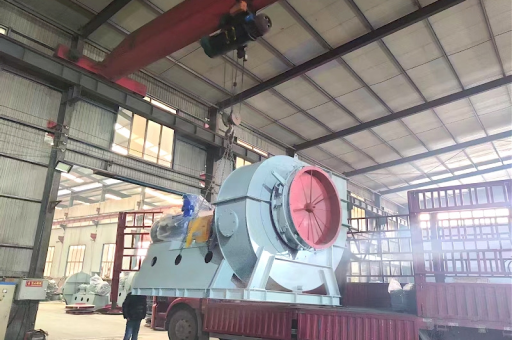
Enter the Biomass Fuel High Pressure Centrifugal Fan. This is not a standard ventilation fan. It is a specialized, heavy-duty air mover engineered to deliver the static pressure needed to force air through deep fuel beds, fluidized beds, or dense filter systems. Yet, the most pressing challenge for operators is not pressure—it is survival. The combination of acidic flue gases, high moisture, and abrasive particulates creates a death sentence for conventional fans. Therefore, Anticorrosion and Long Lifetime are the two pillars on which modern biomass fan design is built.
This article explores the engineering principles, material science, and maintenance practices that ensure these fans operate efficiently for decades. We will also examine how the technology relates to broader renewable systems, including adaptations for wind turbine cooling and hybrid energy plants.
Chapter 1: Understanding the Core Components – Biomass Fuel Systems
Biomass fuel systems vary widely, but they all share a common need: controlled airflow.
- Combustion Systems: In a typical biomass boiler, a high-pressure fan forces primary air underneath the grate to support the combustion of wet fuel (often 30-50% moisture). Secondary air, also supplied by high-pressure fans, ensures complete burnout of volatile gases. Without sufficient static pressure (often 1500-3000 Pa or higher), the air will not penetrate the fuel pile.
- Gasification Units: These require even more precise air control. The fan must push air through a restriction created by the fuel column, maintaining an oxygen-starved environment for syngas production.
- Pneumatic Conveying: Many biomass plants use fans to transport fuel chips or dust from storage silos to the burner. This requires high velocity and pressure to prevent settling in horizontal pipes.
The fan is the heart of these systems. If it fails, the entire process stops. Unlike a simple wind turbine, which relies on passive natural airflow, a biomass fan must actively create flow against extreme resistance.
Chapter 2: Why High-Pressure Centrifugal Fans Are Non-Negotiable
Why use a centrifugal fan instead of an axial fan (like a desk fan or a wind turbine blade)?
The answer lies in the pressure curve. A centrifugal fan uses a rotating impeller to accelerate air radially, creating significant static pressure. This is essential for:
- Overcoming System Resistance: Pipes, dampers, heat exchangers, and baghouse filters create friction. A low-pressure axial fan would stall.
- Penetrating Fuel Beds: Biomass fuels are heavy, wet, and irregular. High-pressure air jets are needed to lift the fuel and ensure even burning.
- Dust Handling: Centrifugal fans, specifically radial-tipped or backward-curved designs, can handle moderate dust loads without blade clogging or erosion.
Critical Design Parameters:
- Flow Rate (CFM/m³/h): Must match the thermal output.
- Static Pressure (in.wg/Pa): Must exceed the worst-case filter and duct loss.
- Impeller Type: Radial (for heavy dust) vs. Backward Inclined (for efficiency).
Chapter 3: The Enemy Within – Corrosion in Biomass Environments
The promise of Anticorrosion cannot be overstated. The flue gas from biomass is a toxic cocktail:
- Acidic Condensation: When biomass burns, sulfur, chlorine, and hydrogen are released. These form sulfuric acid (H₂SO₄) and hydrochloric acid (HCl). When the fan operates below the acid dew point (around 120-160°C), condensation occurs, quickly destroying carbon steel.
- Abrasive Erosion: Ash particles traveling at high velocity act like sandpaper, wearing down the leading edges of fan blades and the impeller bore.
- Sticky Deposits: "Sticky" ash from potassium and sodium compounds can build up on blades, causing imbalance and vibration.
Case Study: A standard carbon steel fan in a wood chip boiler lasted only 6 months before rotor failure due to acid pitting. A replacement with a Biomass Fuel High Pressure Centrifugal Fan featuring stainless steel and a heavy-duty coating extended the interval to over 6 years.
Chapter 4: Anticorrosion Strategies – Materials, Coatings, and Design
To achieve Long Lifetime, manufacturers employ a multi-layered defense:
-
Material Selection:
- Corten Steel (A242): Forms a stable rust layer in dry environments but is vulnerable to wet acid.
- Stainless Steel (SS316L / 904L): The gold standard for resistance to chlorine and sulfuric acid. SS316L is common; 904L is used for extreme chloride conditions.
- Duplex Stainless Steel: High strength and excellent stress corrosion cracking resistance.
-
Protective Coatings:
- Epoxy Phenolic: Excellent for chemical resistance but limited to lower temperatures.
- Tungsten Carbide / Ceramic Infused Coatings: Applied to blade leading edges to combat erosion. These are hard, dense, and sacrificial.
- PTFE (Teflon) Linings: Used for sticky ash applications to reduce buildup.
-
Design Modifications:
- Ventilated Housings: To keep the bearing housing cool and prevent heat transfer.
- Drain Ports: To allow condensation to escape rather than pool inside the scroll.
- Optimized Blade Profile: Thicker leading edges and increased radial clearance to reduce wear.
Chapter 5: The Quest for Long Lifetime – Maintenance and Engineering
A fan designed for Anticorrosion and Long Lifetime is only as good as its maintenance plan. Here is the engineering roadmap:
- Bearing Selection: High-temperature grease-packed bearings or oil-lubricated split pillow blocks. For heavy industrial fans, vibration monitoring (ISO 10816) is mandatory.
- Shaft Seals: Labyrinth seals or mechanical seals to prevent flue gas from reaching the bearing housing.
- Vibration Analysis: Early detection of imbalance due to ash buildup or blade erosion.
- Smart Drives: VFDs (Variable Frequency Drives) allow soft starting and speed modulation, reducing mechanical shock. This directly contributes to a Long Lifetime.
- Structural Integrity: The fan casing must be reinforced to withstand high pressure without distortion. Finite Element Analysis (FEA) is used to identify stress points.
Pro Tip: Schedule quarterly inspections of the impeller. Use a boroscope to check internal wear without disassembly. Keep a spare rotor assembly on hand for critical plants.
Q&A Section – Expert Answers to Critical Questions
Q1: How do I know if my biomass system needs a high-pressure fan? A1: If your system pressure loss (calculated across the boiler, ducts, and filter) exceeds 1500 Pa at full load, a centrifugal high-pressure fan is required. If your fuel bed is deeper than 150mm, high pressure is essential to prevent smoldering.
Q2: What is the biggest cause of premature failure in biomass fans? A2: Corrosion due to acid condensation. This is often caused by the fan running too cold or being oversized (running at low flow, causing condensation). A dedicated Anticorrosion design with a drain and heating jacket can mitigate this.
Q3: Can a biomass fan be used in a wind turbine application? A3: While a wind turbine generates electricity from natural wind, it is not a fan. However, large wind turbines often use cooling fans for the gearbox and generator. Some hybrid plants use high-pressure fans (powered by wind turbine electricity) to boost biomass combustion air during low-wind periods.
Q4: How long should a properly designed fan last? A4: With correct material selection (SS316L or better) and proper operation (keeping flue gas above acid dew point), a lifespan of 15-20 years is realistic. This is the definition of Long Lifetime in this industry.
Q5: Is there a way to retrofit an existing fan for Anticorrosion? A5: Yes. You can apply epoxy coatings, install a wash system for blade cleaning, add insulation to maintain high temperature, and upgrade the shaft seal. However, full replacement of the impeller with a corrosion-resistant alloy is often more cost-effective in the long run.
Chapter 6: Future Trends – Smart Fans and Sustainable Wind Turbine Integration
The next generation of Biomass Fuel High Pressure Centrifugal Fans is already in development.
- IoT Integration: Sensors for temperature, vibration, current draw, and blade thickness. Data is fed to a cloud-based maintenance platform that predicts failure weeks in advance.
- Hybrid Systems: As biomass plants seek to reduce their carbon footprint, they are co-locating with wind turbine farms. Excess electricity from a wind turbine can power the high-pressure fans, reducing parasitic load. This synergy is particularly effective for drying wet biomass before combustion.
- Airfoil Optimization: 3D-printed impeller blades with computational fluid dynamics (CFD) optimization achieve up to 85% static efficiency, reducing energy consumption.
- Self-Cleaning Blades: Using non-stick nano-coatings and variable pitch design to shed ash buildup automatically.
These innovations will further extend the Long Lifetime of fans while making biomass energy more economically competitive.
Conclusion: The Blueprint for Durable, High-Performance Systems
The success of a biomass power plant hinges on the reliability of its air supply. The Biomass Fuel High Pressure Centrifugal Fan is a critical asset that demands respect, not neglect. By prioritizing Anticorrosion through advanced material selection (stainless steels, ceramic coatings) and Long Lifetime through robust engineering (VFDs, vibration monitoring, smart maintenance), operators can avoid costly downtime.
Key takeaways for engineers and plant managers:
- Never undersize pressure requirements.
- Invest in anticorrosion materials upfront – it is cheaper than a shutdown.
- Consider hybrid energy systems. A wind turbine on site can power your fan, creating a closed-loop renewable solution.
- Embrace predictive maintenance. Sensors are no longer optional; they are the guarantee of Long Lifetime.
The fan may be hidden inside a duct, but its performance determines the difference between a profitable plant and a constant repair nightmare. Choose wisely, engineer for corrosion, and design for the long haul.





