
This article's table of contents introduction:
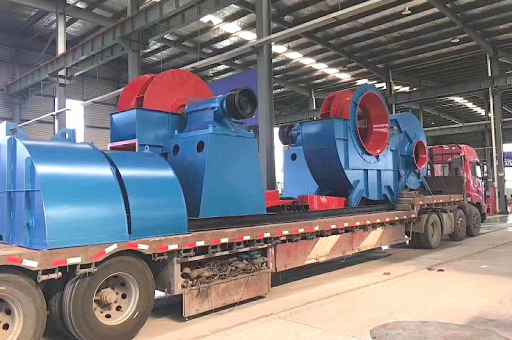
- Core Purpose: Why High Pressure?
- Key Features for Sewage Treatment
- Typical Technical Specifications
- Comparison with Other Blower Technologies
- Critical Selection Criteria
- Advantages for Sewage Treatment
- Potential Disadvantages
- Summary: Is it the right choice?
- Next Steps for Procurement
Here is a detailed breakdown of the Industrial High Pressure Centrifugal Fan (Air Blower) specifically for Sewage Treatment Plants (STPs) , covering its purpose, key features, selection criteria, and benefits.
Core Purpose: Why High Pressure?
In a Sewage Treatment Plant, the primary biological treatment stage is usually the Aeration Tank (Activated Sludge Process). Here, aerobic bacteria need a constant supply of oxygen to break down organic waste.
- Traditional Fans: Standard fans can move large volumes of air but struggle against the back pressure created by the depth of the wastewater (e.g., 5–8 meters of water column).
- High Pressure Centrifugal Fans: These are designed to generate the static pressure (typically 2000–8000 Pa or 8–32 inches of water gauge) needed to force air through the following restrictive system:
- Air filters (at the intake).
- Piping network (friction loss).
- Diffusers (fine bubble or coarse bubble) located at the bottom of the aeration tank.
Key Features for Sewage Treatment
- High Static Pressure: The defining feature. The fan wheel (impeller) is designed with backward-curved or radial blades to generate significant pressure.
- Flow Rate (CFM/m³/hr): Must match the biological oxygen demand (BOD) of the influent. Typical ranges are from 500 m³/hr to over 50,000 m³/hr.
- Material Construction:
- Impeller: Usually carbon steel or stainless steel (SS304/316) for resistance to moisture and corrosive gases (H₂S, methane).
- Housing: Heavy gauge steel with robust flanges.
- Drive Mechanism:
- Direct Drive: Motor is coupled directly to the fan shaft (higher efficiency, lower maintenance).
- Belt Drive: Allows for speed adjustment (change pulleys) to fine-tune flow/pressure.
- Sealing: High-quality shaft seals to prevent process air leakage and protect bearings from moisture.
Typical Technical Specifications
| Parameter | Typical Value for STP Application |
|---|---|
| Pressure | 2000 – 8000 Pa (8 – 32” wg) |
| Flow (Air Volume) | 1000 – 50,000 m³/hr |
| Motor Power | 5 kW – 200 kW |
| Speed | 1450 – 2900 RPM (Direct) / Variable via VFD |
| Impeller Type | Backward Curve (High efficiency, non-overloading) |
| Noise Level | 75 – 85 dB(A) (with silencer) |
| Temperature | 30°C – 50°C (ambient) |
Comparison with Other Blower Technologies
Before choosing a centrifugal fan, it's crucial to compare it with the other common STP blower types:
| Feature | High Pressure Centrifugal Fan | Roots Blower (PD Blower) | Turbo Blower |
|---|---|---|---|
| Pressure Range | Medium-High | High | Medium-High |
| Flow Control | Variable (VFD) or Damper | More complex (By-pass or skid) | Efficient (VFD) |
| Efficiency | Good (70-80%) | Lower (50-65%) | Very High (80-85%) |
| Noise | Moderate | Very High (needs heavy silencer) | Low |
| Maintenance | Simple (bearings, belts) | High (rotor timing, oil, wear) | Very Low (magnetic bearings) |
| Cost | Lowest Initial Cost | Medium | Highest Initial Cost |
| Best for | Medium plants, continuous duty, budget-sensitive | High pressure, constant flow, older plants | Large plants, energy savings, minimal maintenance |
Conclusion for STP: The Centrifugal Fan is the "workhorse" option. It is cheaper to buy and maintain than a Turbo, and quieter/more efficient than a Roots blower, making it the most common choice for medium-sized municipal and industrial STPs.
Critical Selection Criteria
When specifying a fan for your STP, your engineer or supplier must consider:
- Actual Operating Point: Do not oversize. Use the actual Total Dynamic Head (TDH) = Diffuser depth + friction losses + filter loss. Oversizing wastes energy.
- Temperature: Design for ambient temperature + motor heat (usually up to 40°C or 50°C). Error: Hot air weighs less → fan pressure drops.
- Altitude: Higher altitude reduces air density, requiring a larger fan or higher speed to deliver the same mass flow of oxygen.
- Materials: Inlet air is humid and may contain H₂S. The fan housing and impeller must be coated or made of stainless steel to prevent corrosion.
- Control System: Best practice is a VFD (Variable Frequency Drive) to match airflow to the biological oxygen demand (DO control loop). This saves 30-50% in energy.
Advantages for Sewage Treatment
- Reliability: Simple design with few moving parts (no gears or timing components like Roots).
- Continuous Duty: Designed to run 24/7/365.
- Cost-Effective: Lowest initial purchase price compared to Turbo or PD blowers.
- Quiet Operation: Significantly quieter than a Roots blower (if proper silencers are installed).
- Flexibility: Easy to change performance with belt drive or VFD.
Potential Disadvantages
- Surge Risk: Running at very low flow (below 40-50% of the design point) can cause surge (unstable operation, vibration). A blow-off valve or bypass is required.
- Sensitivity to System Pressure: A slight change in diffuser blockage or water level will change the flow rate (unlike a Roots blower which is constant volume).
- Efficiency Drop: If operated consistently at low load without VFD, efficiency suffers.
Summary: Is it the right choice?
YES, the High Pressure Centrifugal Fan is a standard choice for:
- Municipal STPs (e.g., 5 MLD to 100 MLD).
- Industrial Effluent Treatment Plants (ETPs).
- Any application where reliability and low initial cost are the primary drivers, and a VFD will be used for control.
NO, consider a Turbo Blower if:
- You have a very large plant (>100 MLD) and energy costs are a critical factor (Turbo saves 15-20% in energy).
- You have very strict noise requirements (e.g., near residential areas).
- You need oil-free air for membrane bioreactors (MBRs).
Next Steps for Procurement
If you are looking to purchase one, you should provide the following to a fan manufacturer:
- Required Air Flow: (m³/hr or CFM)
- Required Static Pressure: (Pa or inches of water gauge)
- Total TDH (Depth of diffuser + losses): (meters)
- Inlet Air Temperature & Altitude:
- Corrosive Elements: Yes/No (If yes, specify like H₂S)
- Power Supply: Voltage/Phase/Hz (e.g., 415V/3Ph/50Hz)
- Control Method: Direct-on-line, Star-Delta, VFD.
Would you like a sample technical data sheet template to send to a supplier, or a list of top manufacturers for this type of fan?





