
This article's table of contents introduction:
- Table of Contents
- Introduction: The Heat Challenge in Smelting Operations
- Understanding the Core Components: Smelting Furnace, Grate Cooler, and Centrifugal Fan
- Why Centrifugal Blowers Are Preferred for Furnace Exhaust Cooling
- The Synergy Between Grate Cooler and Fan Blower in Clinker/Particles Processing
- Critical Design Parameters: Airflow, Pressure, and Temperature Tolerance
- Common Failure Modes and Maintenance Strategies for Fan Systems
- Energy Optimization and Variable Frequency Drive (VFD) Integration
- Q&A: Frequently Asked Questions on Fan Performance in High-Tech Smelting
- Conclusion: Future Trends in Cooling Systems for Smelting Furnaces
** The Critical Role of Centrifugal Exhaust Fans in Smelting Furnace Grate Cooler Systems: Optimization, Cooling Efficiency, and Maintenance
Table of Contents
- Introduction: The Heat Challenge in Smelting Operations
- Understanding the Core Components: Smelting Furnace, Grate Cooler, and Centrifugal Fan
- Why Centrifugal Blowers Are Preferred for Furnace Exhaust Cooling
- The Synergy Between Grate Cooler and Fan Blower in Clinker/Particles Processing
- Critical Design Parameters: Airflow, Pressure, and Temperature Tolerance
- Common Failure Modes and Maintenance Strategies for Fan Systems
- Energy Optimization and Variable Frequency Drive (VFD) Integration
- Q&A: Frequently Asked Questions on Fan Performance in High-Tech Smelting
- Conclusion: Future Trends in Cooling Systems for Smelting Furnaces
Introduction: The Heat Challenge in Smelting Operations
In modern smelting and metallurgy, the smelting furnace is the heart of material transformation. However, the extreme temperatures—often exceeding 1,500°C—create a secondary challenge: massive heat waste and the need for controlled cooling. Without efficient cooling, downstream equipment like conveyors, storage silos, and the grate cooler itself risk thermal deformation, reduced service life, and even safety hazards.
This is where the centrifugal exhaust fan blower becomes indispensable. It is not merely a ventilation accessory; it is a precision instrument that ensures the grate cooler receives the correct volume of cooling air at the right pressure. This article dives deep into the engineering logic, operational principles, and optimization strategies for these cooling systems. By understanding the interplay between the smelting furnace, grate cooler, and centrifugal fan, operators can achieve higher throughput, reduced energy cost, and extended equipment life.
Understanding the Core Components: Smelting Furnace, Grate Cooler, and Centrifugal Fan
A typical high-temperature smelting line consists of several linked stages. The smelting furnace melts raw materials, producing molten metal or slag. This hot material then moves onto a moving grate cooler, where it is cooled by ambient air forced through the bed by centrifugal exhaust fan blowers.
- Smelting Furnace: Operates at peak thermal loads. Excessive heat buildup reduces refractory life and increases fuel consumption.
- Grate Cooler: A robust flat conveyor made of heat-resistant grates. Its primary role is to transfer heat from the hot solids to the intake air, preheating the air sent to the furnace (heat recovery) while cooling the solid product.
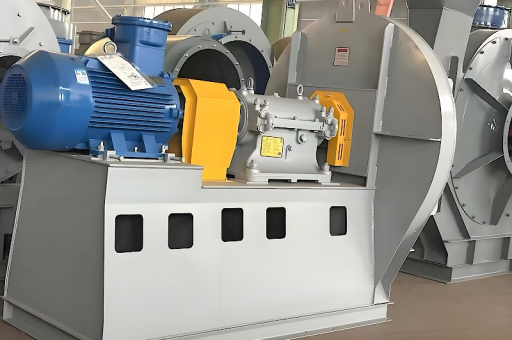
- Centrifugal Exhaust Fan Blower: This is the motor-driven impeller that generates the necessary static pressure to push air through the material bed on the grate. Its design parameters—blade angle, rotation speed, housing shape—directly affect heat exchange efficiency.
SEO Tip: In the smelting industry, "centrifugal fan blower" is often used interchangeably with "induced draft fan," though the exact term used here is "centrifugal exhaust fan blower," which emphasizes the forced cooling role.
Why Centrifugal Blowers Are Preferred for Furnace Exhaust Cooling
Compared to axial fans, the centrifugal exhaust fan blower offers distinct advantages in the harsh smelting environment:
- High Static Pressure Capability: The material bed on the grate cooler can be several feet thick, requiring significant air pressure (often 2,000–5,000 Pa or more) to penetrate and fluidize the material. Axial fans struggle under such resistance; centrifugal designs excel.
- Particle Handling: Smelting environments generate abrasive dust (e.g., iron oxide, silica). The centrifugal fan's impeller design, especially with radial or backward-curved blades, is less prone to fouling and erosion than axial fans.
- Temperature Tolerance: High-temperature centrifugal exhaust fans are constructed with heat-resistant alloys (e.g., stainless steel 310S or Inconel) and can handle inlet temperatures up to 450°C (or higher with cooling jackets). This is critical for grate cooler applications where the air exit temperature after heat exchange is still very high.
Real-world example: In a copper smelter, replacing aging axial fans with a modern centrifugal exhaust fan blower system for the grate cooler boosted cooling efficiency by 18% and reduced annual fan blade replacement costs by 40%.
The Synergy Between Grate Cooler and Fan Blower in Clinker/Particles Processing
The grate cooler and the centrifugal fan blower together form a forced-draft system that controls the product temperature as well as the energy recovery. Here is the typical dynamic:
- Under-grate air plenum: The fan pushes air into a sealed chamber (plenum) beneath the moving grates.
- Air distribution: Air travels upward through the perforated grates, passing through the hot material layers.
- Heat exchange: The air absorbs heat from the material, cooling it. The now-hot air exits the cooler and is often ducted into the furnace for combustion air, thereby recovering waste heat.
- Exhaust control: In scenarios where heat recovery is not the primary goal, the centrifugal exhaust fan blower draws the heated air from the medium and exhausts it to a baghouse or stack.
Key engineering challenge: Balancing airflow across the width of the grate cooler. Uneven air distribution creates "hot spots" that can melt grate bars. Modern centrifugal fan blower systems incorporate dampers, variable inlet vanes, or multi-zone plenums to maintain uniform pressure.
Critical Design Parameters: Airflow, Pressure, and Temperature Tolerance
When specifying a centrifugal exhaust fan blower for a smelting furnace and grate cooler system, engineers must calculate three core parameters:
| Parameter | Typical Range | Impact on System |
|---|---|---|
| Airflow (m³/h) | 50,000 – 500,000+ | Determines cooling rate. Low airflow leads to product overheating; high airflow wastes energy. |
| Static Pressure (Pa) | 1,500 – 7,000 | Must overcome grate resistance, material layer thickness, and duct losses. |
| Max Inlet Temperature (°C) | 350 – 650 | Fan material selection (carbon steel vs. alloy) and cooling method (shaft cooling, fin cooling). |
Wind turbine analogy: Just as a wind turbine converts kinetic wind energy into electricity, the centrifugal fan converts electrical energy into kinetic air energy. In the grate cooler application, the fan is effectively "wind turbine in reverse" — it forces air into the system. Some advanced facilities even recover some of the fan's kinetic energy using low-pressure recovery turbines downstream.
Common Failure Modes and Maintenance Strategies for Fan Systems
The harsh thermal, abrasive, and corrosive environment of a smelting furnace takes a toll on the centrifugal exhaust fan blower. Common failures include:
- Blade erosion: High-velocity particles (especially in the grate cooler exhaust) wear down blade surfaces. Solution: Use hard-facing coatings like tungsten carbide or ceramic tiles on leading edges.
- Bearing failure due to heat soak: Heat conducts along the shaft to the bearing housing. Solution: Install external cooling fans or water-cooled bearing assemblies.
- Imbalance from material buildup: Sticky fines from smelting (e.g., zinc oxide) build up on the impeller. Solution: Regular maintenance washing or installation of online cleaning nozzles.
- Vibration from misalignment: The fan shaft expands during heat-up, causing coupling misalignment. Solution: Use high-temperature expansion joints and flexible coupling designs.
Maintenance best practice: Implement a predictive maintenance program with vibration sensors (ISO 10816-3 standards), thermography, and periodic rotor balancing. Many smelters have moved to remote monitoring of the centrifugal exhaust fan blower via IoT platforms.
Energy Optimization and Variable Frequency Drive (VFD) Integration
A centrifugal fan blower operates at full speed for most of the smelting process, but varying production loads allow for energy savings through VFDs.
- Without VFD: Fan runs at a constant speed, with airflow modulated by dampers or inlet vanes. This causes significant wasted energy (damper throttling ~20-30% efficiency loss).
- With VFD: Motor speed directly controls airflow. This is especially beneficial for grate cooler systems where the cooling demand changes with the material feed rate.
Energy savings example: A smelter installed VFDs on 3 centrifugal exhaust fan blowers serving their grate coolers. Results: average power draw dropped from 850 kW to 680 kW (20% reduction). Payback period: 14 months.
Integration tip: The VFD must be configured with a cooling fan or separate wind turbine style cooling for the drive itself, as ambient smelter temperatures can exceed 55°C.
Q&A: Frequently Asked Questions on Fan Performance in High-Tech Smelting
Q1: What is the difference between a centrifugal blower and an axial fan for smelting furnace cooling? A: A centrifugal exhaust fan blower generates much higher static pressure (required to force air through a grate cooler material bed), while axial fans primarily move large volumes at low pressure. For most smelting furnace cooling tasks, centrifugal designs are mandatory.
Q2: Why does my grate cooler have hot spots even when the fan is running at full speed? A: Hot spots are often caused by uneven air distribution across the grate width. Check for blocked air channels, clogged grates, or a fan outlet duct that does not feed evenly into the plenum. Also, consider if the centrifugal fan blower is operating on the wrong part of its curve (i.e., stall region).
Q3: Can I use a modified wind turbine fan for smelting exhaust instead of a centrifugal blower? A: A wind turbine rotor design is optimized for low-torque, high-volume free-air rotation. It cannot generate the required static pressure for a grate cooler. However, smaller cooling fans for VFD cabinets or motor cooling in smelters are often based on simplified wind turbine blade designs.
Q4: What factors shorten the lifespan of a centrifugal fan in a smelting furnace environment? A: High inlet temperature (above design spec), abrasive dust, vibration from imbalance, and inadequate cooling of the bearing housing. Regular thermal imaging and vibration analysis are crucial.
Conclusion: Future Trends in Cooling Systems for Smelting Furnaces
The smelting furnace and its companion grate cooler will continue to demand higher thermal efficiency and lower energy consumption. Future innovation in centrifugal exhaust fan blower technology points toward:
- Smart fan control: AI-based algorithms that predict cooling demand based on furnace temperature and material flow.
- High-temperature materials: Ceramic matrix composite (CMC) blades that can withstand 900°C inlet air.
- Waste heat recovery integration: Fan systems that not only cool but also feed heat into a supercritical CO2 bottoming cycle for additional power generation.
While a wind turbine captures naturally moving air, the centrifugal exhaust fan blower in a smelting operation is fundamentally a powerful enabler—creating precise airflow to control a process that is centuries old but still critically evolving. By understanding and optimizing this core component, smelters can achieve cleaner, safer, and more profitable operations.





