
This article's table of contents introduction:
- What You Are Describing
- Key Technical Specifications (What to Look For)
- Typical Applications for a 3-Phase Stainless Steel Centrifugal Fan
- Advantages of 3-Phase Power for this Fan
- Common Questions & Considerations
- How to Source or Specify One
- Summary
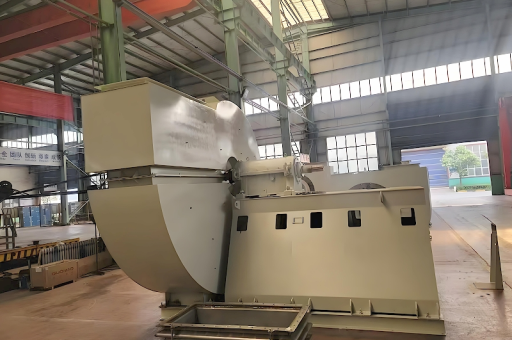
It sounds like you are looking for information on a Large Ventilation Centrifugal Flow Fan made of Stainless Steel, powered by a 3-Phase motor. This is a specific type of industrial fan often referred to as a Centrifugal Blower or Squirrel Cage Fan.
Here is a comprehensive breakdown of what this equipment is, its key features, common applications, and what to look for when sourcing one.
What You Are Describing
You are describing a Class II or Industrial Duty Centrifugal Fan. Let's break down the keywords:
- Large: Indicates high airflow (CFM) and high static pressure capabilities. Often used in central systems.
- Ventilation: The primary purpose is moving large volumes of air for exhaust, supply, or process cooling.
- Centrifugal Flow (vs Axial): Air enters axially (along the shaft) and exits radially (90-degree turn). This creates high pressure, crucial for overcoming duct resistance.
- Stainless Steel: The housing, impeller (wheel), and often the shaft are made of SS304 or SS316. This is critical for corrosive environments (fume exhaust, salt air, food processing) or hygienic applications.
- 3-Phase Power: The motor runs on 208V, 230V, 460V, or 575V 3-phase AC power. This provides higher starting torque, greater efficiency, and lower electrical current draw compared to single-phase motors for large loads.
Key Technical Specifications (What to Look For)
When buying or specifying this fan, you need these parameters:
- Airflow (CFM - Cubic Feet per Minute): "Large" typically means 5,000 CFM to 100,000+ CFM.
- Static Pressure (inches w.g. - Water Gauge): How much resistance the fan can overcome (e.g., 2" to 20").
- Motor Power (HP - Horsepower): Usually 5 HP, 10 HP, 20 HP, 50 HP, or larger.
- Impeller Type:
- Forward Curved: High volume, lower pressure (HVAC).
- Backward Inclined: Higher efficiency, non-overloading power curve (industrial).
- Airfoil: Most efficient for clean air (like power plants).
- Radial Blade (Paddle Wheel): For dirty, sticky, or high-temperature air.
- Speed (RPM): Often belt-driven (allows speed adjustment) or direct drive. Large fans may operate at 800-1800 RPM.
- Temperature Rating: Stainless can handle high temperatures, but the motor and bearings need to be rated (e.g., for ovens).
Typical Applications for a 3-Phase Stainless Steel Centrifugal Fan
Because of the stainless steel construction and high power, this fan is used in harsh environments:
- Corrosive Fume Exhaust: Chemical labs, plating shops, battery rooms, acid storage.
- Food Processing: Bakeries, meat packing, grain drying (must be corrosion-resistant and easy to clean).
- Pharmaceutical & Cleanrooms: High hygiene standards; stainless resists bacteria growth.
- Wastewater Treatment: Handling moist, corrosive air (H2S gas).
- Marine & Offshore: Saltwater atmosphere requires stainless to prevent rust.
- Welding Exhaust: Sparks and fumes require a rugged, non-rusting fan.
Advantages of 3-Phase Power for this Fan
| Feature | Benefit |
|---|---|
| Higher Efficiency | Lower operating cost over the life of the fan. |
| Smaller Wire Size | For the same HP, 3-phase draws less current than single-phase, reducing wiring costs. |
| Longer Motor Life | No start capacitor to fail; smoother startup. |
| Variable Speed Ready | 3-phase motors easily pair with Variable Frequency Drives (VFDs) for precise airflow control. |
Common Questions & Considerations
- Delivery Time: Large custom stainless steel blowers are not "off the shelf." Lead times can be 4 to 12+ weeks depending on manufacturer (Greenheck, New York Blower, Twin City Fan, Chicago Blower, Cincinnati Fan).
- Price: This is a high-investment item. A large (e.g., 20 HP) stainless steel centrifugal fan can range from $5,000 to $50,000+ depending on CFM, pressure, and whether it's explosion-proof or lined with special coatings.
- Noise: Large centrifugal fans are loud. You will likely need an inlet cone silencer and possibly an outlet silencer.
- Motor Location:
- Arrangement 1 (A1): Direct Drive, motor mounted on the fan frame.
- Arrangement 4 (A4): Belt Drive, motor on a slide base for tension adjustment (most common for large units).
- Arrangement 8 (A8): Motor on fan, but belt drive with bearings on shaft.
How to Source or Specify One
To get an accurate quote from a supplier, you need to provide:
- CFM Required: (e.g., 15,000 CFM)
- Static Pressure: (e.g., 6" w.g.)
- Air/Gas Type: (e.g., "Fumes from hydrochloric acid" or "Hot air from an oven at 400°F")
- Power Supply: (e.g., "460V / 60Hz / 3-Phase")
- Material: (e.g., "Housing: SS304, Impeller: SS316L")
- Mounting: (e.g., "Floor mounted on vibration isolators" or "Roof curb mount")
Example Search Terms for Suppliers:
- "Industrial stainless steel centrifugal blower 20 HP 3 phase"
- "SS304 fume exhaust fan 15,000 CFM"
- "Backward inclined stainless steel fan for corrosive air"
Summary
You are looking at a high-end, heavy-duty industrial air mover designed for longevity in tough, corrosive, or hygienic environments. It requires a proper 3-phase power supply and should be selected based on specific airflow/pressure calculations for your duct system. Do not attempt to install this yourself; you need a licensed electrician and an HVAC/mechanical contractor for the ductwork, vibration isolation, and VFD (if used).





