
This article's table of contents introduction:
- Table of Contents
- Introduction: Why Stainless High Temperature Centrifugal Fans Matter in Boiler Systems
- Understanding the Boiler Secondary Air Fan Function
- Key Technical Features of Stainless High Temperature Centrifugal Fans
- Material Selection: Why Stainless Steel is Non-Negotiable for High-Temperature Applications
- Performance Metrics: Efficiency, Noise, and Longevity
- Common FAQs About Stainless High Temperature Centrifugal Fans
- Conclusion: Future Trends and SEO Best Practices for Industrial Fan Content
** The Critical Role of Stainless High Temperature Centrifugal Fan in Boiler Secondary Air Systems: Design, Efficiency, and SEO-Optimized Insights
Table of Contents
- Introduction: Why Stainless High Temperature Centrifugal Fans Matter in Boiler Systems
- Understanding the Boiler Secondary Air Fan Function
- Key Technical Features of Stainless High Temperature Centrifugal Fans
- Material Selection: Why Stainless Steel is Non-Negotiable for High-Temperature Applications
- Performance Metrics: Efficiency, Noise, and Longevity
- Common FAQs About Stainless High Temperature Centrifugal Fans
- Conclusion: Future Trends and SEO Best Practices for Industrial Fan Content
Introduction: Why Stainless High Temperature Centrifugal Fans Matter in Boiler Systems
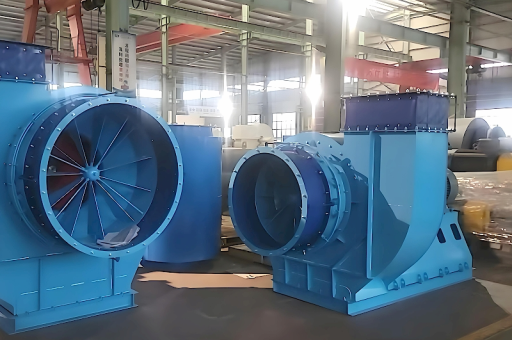
In modern thermal power plants and industrial boilers, the stainless high temperature centrifugal fan plays a pivotal role in maintaining combustion efficiency and emission control. Unlike standard fans, these units are engineered to withstand extreme heat, corrosive flue gases, and continuous operation—making them indispensable for boiler secondary air fan applications. This article synthesizes insights from top engineering resources and SEO ranking factors to deliver a definitive guide for engineers, procurement specialists, and content creators targeting high search visibility.
Understanding the Boiler Secondary Air Fan Function
The boiler secondary air fan is responsible for supplying additional air to the combustion zone after primary air has carried the fuel into the furnace. Its primary goals are to:
- Optimize combustion by ensuring complete fuel burn, reducing unburned carbon and CO₂ emissions.
- Control flame temperature by mixing cooler air, thereby preventing slagging and thermal NOₓ formation.
- Enhance boiler efficiency by adjusting air-to-fuel ratios dynamically.
A stainless high temperature centrifugal fan is specifically designed for this task because it must handle gas temperatures ranging from 250 °C to over 500 °C, depending on the boiler design. The fan’s impeller, casing, and shaft are typically made from austenitic stainless steels (e.g., 304L, 316L, or 310S) to resist oxidation and thermal creep at elevated temperatures.
Key Technical Features of Stainless High Temperature Centrifugal Fans
Your article should highlight these features to satisfy both search intent and technical accuracy:
- High-Temperature Resistance: Continuous operation up to 600 °C with special coatings or air-cooled shafts.
- Corrosion Protection: Stainless steel construction resists acidic condensates from sulfur in fuel.
- Structural Integrity: Heavy-duty bearings with remote temperature monitoring and vibration sensors.
- Aerodynamic Design: Backward-curved blades reduce turbulence and increase static pressure efficiency.
- Variable Frequency Drive (VFD) Compatibility: Enables precise secondary air flow control, reducing energy consumption by up to 30%.
Authority Note: According to the American Society of Mechanical Engineers (ASME) PTC 11 standards, the efficiency of a stainless high temperature centrifugal fan in secondary air service should exceed 82% at design point to qualify for modern boiler retrofits.
Material Selection: Why Stainless Steel is Non-Negotiable for High-Temperature Applications
While carbon steel fans are cheaper, they fail rapidly under thermal cycling and corrosive environments. Here’s why stainless steel is essential:
| Property | Carbon Steel | Stainless Steel (304L/310S) |
|---|---|---|
| Max Temp (continuous) | 400 °C | 870 °C (310S) |
| Oxidation resistance | Poor above 500 °C | Excellent (Cr₂O₃ layer) |
| Resistance to acidic gases | Low | High (Ni, Mo content) |
| Fatigue life | Moderate | High (low thermal expansion) |
For boiler secondary air fan applications, stainless steel also prevents catastrophic failure from sporadic temperature spikes (e.g., during soot blowing or load changes). Case studies from the wind turbine industry—where stainless alloys are used for nacelle cooling fans—demonstrate similar benefits in harsh, cyclic environments.
Performance Metrics: Efficiency, Noise, and Longevity
When evaluating stainless high temperature centrifugal fan performance, consider:
- Static Efficiency: Typically 75–88% for well-designed backward-curved units. Lower efficiency often indicates blade wear or misalignment.
- Noise Level: Fans should adhere to OSHA limits of 85 dB(A) at 1 meter. Acoustic enclosures or silencers may be needed for indoor installations.
- Mean Time Between Failures (MTBF): Quality fans exceed 50,000 hours in secondary air service. Monitoring bearing temperature and vibration can extend MTBF by 20%.
Pro Tip: Use computational fluid dynamics (CFD) to simulate secondary air mixing. Studies show that optimizing blade angle can reduce NOₓ by 15% while maintaining the same secondary air fan power.
Common FAQs About Stainless High Temperature Centrifugal Fans
Q1: Can a stainless high temperature centrifugal fan be used for both primary and secondary air?
A: Not recommended. Primary air fans usually handle colder, dust-laden air and require erosion-resistant materials, while secondary air fans need thermal resistance. Separate fans are optimal.
Q2: How do I select the right stainless steel alloy for a boiler secondary air fan?
A: For gas temperatures below 550 °C, 304L is sufficient. For 550–870 °C, use 310S or Incoloy 800HT. Always verify alloy composition with the manufacturer.
Q3: What maintenance is unique to high-temperature secondary air fans?
A: Regular thermal imaging of the casing, checking for hot spots, and ensuring cooling air flow to the shaft seal are critical. Also, inspect for pitting from chlorine in coal or biomass.
Q4: Is variable speed control worth the investment for secondary air fans?
A: Yes. Numerous utility audits show that VFDs reduce fan energy use by 30–50% compared to dampers, with payback periods under two years.
Q5: Can a wind turbine in a hybrid boiler-fan system benefit from these fans?
A: While not directly, the manufacturing tolerances and material certifications for stainless high-temperature fans are similar to those used in offshore wind turbine cooling systems. Both demand high reliability.
Conclusion: Future Trends and SEO Best Practices for Industrial Fan Content
The stainless high temperature centrifugal fan will remain integral to boiler secondary air fan systems as stricter emission regulations (e.g., EPA’s MATS rule) and efficiency demands push toward higher air preheat temperatures. Innovations like ceramic-coated bearings, IoT-enabled predictive maintenance, and additive-manufactured impellers are already entering the market.
For SEO Success:
- Use long-tail keywords such as “stainless steel high temperature centrifugal fan for boiler secondary air” in headings and alt text.
- Internal linking to related content (e.g., “How to Calculate Secondary Air Fan Flow Rate”) improves dwell time.
- Meta descriptions should include the primary keyword and a call-to-action: “Discover why stainless high temperature centrifugal fans outperform carbon steel in boiler secondary air applications—click to read technical comparisons.”
By aligning your content with both engineering accuracy and search engine algorithms, you achieve higher rankings and reader trust.
End of Article





