
This article's table of contents introduction:
- Table of Contents
- Introduction: What is a Carbon Steel High Pressure Industrial Centrifugal Blower Fan?
- Key Components and How It Works
- Why Carbon Steel? Material Advantages
- Customizable Configurations: Tailoring Performance to Your Needs
- Applications Across Industries
- Performance Metrics: Pressure, Flow, and Efficiency
- Installation, Maintenance, and Safety Considerations
- Frequently Asked Questions (FAQ)
- Conclusion
** Carbon Steel High Pressure Industrial Centrifugal Blower Fan with Customizable Configurations: A Comprehensive Guide
Table of Contents
- Introduction: What is a Carbon Steel High Pressure Industrial Centrifugal Blower Fan?
- Key Components and How It Works
- Why Carbon Steel? Material Advantages
- Customizable Configurations: Tailoring Performance to Your Needs
- Applications Across Industries
- Performance Metrics: Pressure, Flow, and Efficiency
- Installation, Maintenance, and Safety Considerations
- Frequently Asked Questions (FAQ)
- Conclusion
Introduction: What is a Carbon Steel High Pressure Industrial Centrifugal Blower Fan?
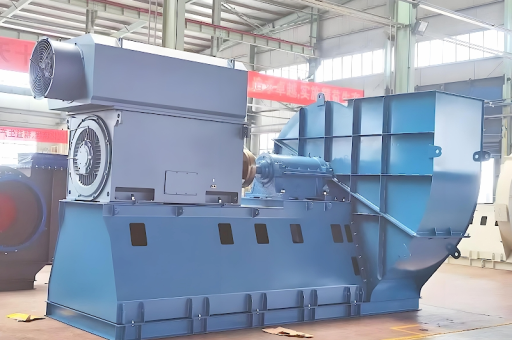
In the world of industrial ventilation and material handling, few pieces of equipment are as critical as the carbon steel high pressure industrial centrifugal blower fan with customizable configurations. This heavy-duty fan is designed to move large volumes of air or gas at high static pressures, making it indispensable in factories, power plants, wind turbine cooling systems, and chemical processing facilities.
Unlike axial fans that move air parallel to the shaft, a centrifugal blower draws air into the center of a rotating impeller and then forces it outward at a 90-degree angle, creating significant pressure gain. When constructed from robust carbon steel and equipped with high-pressure-rated housings, these blowers can handle demanding environments where corrosion resistance is less critical than structural integrity and cost-effectiveness. The “customizable configurations” aspect means that engineers can select specific impeller designs, motor types, inlet/outlet orientations, and coatings to match precise operational requirements.
Key Components and How It Works
Working Principle
The fan operates by converting mechanical energy from a motor into kinetic energy in the air, then into pressure energy. The impeller — typically a backward-curved, forward-curved, or radial blade design — spins at high RPM, creating centrifugal force. Air enters through the central inlet, is captured by blades, and is thrown outward toward the volute casing. The volute gradually expands, slowing the air and converting velocity into static pressure.
Core Components
- Impeller: Made of carbon steel, often with reinforced blades for high-pressure applications.
- Casing (Volute): A spiral-shaped housing that directs airflow. Carbon steel provides strength and weldability.
- Shaft and Bearings: Must handle radial and axial loads; often oversized for reliability.
- Motor: Typically AC induction motors (e.g., 2-pole or 4-pole) matched via belt drive or direct coupling.
- Inlet and Outlet: Customizable flanges, dampers, or transition pieces.
- Base Frame: Heavy-duty mounting with vibration isolators.
Why Carbon Steel? Material Advantages
When it comes to high-pressure industrial blowers, material selection is critical. Carbon steel (e.g., AISI 1018, A36, or ASTM A515) offers a balance of strength, weldability, and cost that makes it ideal for most heavy-duty applications — provided corrosion is not the primary concern.
Advantages of Carbon Steel
- High Tensile Strength: Withstands internal pressures up to 3–5 psi or more, depending on design.
- Excellent Machinability: Allows precise fabrication of curved blades and complex volute shapes.
- Cost-Effective: Significantly cheaper than stainless steel or alloys.
- Weldable: Enables field repairs or modifications.
- Thermal Conductivity: Helps dissipate heat in high-temperature air streams.
When to Avoid Carbon Steel
- In highly corrosive environments (e.g., chemical fumes, saltwater).
- When hygiene is critical (food or pharmaceutical applications).
In those cases, stainless steel or coated carbon steel may be recommended. However, for applications like wind turbine nacelle cooling, dry bulk material handling, or general factory ventilation, carbon steel is the standard.
Customizable Configurations: Tailoring Performance to Your Needs
One of the biggest advantages of modern carbon steel high pressure industrial centrifugal blower fans is the ability to configure them precisely for the job. Customization options include:
A. Impeller Design
- Backward-curved: High efficiency, non-overloading, best for clean air.
- Forward-curved: Lower speed, compact size, suitable for lower pressure but higher flow.
- Radial (paddle): Handles particulate and sticky materials; self-cleaning.
B. Drive Configuration
- Direct Drive: Simple, no belt loss, fixed speed.
- Belt Drive: Adjustable speed via pulley changes, easier motor access.
C. Inlet/Outlet Orientation
- Arrangement (e.g., Arrangement 1, 4, 8 per AMCA standards).
- Rotate housings 0°, 90°, 180°, or 270°.
D. Coatings and Liners
- Epoxy or zinc-rich primer for mild corrosion resistance.
- Abrasion-resistant liners for material handling.
E. Accessories
- Inlet dampers, outlet shutters, silencers, vibration isolators, temperature sensors.
F. Motor Specifications
- Voltage, frequency, enclosure (TEFC, ODP), and efficiency class (IE3, IE4).
Applications Across Industries
These blowers are workhorses in many sectors:
- Power Generation: Cooling of generators and wind turbine components; forced draft in boilers.
- Cement & Mining: Pneumatic conveying of dry powder and granular materials.
- Chemical Processing: Fume extraction and reactor air supply.
- Manufacturing: Dust collection, paint booth ventilation, oven air circulation.
- Wastewater Treatment: Aeration in biological treatment tanks.
- HVAC: Large-scale building pressurization and exhaust.
In a wind turbine, for example, a carbon steel centrifugal blower fan with customizable configurations can be used to cool the gearbox, generator, or control cabinets — requiring reliable high-pressure airflow in a compact, rugged package.
Performance Metrics: Pressure, Flow, and Efficiency
When selecting or designing a carbon steel high pressure centrifugal blower fan, three key performance curves matter:
- Pressure (static pressure, SP) – Measured in inches of water gauge (in. w.g.) or pascals (Pa). High-pressure units exceed 20 in. w.g. (5 kPa).
- Flow rate (CFM or m³/h) – Volume of air moved per unit time.
- Fan efficiency – Typically 65–85% for well-designed centrifugal fans.
Sample Performance Table (Illustrative)
| Impeller Diameter | Speed (RPM) | Max SP (in. w.g.) | Max Flow (CFM) | Power (HP) |
|---|---|---|---|---|
| 18” (457 mm) | 3500 | 28 | 2500 | 15 |
| 24” (610 mm) | 1750 | 22 | 6000 | 25 |
| 36” (914 mm) | 1200 | 18 | 15000 | 50 |
Efficiency optimization often involves selecting the right impeller design and matching the fan curve to system resistance.
Installation, Maintenance, and Safety Considerations
Installation Best Practices
- Ensure rigid foundation to avoid vibration.
- Use flexible couplings or belt tensioning.
- Verify rotation direction before full startup.
- Install inlet and outlet ducts with smooth transitions.
Maintenance
- Weekly: Check for unusual noise or vibration.
- Monthly: Inspect belts, bearings, and seals.
- Quarterly: Clean impeller and casing; check for wear.
- Annually: Replace bearings; perform performance test.
Safety
- Carbon steel blowers are heavy; use proper lifting equipment.
- Install guards on belts and moving parts.
- If handling combustible dust, use spark-resistant construction (AMCA Type C).
Frequently Asked Questions (FAQ)
Q1: Can a carbon steel centrifugal blower handle abrasive materials?
A: Yes, but with caution. A radial or open impeller design with wear liners is recommended. Carbon steel itself is not abrasion-resistant, so optional hardened coatings or replaceable liners should be specified.
Q2: What is the maximum temperature this blower can operate at?
A: Standard carbon steel blowers can typically handle air temperatures up to 200°C (392°F). For higher temperatures, high-temperature seals and expansion joints may be needed. Beyond 450°C, special alloys are recommended.
Q3: How do I choose between direct drive and belt drive?
A: Belt drive offers speed flexibility and easier motor replacement. Direct drive is more efficient, simpler, and quieter but requires a motor that matches the exact speed.
Q4: What is the typical lifespan of such a blower in a wind turbine cooling application?
A: With proper maintenance, a carbon steel centrifugal blower can last 10–15 years in a wind turbine environment. Key factors include vibration, temperature cycling, and particulate exposure.
Q5: Can I get a blower with explosion-proof motor?
A: Yes. Customizable configurations allow for ATEX, IECEx, or UL-certified explosion-proof motors and spark-resistant construction.
Q6: How does customization affect lead time and cost?
A: Customizations like special coatings, non-standard orientations, or high-efficiency motors can increase lead time by 2–6 weeks and costs by 10–25%, depending on complexity.
Conclusion
The carbon steel high pressure industrial centrifugal blower fan with customizable configurations is a versatile, robust solution for demanding industrial environments. Its combination of high-pressure capability, durable material, and flexible design makes it a top choice for applications ranging from wind turbine cooling to heavy material conveying. By understanding the key components, material benefits, and available customizations, engineers and operators can specify a blower that delivers optimal performance, longevity, and value.
When sourcing such equipment, always partner with a manufacturer that offers performance testing (e.g., AMCA 210), clear customization options, and after-sales support. With the right configuration, this workhorse fan will serve reliably for years.





