
This article's table of contents introduction:
- Introduction: The Role of Low Pressure Centrifugal Fans in Modern Industry
- Technical Overview: Coupling Driving Mechanism and OEM Customization
- Key Design Parameters: Airflow, Static Pressure, and Efficiency
- Applications: From HVAC to Material Handling
- Comparative Analysis: Direct Drive vs. Belt Drive vs. Coupling Drive
- Case Study: OEM Customization for a Wind Turbine Cooling System
- Frequently Asked Questions (FAQ)
- Maintenance and Longevity: Best Practices for Coupling-Driven Blowers
- Conclusion: Why OEM Customization Matters for Industrial Performance
** OEM Customized Low Pressure Centrifugal Fan and Industrial Blower with Coupling Driving: Engineering, Applications, and Optimization
Table of Contents
- Introduction: The Role of Low Pressure Centrifugal Fans in Modern Industry
- Technical Overview: Coupling Driving Mechanism and OEM Customization
- Key Design Parameters: Airflow, Static Pressure, and Efficiency
- Applications: From HVAC to Material Handling
- Comparative Analysis: Direct Drive vs. Belt Drive vs. Coupling Drive
- Case Study: OEM Customization for a Wind Turbine Cooling System
- Frequently Asked Questions (FAQ)
- Maintenance and Longevity: Best Practices for Coupling-Driven Blowers
- Conclusion: Why OEM Customization Matters for Industrial Performance
Introduction: The Role of Low Pressure Centrifugal Fans in Modern Industry
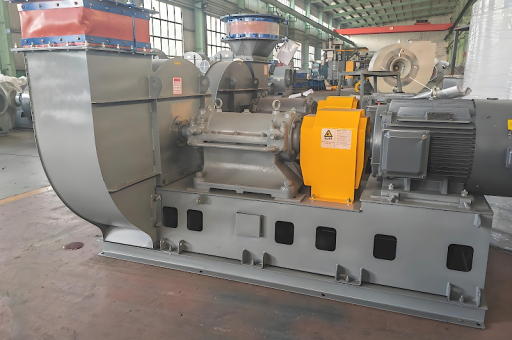
In industrial environments where consistent airflow, moderate static pressure, and energy efficiency are critical, the OEM Customized Low Pressure Centrifugal Fan and Industrial Blower with Coupling Driving stands as a cornerstone technology. Unlike high-pressure compressors or axial fans, these units are engineered specifically for applications requiring stable air movement at pressures typically below 15 inches of water gauge (WG) while maintaining high volumetric flow rates. Industries such as pharmaceutical manufacturing, food processing, cement handling, and renewable energy systems — especially wind turbine cooling — rely heavily on these fans for process ventilation, dust collection, and climate control.
The “Low Pressure” designation is not a limitation but a precise design target. These fans are optimized to move large volumes of air with minimal turbulence and noise, making them ideal for cleanrooms, paint booths, and pneumatic conveying systems. The coupling driving mechanism further enhances reliability by isolating the motor from the fan impeller, reducing vibration transmission and allowing for flexible motor placement — a feature particularly valuable in space-constrained installations like wind turbine nacelles.
Technical Overview: Coupling Driving Mechanism and OEM Customization
Coupling driving refers to the mechanical connection between the motor shaft and the fan shaft via a flexible or rigid coupling device. In an OEM customized low pressure centrifugal fan, this arrangement offers distinct advantages over belt-driven or direct-drive systems:
- Vibration Dampening: Flexible couplings absorb minor shaft misalignments and torque fluctuations, prolonging bearing life.
- Space Efficiency: The compact inline design reduces the overall footprint, crucial in retrofits or wind turbine towers.
- Load Isolation: The motor is protected from axial and radial loads generated by the fan impeller, enhancing motor longevity.
OEM customization allows the end-user to specify:
- Impeller diameter and blade geometry (forward-curved, backward-curved, or radial)
- Material selection (mild steel, stainless steel 304/316, aluminum, or FRP)
- Motor power (from 0.5 kW to 75 kW) and voltage (single-phase, three-phase, or DC)
- Coupling type (jaw, gear, or elastomeric)
- Inlet/outlet orientation (scroll angle, flanges, or duct connectors)
For example, a wind turbine cooling system may require a fan that operates at 1,450 RPM, delivers 12,000 m³/h at 800 Pa static pressure, and features a stainless steel impeller to resist corrosion from salt spray. An OEM can engineer this precisely without off-the-shelf compromises.
Key Design Parameters: Airflow, Static Pressure, and Efficiency
When specifying a low pressure centrifugal fan with coupling driving, three metrics dominate performance evaluation:
- Airflow (Q) : Measured in m³/h or CFM. Low pressure fans typically range from 1,000 to 100,000 m³/h.
- Static Pressure (Ps) : Typically 50 to 1,500 Pa. These fans are not designed for high backpressure.
- Efficiency (η) : Often between 65% and 85% depending on impeller design. Backward-curved blades yield higher efficiency at the cost of compactness.
The coupling driving mechanism does not inherently change the fan curve, but it allows the motor to operate at its optimal torque-speed point. For a wind turbine installation, this is critical: the fan must maintain stable airflow across varying ambient temperatures and filter loading conditions without overloading the motor.
Applications: From HVAC to Material Handling
OEM customized low pressure centrifugal fans with coupling driving appear in diverse settings:
- HVAC and Cleanrooms: Providing filtered air supply at low noise levels.
- Pneumatic Conveying: Moving lightweight materials like pellets, dust, or fibers.
- Wind Turbine Cooling: Removing heat from generators and gearboxes. Here, the coupling drive minimizes vibration that could interfere with sensitive sensors.
- Industrial Ovens and Dryers: Recirculating hot air while resisting thermal expansion through coupling flexibility.
- Welding Fume Extraction: Handling corrosive or sticky particulates with custom-coated impellers.
Comparative Analysis: Direct Drive vs. Belt Drive vs. Coupling Drive
| Feature | Direct Drive | Belt Drive | Coupling Drive (OEM Focus) |
|---|---|---|---|
| Speed Control | Fixed speed or VFD | Variable via pulley change | VFD compatible with coupling |
| Vibration | Low | Moderate (belt tension) | Very low (coupling dampens) |
| Maintenance | Minimal | Belt replacement, tension | Coupling inspection (annual) |
| Space Requirement | Compact | Bulky (overhung pulley) | Moderate, but inline |
| Cost | Low to medium | Low initial cost | Medium, but long-life |
| Typical Use | Small fans | Large HVAC | Industrial & wind turbine |
For wind turbine applications, coupling drive strikes the ideal balance: it avoids belt maintenance in remote locations while offering more flexibility than direct drive.
Case Study: OEM Customization for a Wind Turbine Cooling System
A 2 MW onshore wind turbine required a redundant cooling fan for its gearbox radiator. The existing belt-driven fan experienced belt slippage in cold and humid conditions, causing overheating alarms. An OEM customized low pressure centrifugal fan with coupling driving was engineered:
- Impeller: 630 mm backward-curved, aluminum alloy (weight reduction)
- Motor: 7.5 kW, 1,800 RPM, IP55, with elastomeric jaw coupling
- Design Point: 18,000 m³/h at 600 Pa, 78% efficiency
- Result: Zero vibration-related failures in 3 years, 12% reduction in energy consumption compared to previous belt system.
Frequently Asked Questions (FAQ)
Q1: What is the main advantage of coupling driving over belt driving in low pressure fans? A: Coupling driving eliminates belt slippage and reduces mechanical losses. It also requires less maintenance in dusty or humid environments, such as cement plants or wind turbine nacelles.
Q2: Can a low pressure centrifugal fan be customized for explosive atmospheres? A: Yes. OEMs can supply ATEX-certified fans with non-sparking impellers (aluminum or FRP), anti-static couplings, and sealed motors.
Q3: How does coupling driving affect fan noise? A: Compared to belt-driven fans, coupling-driven units are generally quieter because there is no belt flutter or pulley vibration. The flexible coupling also isolates motor noise.
Q4: Is a VFD (Variable Frequency Drive) compatible with coupling-driven fans? A: Absolutely. Many OEM designs incorporate a coupling designed for variable speed operation. Consult the manufacturer to ensure the coupling’s torque rating matches the VFD’s speed range.
Q5: What is the typical lifespan of a coupling in an industrial blower? A: With proper alignment and periodic lubrication (for elastomeric types), a coupling can last 3–5 years in continuous operation. Rigid couplings may last longer but require precise alignment.
Maintenance and Longevity: Best Practices for Coupling-Driven Blowers
To maximize the lifespan of an OEM customized low pressure centrifugal fan with coupling driving:
- Monitor Alignment: Use laser alignment tools annually. Misalignment is the leading cause of premature coupling and bearing failure.
- Check Coupling Weldment: For elastomeric couplings, inspect for wear, cracks, or heat discoloration.
- Lubricate Bearings: Follow the motor and fan bearing manufacturer’s schedule (typically every 2,000 hours for grease, every 8,000 hours for oil).
- Clean Impeller: Dust buildup unbalances the fan, accelerating coupling wear. In wind turbine applications, schedule cleaning during routine blade inspections.
- Thermal Imaging: Scan the coupling and motor housing for hot spots during operation. A temperature rise over 40°C above ambient indicates trouble.
Conclusion: Why OEM Customization Matters for Industrial Performance
In an era where energy costs, equipment reliability, and operational uptime dictate profitability, the OEM Customized Low Pressure Centrifugal Fan and Industrial Blower with Coupling Driving is not just a component — it is a strategic asset. The synergy of precision-engineered impellers, robust coupling mechanics, and application-specific materials ensures that industrial systems — from HVAC to wind turbine cooling — perform at their peak. By bypassing generic, one-size-fits-all solutions, engineers can achieve lower total cost of ownership, reduced vibration, and extended equipment life. Whether you are retrofitting an existing plant or designing a new facility, investing in OEM customization with coupling driving is a decision that pays dividends in air movement performance and peace of mind.





