
This article's table of contents introduction:
- Decoding the Model: 4-68-18D
- Typical Performance Range (Estimated)
- Possible Common Issues & Solutions
- Key Specifications to Verify
- Summary
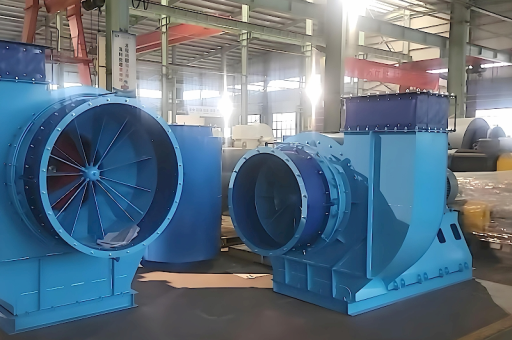
It appears you are referring to a specific model of a Centrifugal Fan (also known as a squirrel cage fan or blower). The designation "4-68-18D" typically follows a naming convention used by Chinese manufacturers (standards like GB/T or JB/T) or industrial fans derived from the 4-68 series.
Here is a breakdown of what this model number generally means and the specifications you can expect.
Decoding the Model: 4-68-18D
4-68 Series:
- 4: Indicates the fan is forward-curved (the blades curve in the direction of rotation). This is common for high volume, low to medium pressure applications.
- 68: Represents the specific specific speed of the fan design (ns=68). This dictates the aerodynamic performance curve.
-18:
- This refers to the impeller diameter. In the Chinese standard (and many industrial applications), "18" means the impeller diameter is 18 decimeters.
- 1 dm = 100 mm
- Therefore, 18 dm = 1800 mm (or ~71 inches).
D:
- This denotes the drive arrangement.
- "D" almost always means Direct Drive (the impeller is mounted directly on the motor shaft, usually connected via a coupling).
Typical Performance Range (Estimated)
Since you provided the size (18) and series, we can estimate the air volume and pressure range. Please note: Exact numbers require the manufacturer's specific performance curve.
- Air Volume (Q): Approximately 30,000 – 75,000 m³/h (17,600 – 44,000 CFM)
- Total Pressure (P): Typically 1,500 – 3,500 Pa (6 – 14 in.w.g.)
- Motor Power: Usually 30 kW to 55 kW (depending on the specific speed and pressure requirements).
- Application: General ventilation, HVAC systems, industrial air supply, and dust extraction (with a suitable housing).
Possible Common Issues & Solutions
If you are troubleshooting this specific fan, here are common problems:
| Issue | Possible Cause | Solution |
|---|---|---|
| Vibration | Impeller imbalance (dust buildup), loose mounting, bearing wear (Direct Drive "D" arrangement relies on motor bearings). | Clean impeller, rebalance, check bolting, replace motor bearings. |
| Low Airflow | Wrong rotation direction, blocked inlet/outlet, speed too low, or sheave (pulley) mismatch (if not truly direct coupled). | Check rotation arrow, clean ducts, check motor RPM with a tachometer. |
| Overheating Motor | Overloaded fan (operating in a high-pressure/low-flow region), or failing motor bearings. | Check if dampers are closed (partially open damper for startup), verify motor current against nameplate. |
| Noisy Operation | Air turbulence, loose casing, or impeller rubbing against the inlet cone. | Check clearance between impeller and inlet cone (should be ~3-5 mm). |
Key Specifications to Verify
To ensure you are buying the correct replacement or spare parts, you must check:
- Rotation (CW/CCW): Clockwise or Counter-clockwise (viewed from the drive side).
- Outlet Position (Angle): Standard is 0°, 90°, 180°, or 270°.
- Operating RPM: The actual speed the fan is running at (for a direct-drive "D" unit, this is the motor speed, e.g., 1450 RPM or 2900 RPM).
- Material: Steel, Stainless Steel, or special coating.
Summary
The 4-68-18D is a large, direct-drive, forward-curved centrifugal fan with an 1800 mm impeller, designed for high-volume, medium-pressure industrial ventilation.
If you have a specific problem (e.g., "it's vibrating", "the motor is too hot", or "I need the performance curve"), please share that context, and I can provide more targeted advice.





