
** The 4-68-16D Centrifugal Fan: A Comprehensive Technical Guide for Industrial Airflow Optimization
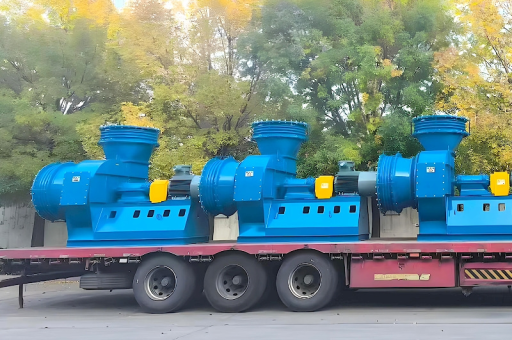
Table of Contents
- Introduction: What Is the 4-68-16D Centrifugal Fan?
- Technical Specifications and Design Features
- Performance Characteristics and Efficiency Analysis
- Common Applications in Industrial Settings
- Installation and Maintenance Best Practices
- Troubleshooting Common Issues
- Frequently Asked Questions (FAQ)
- Conclusion: Why Choose the 4-68-16D for Your Facility?
Introduction: What Is the 4-68-16D Centrifugal Fan?
The 4-68-16D Centrifugal Fan is a high-efficiency, medium-pressure industrial fan widely used for ventilation, dust extraction, and material handling systems. Its model number encodes critical design parameters: "4" refers to the fan series (typically backward-curved blades), "68" indicates the impeller diameter in inches, and "16D" denotes a direct-drive configuration with a specific motor mounting arrangement. This fan is engineered for continuous operation in demanding environments, offering a balance of airflow volume (CFM) and static pressure (in. wg) that makes it ideal for factories, warehouses, power plants, and mining facilities.
Unlike axial fans that move air parallel to the shaft, centrifugal fans like the 4-68-16D generate pressure by accelerating air radially outward through an impeller. This design delivers higher pressure capability, enabling the fan to overcome duct resistance, filter loading, and long duct runs. The 4-68-16D is particularly valued for its robust construction, energy efficiency, and low maintenance footprint.
Q: What does the "16D" in 4-68-16D mean? A: "16" refers to the impeller diameter in inches, and "D" indicates a direct-drive setup, where the fan impeller is mounted directly on the motor shaft without belts or pulleys. This eliminates belt slippage and reduces maintenance.
Technical Specifications and Design Features
The 4-68-16D Centrifugal Fan is built with a heavy-duty steel housing, dynamically balanced backward-curved impeller, and optional inlet/outlet flanges conforming to AMCA (Air Movement and Control Association) standards. Key specifications include:
- Airflow Range: 10,000 – 40,000 CFM (cubic feet per minute), depending on rotational speed and system resistance.
- Static Pressure: Up to 20 in. wg (inches of water gauge).
- Impeller Diameter: 68 inches (1,727 mm).
- Motor Power: Typically 50–150 HP (37–112 kW), depending on application configuration.
- Operating Temperature: Standard models handle up to 200°F (93°C); high-temperature options available up to 800°F (427°C).
- Construction Materials: Carbon steel standard, with stainless steel or coated options for corrosive environments.
The backward-curved blade design is a standout feature. Unlike forward-curved blades, which are prone to dust buildup and performance deterioration, backward-curved blades are self-cleaning and maintain high efficiency across a wide operating range. The direct-drive arrangement further enhances reliability by eliminating belt tensioning, alignment issues, and periodic belt replacement. The fan housing is typically scroll-shaped for optimal pressure recovery, and access doors are provided for inspection and cleaning.
Q: Why is the backward-curved blade preferred for industrial applications? A: Backward-curved blades offer higher efficiency (typically 75–85%), better resistance to dust accumulation, and a non-overloading power curve. This means the motor is less likely to burn out if system resistance changes suddenly.
Performance Characteristics and Efficiency Analysis
Performance data for the 4-68-16D is typically presented in fan curves showing airflow (CFM) versus total static pressure (in. wg) at various speeds (RPM). A representative 4-68-16D operating at 1,200 RPM might deliver 25,000 CFM at 12 in. wg. The fan’s efficiency map shows a peak static efficiency of 83% at the design point, making it one of the more energy-efficient options in its class.
Efficiency is critical for operating cost control. For example, if the fan runs 8,000 hours annually at 100 HP, each 1% efficiency improvement saves approximately 7,460 kWh per year (based on 0.746 kW/HP). At an industrial electricity rate of $0.10/kWh, that translates to $746 in annual savings. The 4-68-16D’s efficient design directly impacts the bottom line.
To read the fan curve effectively, locate the system resistance curve (which varies with duct length, filter loading, and dampers). The intersection of the system curve with the fan curve at a given RPM defines the operating point. For proper sizing, ensure the operating point falls within the high-efficiency region (typically 60–90% of maximum static pressure).
Q: How do I select the correct motor size for the 4-68-16D? A: Use the fan curve to determine the required Horsepower (BHP) at the design operating point. Then select a motor with at least 10–15% service factor above the BHP requirement to account for minor system changes.
Common Applications in Industrial Settings
The 4-68-16D Centrifugal Fan excels in environments requiring high-volume, medium-pressure airflow. Typical applications include:
- Dust Collection Systems: In woodworking, cement, or chemical plants, the fan moves dusty air through baghouses or cyclones. The backward-curved blades minimize dust buildup.
- Industrial Ventilation: Factories use the 4-68-16D to exhaust hot air, welding fumes, or chemical vapors, ensuring OSHA-compliant indoor air quality.
- HVAC Make-up Air Systems: Large commercial buildings often integrate these fans for pressurizing spaces or supplying tempered air.
- Material Pneumatic Conveying: The fan’s pressure capability enables light material transport (e.g., grains, pellets, shreddings) through pipelines.
- Fume Exhaust for Boilers: Power plants use these fans to remove flue gases, often with corrosion-resistant coatings at elevated temperatures.
Case study: A midwestern steel fabrication facility replaced two aging forward-curved fans with a single 4-68-16D unit, achieving 30% energy reduction while improving dust capture from their plasma cutting tables.
Q: Can the 4-68-16D handle abrasive materials? A: Yes, with reinforcement. Options include wear liners, hardened impeller tips, and thicker wall housing. For heavy abrasion, specify a high-chrome or ceramic-coated impeller.
Installation and Maintenance Best Practices
Proper installation and maintenance ensure the 4-68-16D operates at peak performance for 20+ years. Key steps include:
Installation:
- Foundation: Mount on a rigid, level concrete base or steel skid with vibration isolation pads to reduce noise and structural stress.
- Ductwork: Use smooth-radius elbows, avoid abrupt transitions, and provide a straight duct run (at least 3 pipe diameters) before and after the fan inlet and outlet.
- Electrical: Confirm motor voltage (e.g., 460V, 3-phase) and wire per NEC codes. Install a lockable disconnect nearby.
- Access: Leave clearance for impeller removal (typically 1.5× impeller diameter).
Preventive Maintenance (Monthly):
- Inspect and clean impeller blades; accumulated debris can cause imbalance.
- Check belt tension (if using belt-drive variants; the 16D is direct-drive, so no belts).
- Lubricate motor bearings per manufacturer schedule (usually every 3–6 months with high-temp grease).
- Verify amperage draw against motor nameplate to detect overload.
- Listen for unusual noises (e.g., scraping, rumbling) that signal bearing wear.
Q: How do I balance the 4-68-16D impeller? A: Factory-balanced impellers typically require no field balancing unless damaged. If vibration occurs, use a portable balancer, adding correction weights at the impeller hub per manufacturer instructions.
Troubleshooting Common Issues
Even robust fans can encounter problems. Here are common issues and solutions for the 4-68-16D:
| Problem | Likely Cause | Solution |
|---|---|---|
| Low airflow | Duct blockage, dirty filter, or incorrect rotation direction | Inspect ducts; clean filters; check motor wiring (usually rotation arrow on housing) |
| Excessive vibration | Impeller imbalance, bearing wear, or loose foundation bolts | Clean impeller; replace bearings; re-torque foundation bolts |
| Motor overheating | Overload, restricted motor airflow, or undervoltage | Verify BHP vs. motor rating; clean motor cooling fins; check voltage with meter |
| Scraping noise | Impeller rubbing against housing (due to thermal expansion or misalignment) | Check clearance; realign motor and impeller hub; allow for thermal growth |
| Reduced pressure | Worn blades, inlet cone misalignment, or speed drop | Inspect blade edges for erosion; adjust cone gap; check VFD or pulley ratios |
Q: My 4-68-16D fan has a high-pitched whine; what could it be? A: High-pitched noise often indicates resonance with ductwork or inlet swirl blockage. Try adding an inlet orifice or changing fan speed by 5–10%. If noise persists, inspect for narrow gaps (e.g., between impeller and cone) causing tip turbulence.
Frequently Asked Questions (FAQ)
Q: What is the maximum RPM for the 4-68-16D?
A: Maximum allowable RPM depends on impeller material and operating temperature. For standard carbon steel, max RPM is typically 1,500; for aluminum or composite, lower speeds apply. Always consult the manufacturer’s data sheet.
Q: Is the 4-68-16D suitable for outdoor use?
A: Yes, when equipped with weatherproof motor (e.g., TEFC enclosure), epoxy coating or galvanized housing, and rain hood. Direct-drive motors require protection from rain.
Q: Can I operate the fan at lower speed to reduce noise?
A: Yes. Using a variable frequency drive (VFD) allows speed reduction, which lowers noise and energy use proportionally by the cube of the speed change (e.g., 80% speed = 51% power). However, ensure the motor is VFD-rated to avoid overheating.
Q: How long does the 4-68-16D typically last?
A: With proper maintenance, 20–30 years. Bearing life is usually 10,000–50,000 hours; bearing replacement is common preventive maintenance.
Q: What certifications does the fan have?
A: Many 4-68-16D units are AMCA-certified for air and sound performance. Also may carry UL, CE, or ATEX (explosion-proof) certifications for specific environments.
Conclusion: Why Choose the 4-68-16D for Your Facility?
The 4-68-16D Centrifugal Fan represents a reliable, efficient, and low-maintenance solution for industrial air movement. Its backward-curved impeller delivers consistent performance under dusty, high-temperature, or high-resistance conditions that would challenge conventional fans. The direct-drive design minimizes downtime, while its broad operating range allows use in applications from dust control to pneumatic conveying.
For facility managers and engineers, selecting the 4-68-16D means investing in a fan that reduces energy costs, improves workplace safety, and withstands years of heavy service. As with any industrial equipment, proper sizing, installation, and a regular maintenance schedule are essential to maximizing its value.
Whether you upgrade an existing system or design a new one, the 4-68-16D offers the balance of performance and durability that industrial operations demand. Consult your fan manufacturer’s documentation or a certified sales engineer to confirm the exact configuration—speed, motor size, and coating—best suits your facility’s unique requirements.
For more technical data sheets, dimension drawings, and performance curves, search online using keywords “4-68-16D centrifugal fan specs” or visit manufacturer websites specializing in industrial ventilation equipment under the fan domain. For installation support, consider contacting local O&M contractors experienced in large centrifugal fan systems.





