This article's table of contents introduction:
- Table of Contents
- Introduction: The Critical Role of 700℃ Exhaust Fans
- What Defines a 700℃ High-Temperature Exhaust Fan?
- Primary Applications Across Industries
- How It Works: Aerodynamics and Cooling Mechanisms
- Selection Criteria: Choosing the Right Fan for Your Facility
- Installation, Maintenance, and Safety Best Practices
- Common Myths vs. Facts (Q&A Section)
- Conclusion: The Future of High-Temperature Ventilation
*The Essential Guide to 700℃ High-Temperature Exhaust Fans: Design, Applications, and Selection*
Table of Contents
- Introduction: The Critical Role of 700℃ Exhaust Fans
- What Defines a 700℃ High-Temperature Exhaust Fan?
- Key Technical Specifications
- Material Science: How They Withstand Extreme Heat
- Primary Applications Across Industries
- Industrial Ovens and Kilns
- Fire Safety and Smoke Extraction
- Power Generation and Boiler Systems
- How It Works: Aerodynamics and Cooling Mechanisms
- Selection Criteria: Choosing the Right Fan for Your Facility
- Installation, Maintenance, and Safety Best Practices
- Common Myths vs. Facts (Q&A Section)
- Conclusion: The Future of High-Temperature Ventilation
Introduction: The Critical Role of 700℃ Exhaust Fans
In industrial environments, managing extreme heat is not merely a matter of comfort—it is a matter of safety, compliance, and operational integrity. Standard ventilation fans fail catastrophically when exposed to temperatures exceeding 300℃. This is where the 700℃ high-temperature exhaust fan becomes indispensable.
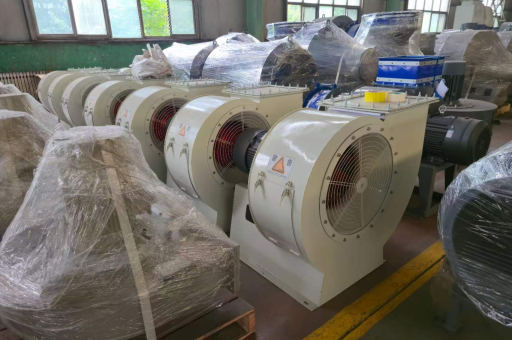
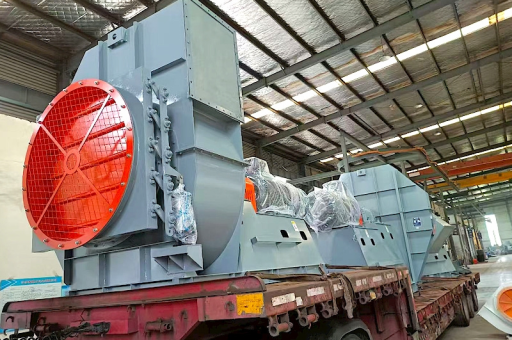
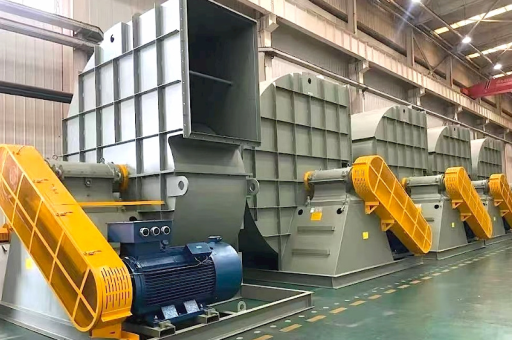
Unlike conventional fans, these specialized units are engineered to operate continuously or intermittently in gas streams reaching 700°C (1,292°F). They are the backbone of forced ventilation in steel mills, chemical processing plants, tunnel kilns, and emergency fire safety systems. Their primary purpose is to expel superheated air, toxic combustion gases, and particulates efficiently, preventing equipment damage and ensuring worker safety. According to industry reports from the Industrial Ventilation Institute, facilities equipped with temperature-rated exhaust fans experience 40% fewer unplanned shutdowns related to thermal overload.
Q: Why 700℃ specifically?
A: 700°C is a threshold point. Many industrial processes—such as ceramic sintering, metal heat treatment, and exhaust gas recirculation—operate in the range of 600°C to 800°C. A fan rated for 700°C provides a safety buffer while remaining cost-effective compared to exotic alloy fans rated for 1000°C+.
What Defines a 700℃ High-Temperature Exhaust Fan?
A true 700℃ fan is not simply a standard fan with a heat shield. It is a meticulously engineered system where every component is evaluated for thermal endurance.
Key Technical Specifications
- Maximum Continuous Operating Temperature: 700°C (verified via thermal cycling tests)
- Flow Rate: Typically 5,000 to 100,000 m³/h depending on wheel diameter and speed
- Static Pressure: 500 to 4,000 Pa (dependent on duct resistance)
- Motor Type: Remote-mounted via shaft cooling, or using air-cooled high-temperature motors
- Wheel Design: Radial (centrifugal) or axial configurations, with backward-curved or radial blades for thermal efficiency
Material Science: How They Withstand Extreme Heat
The core challenge is thermal creep and oxidation. At 700°C, steel loses its tensile strength. Therefore, manufacturers use:
- Impeller and Housing: Stainless steel alloys (e.g., 310S, 309) or Inconel steel. These alloys contain high levels of chromium and nickel, forming a protective oxide layer that resists scaling.
- Shaft and Bearings: The motor is typically isolated from the hot gas stream using a cooling tunnel, insulated shaft, or a shaft seal with forced air cooling. Bearings are high-temperature grease-packed or graphite-impregnated.
- Expansion Joints: To accommodate thermal expansion, bellows or flexible connectors are installed at the duct interface.
Q: Can a 700℃ fan run at 800°C for a short period?
A: Most premium models have a thermal buffer. However, prolonged exposure beyond the rated temperature accelerates oxidation and bearing failure. Always consult the manufacturer’s thermal profile curve.
Primary Applications Across Industries
The 700℃ exhaust fan serves multiple critical roles across sectors. Here are the most common deployment scenarios.
Industrial Ovens and Kilns
In ceramic, cement, and brick production, tunnel killns reach temperatures exceeding 1000°C. Exhaust fans at the cooler zone must handle gases at 600–700°C. They remove humidity, CO₂, and volatile organic compounds (VOCs) while maintaining even heat distribution.
Fire Safety and Smoke Extraction
For public buildings and industrial plants, building codes (e.g., NFPA 92) require smoke exhaust fans to operate at 250–400°C for 30–60 minutes. However, specialized 700°C rated fans are used in scenarios with potential for heat-fog or hydrocarbon fires, such as tunnels, parking garages, and chemical warehouses. These fans maintain structural integrity even as the fire temperature escalates.
Power Generation and Boiler Systems
In combined cycle and waste-to-energy plants, boilers generate high-temperature flue gases. To prevent backflow and enable forced draft, 700°C exhaust fans are used in:
- Induced Draft (ID) Fans: Pulling combustion gases through the economizer.
- Recirculation Fans: Reintroducing hot gases into the furnace to control temperature.
Q: Are these fans suitable for exhaust gas containing acidic fumes?
A: Yes, but the housing and impeller must be coated with anti-corrosion paint or made with acid-resistant alloys. Standard 700°C fans are designed primarily for dry gases.
How It Works: Aerodynamics and Cooling Mechanisms
Understanding the airflow dynamics is crucial for proper integration.
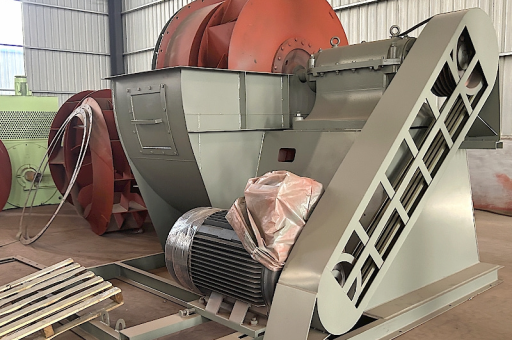
Flow Path: A radial (centrifugal) fan draws hot gas axially into the impeller. The rotating impeller accelerates the gas outward, converting kinetic energy into static pressure. The volute casing collects and directs the high-pressure gas into the exhaust duct. To achieve 700°C operation, the shaft and bearing assembly must be kept below 100°C. This is accomplished through:
- Shaft cooling fins: Integrated onto the shaft between the housing and motor.
- Forced air cooling: An external blower pushes ambient air across the bearing housing.
- Withdrawn impeller design: The impeller is cantilevered away from the motor, separated by an insulated gap.
Performance Curve: Remember that air density decreases significantly at high temperatures. At 700°C, air density is only about 30% of ambient. Consequently, a fan designed for 20°C cannot achieve the same flow rate or pressure at 700°C. Manufacturers provide specific performance tables for each temperature level.
Q: Why do some fans have VFD (Variable Frequency Drive) compatibility?
A: VFD allows precise speed control to match varying gas flow, reducing energy use and mechanical stress, especially during startup and cooldown phases.
Selection Criteria: Choosing the Right Fan for Your Facility
To ensure reliability and compliance, consider the following factors:
- Gas Temperature Profile: Determine the peak and average continuous temperature. Choose a fan with a thermal rating that exceeds your peak by at least 50°C.
- Gas Composition: Confirm if the gas is dry, wet, corrosive, or contains particulates. For abrasive fly ash, a reinforced impeller with hardened coating is mandatory.
- Static Pressure: Calculate total system resistance (duct friction, bends, dampers). Ensure the fan can deliver the required pressure at the reduced air density of 700°C.
- Mounting Orientation: Horizontal or vertical? For vertical discharge, use an impeller with a locked rotor safety ring.
- Space Constraints: In tight spaces, consider inline (tube-axial) models with remote motor arrangements.
- Compliance Standards: Check certifications: ATEX (for explosive environments), CE, UL, or ISO 21940 for balance quality.
Q: What happens if I undersize the motor?
A: At elevated temperatures, gas density decreases, so torque load drops. However, if a cold startup occurs (ambient air), the motor may overload due to higher density. Always specify a motor with adequate startup torque.
Installation, Maintenance, and Safety Best Practices
Proper installation and maintenance extend the lifespan of 700℃ exhaust fans.
Installation Checklist:
- Thermal Expansion Provision: Install bellows or slip joints on duct connections between the fan and rigid piping.
- Vibration Isolation: Use spring isolators or rubber-in-shear mounts to prevent structural resonance.
- Electrical Wiring: Use high-temperature cable (rated 200°C+) for motor connections near the fan housing.
- Inlet Screen: Prevent debris ingestion.
Daily/Weekly Maintenance:
- Check bearing temperature: Use an infrared gun; >90°C indicates overheating.
- Inspect shaft seal: Look for smoke or leakage around the housing.
- Clean impeller blades: Remove accumulation of carbon or soot, which can cause imbalance.
- Lubricate bearings: Use high-temperature grease every 200 hours.
Safety Precaution: Always shut off power and lockout-tagout before maintenance. Hot surfaces require signage and guard rails.
Q: How often should I replace the bearings?
A: In a 700°C fan running 24/7, bearing replacement is typically recommended every 6–12 months due to thermal grease degradation.
Common Myths vs. Facts (Q&A Section)
| Myth | Fact |
|---|---|
| All high-temperature fans are equally reliable. | No. Only fans from certified manufacturers with the correct alloy and bearing design can withstand 700°C continuous duty. |
| A 700°C fan can handle 1000°C briefly. | Only if specially designed. Standard models risk rotor melting and shaft failure. |
| You can use a standard fan with a heat shield. | Not effectively. The impeller must be designed for thermal expansion; heat shields alone do not solve material creep. |
| These fans consume more energy because they are heavy. | Actually, at 700°C, the low-density gas requires less aerodynamic work than cold air. Total kilowatt demand may be lower than a comparable cold-air fan. |
Conclusion: The Future of High-Temperature Ventilation
As industrial processes push boundaries—including hydrogen combustion, high-efficiency glass furnaces, and carbon capture—the demand for reliable 700℃ high-temperature exhaust fans will grow. Next-generation models will likely incorporate:
- Ceramic matrix composite impellers for weight reduction.
- Predictive health monitoring using vibration and thermal sensors connected to IoT platforms.
Choosing the right fan today requires collaboration between engineers and specialized suppliers. By understanding material limits, aerodynamic behavior at extreme temperatures, and proper maintenance, facility operators can ensure safe, efficient, and long-lasting operation. Whether you need to extract smoke from a tunnel or ventilate a steel foundry, a properly selected 700℃ exhaust fan is your most dependable ally against the industry’s harshest conditions.