This article's table of contents introduction:
- What "600℃" Actually Means
- Typical Applications
- Critical Design Features (For 600℃)
- Performance Warning
- Common Failure Modes (If Not Designed Correctly)
- Steps to Verify Your Existing Unit
Please provide the model number or specification documents for the specific unit. However, based on standard industrial classification, here is the professional interpretation of a "600℃ High-Temperature Exhaust Fan" :
What "600℃" Actually Means
In the fan industry, 600°C usually refers to the maximum allowable inlet temperature for continuous operation or emergency operation (typically ≥ 1 hour).
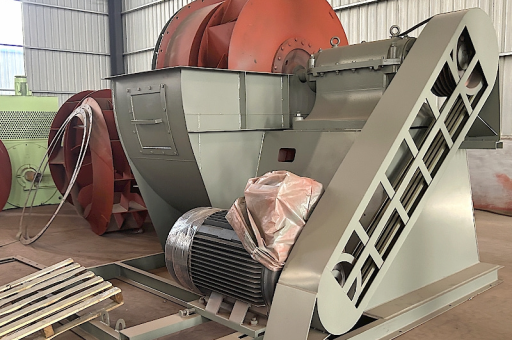
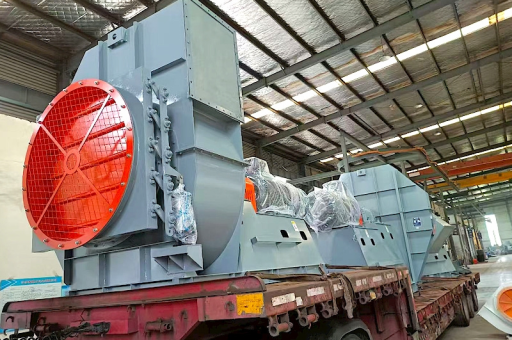
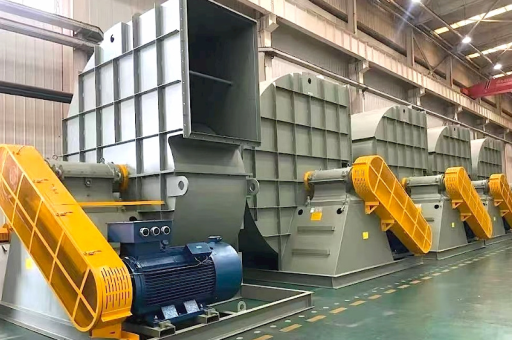
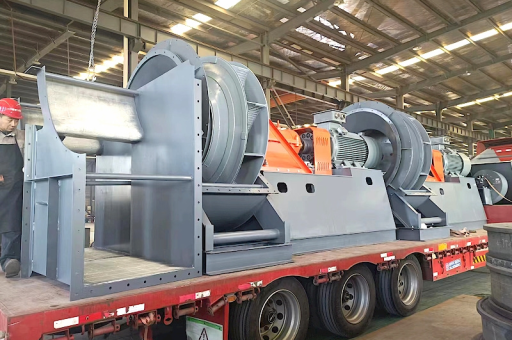
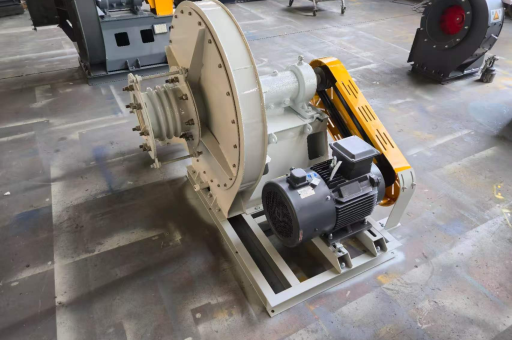
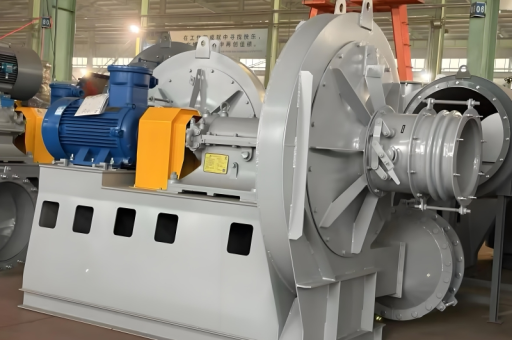
- Material Limit: Standard carbon steel fans cannot handle this temperature. A 600℃ fan must be made of High-Temperature Alloy Steel (e.g., 310S, Inconel 601) for the impeller and casing.
- Cooling System: The shaft and bearing housing require water cooling or forced air cooling to protect the bearings (which fail above ~120℃).
- Motor: It must be a high-temperature motor (rated for ambient temps up to 80-100℃) or a shaft-through design with a cooling fan and heat shield.
Typical Applications
- Industrial Furnaces/Kilns: Exhausting flue gas from ceramic, cement, or glass kilns.
- Boilers: High-temperature flue gas exhaust (biomass, coal, waste-to-energy).
- Heat Treatment Equipment: Hardening, annealing, and tempering furnaces.
- RTO (Regenerative Thermal Oxidizer): High-temperature exhaust from pollution control systems.
Critical Design Features (For 600℃)
| Component | Requirement |
|---|---|
| Impeller | 310S Stainless steel (1.4845) or Inconel 600/625. |
| Shaft | Must be water-cooled or have a cooling fan. High alloy steel. |
| Bearings | High-temp grease (e.g., Mobilith SHC 100) or ceramic bearings. |
| Housing | Welded steel plate with refractory coating OR 310S steel. |
| Seals | High-temp graphite or metal labyrinth seals to prevent leakage. |
| Motor | IP55, Class H insulation (180°C), separate cooling fan. |
Performance Warning
- Density Drop: At 600°C, air density is ~0.4 kg/m³ (vs 1.2 at 20°C). The fan must deliver higher volumetric flow to achieve the same mass flow. A 600℃ fan’s motor power is typically 3-4x larger than a standard fan of the same size.
- Thermal Expansion: The impeller expands significantly. Clearances between the impeller and housing must be increased (≈ 3-5 mm) to prevent binding when hot.
Common Failure Modes (If Not Designed Correctly)
- Bearing Seizure: Heat traveling down the shaft destroys grease/lubrication.
- Impeller Creep: At 600°C, standard steel loses ≈ 80% of its strength; the impeller deforms or cracks.
- Thermal Fatigue: Rapid heating/cooling cycles cause metal fatigue and fractures.
Steps to Verify Your Existing Unit
If you have a specific fan, please check:
- Nameplate: Look for "Maximum inlet temp: 600°C" and "Material: 310S" .
- Bearing Housing: Feeling the housing – should be cool to the touch (< 60°C) due to water cooling.
- Impeller Color: Should be matte gray/silver (stainless) – never painted (paint will burn off).
Note: If you are trying to use a standard industrial fan for 600°C applications, do not do it – it will fail catastrophically (bearing lockup, impeller disintegration, fire risk).
If you provide the make/model or site photos of the fan, I can give you specific setup or troubleshooting advice.