This article's table of contents introduction:
- Breaking Down the Model: "9-26-9D"
- Key Characteristics of a 9-26-9D Fan
- Common Applications
- Important Operational Notes
- Need More Specific Information?
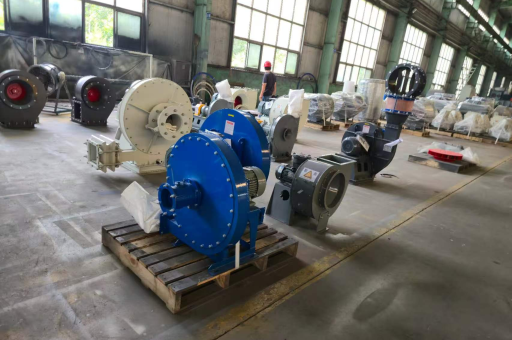
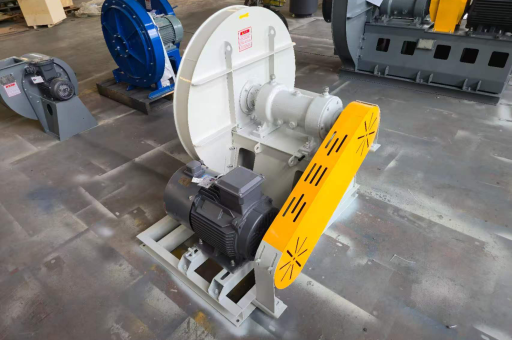
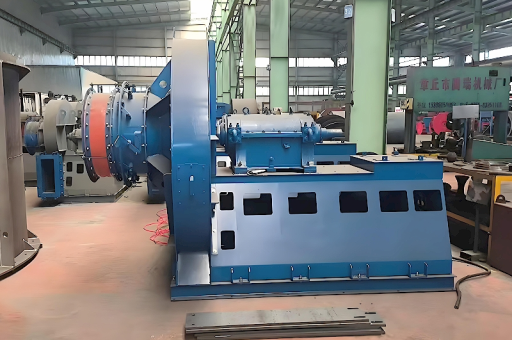
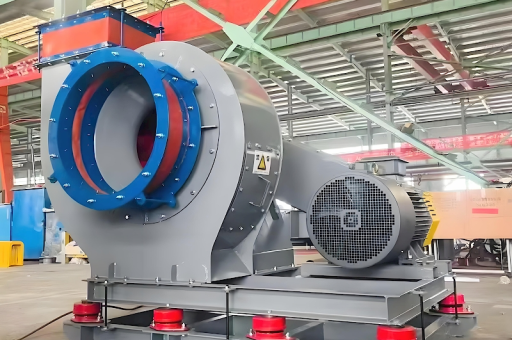
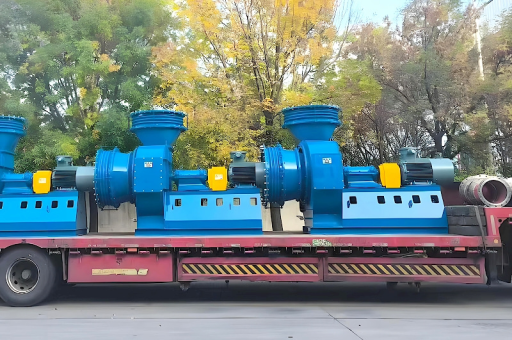
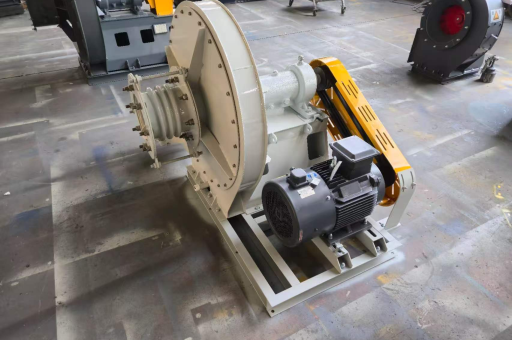
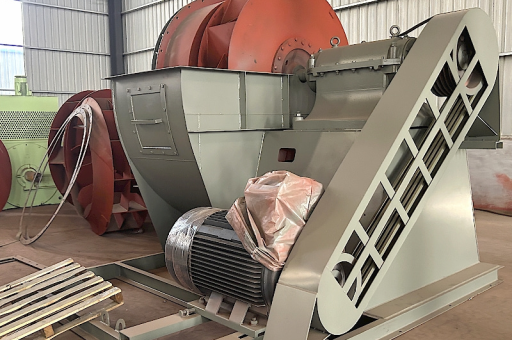
It appears you are looking for information on a 9-26-9D High-Pressure Centrifugal Fan.
This is a very specific model designation used primarily in Chinese industrial fan manufacturing (compliant with GB/T standards). Let me break down what that code means, what the fan is used for, and its key characteristics.
Breaking Down the Model: "9-26-9D"
This code follows the standard Chinese naming convention for centrifugal fans:
- 9: Represents the Pressure Coefficient. This is the key indicator.
- A coefficient of 9 is very high. These fans are designed for high pressure, low to medium volume applications.
- 26: Represents the Specific Speed. This indicates the fan's impeller design for optimal efficiency at that speed/pressure combination.
- 9: Represents the Impeller Diameter in decimeters (dm).
- 9 dm = 900 mm (or approx. 35.4 inches) . This is a medium-to-large sized impeller.
- D: Represents the Drive Type / Coupling.
- D = Direct Drive (via a flexible coupling). The motor shaft is directly connected to the fan shaft, supported by separate bearings on a common baseplate. This is the most common industrial configuration for reliability and efficiency at higher speeds.
Key Characteristics of a 9-26-9D Fan
| Feature | Typical Value / Description |
|---|---|
| Type | High Pressure, Centrifugal, Forward-Curved/Flat Blades |
| Max Static Pressure | Very High (Often > 8000 - 12000 Pa or 32 - 48 inches w.g. depending on motor speed and configuration) |
| Airflow Range | Moderate (Typically 5,000 – 30,000 m³/h or 3,000 – 17,500 CFM depending on RPM) |
| Efficiency | Moderate (60-75% typical). High-pressure fans trade efficiency for the ability to overcome system resistance. |
| Construction | Heavy-duty steel plate. Welded impeller with high-strength blades to withstand centrifugal forces. |
| Noise Level | High (Requires silencers/inlet mufflers for indoor use near personnel). |
| Drive | D-Type (Coupling direct drive). Motor speed determines fan speed. |
Common Applications
Due to its high-pressure capability and moderate volume, this fan is a workhorse in industrial systems that require high resistance to airflow. Common uses include:
- Pneumatic Conveying: Moving materials like grain, cement powder, wood chips, plastic pellets, or dust through pipes.
- Forced Draft (FD) / Induced Draft (ID) Systems: Supplying combustion air to boilers, furnaces, or incinerators where high pressure is needed to push air through thick fuel beds or heat exchangers.
- Cement & Mining: Dust collection systems, mine ventilation, and material transport.
- Steel & Smelting: Oxygen supply and fume extraction.
- Chemical & Heavy Industrial Processing: Drying systems, cooling towers (high resistance), and air supply for specialized reactors.
Important Operational Notes
- Variable Speed is Highly Recommended: Running a 9-26 fan at full constant speed is very energy-intensive. Using a Variable Frequency Drive (VFD) is almost essential for controlling pressure and volume, and for significant energy savings.
- Outboard Bearings (D-Drive): The D-drive means the fan has a bearing housing on each side of the impeller, making it robust but requiring proper alignment and lubrication maintenance.
- Air Density: It is rated for clean or mildly dusty air at standard density (1.2 kg/m³). For higher temperatures or pressures, you must recalculate the motor power and shaft strength.
- Size & Weight: A 9-26-9D is a substantial piece of equipment. You will need proper lifting equipment, a reinforced mounting base, and space for maintenance.
Need More Specific Information?
To get a more precise answer (e.g., specific motor power, exact pressure-volume curve, dimensions, or price), I would need one of the following:
- The full model number from the manufacturer's nameplate (e.g., Y5-47 or a variation like 9-26-No.9D).
- The Manufacturer (e.g., Shenyang Blower Works, Shandong Huawo, Wuxi fan factory, etc.). Different manufacturers may have slight dimensional variations.
- The specific RPM you intend to run it at (e.g., 1450 rpm or 2900 rpm). This drastically changes the performance curve.
- Your required operating point: What specific pressure (Pa or mmH₂O) and airflow (m³/h or CFM) do you need at the fan outlet?
If you have any of this information, please provide it and I can give you a much more detailed technical analysis or help you with specification.