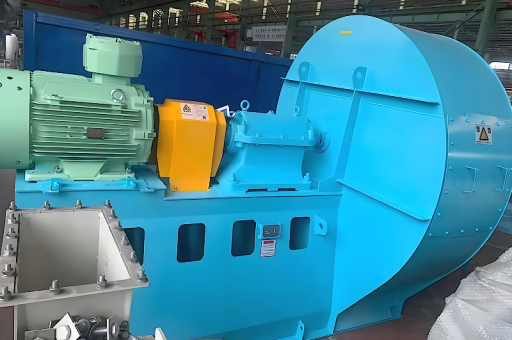
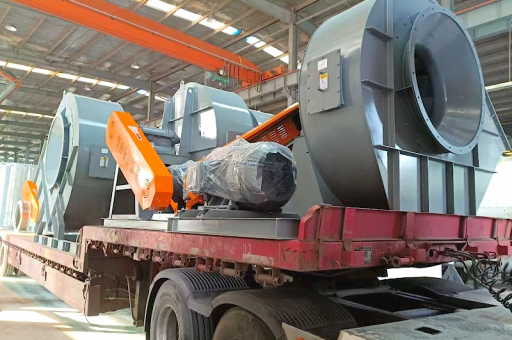
The Comprehensive Guide to Hot Air Circulation Centrifugal Fan: Principles, Applications, and Performance Optimization
Table of Contents
- Introduction to Hot Air Circulation Centrifugal Fans
- How a Hot Air Circulation Centrifugal Fan Works
- Key Components and Design Features
- Common Applications Across Industries
- Selection Criteria and Performance Parameters
- Installation and Maintenance Best Practices
- Frequently Asked Questions (FAQs)
- Conclusion
Introduction to Hot Air Circulation Centrifugal Fans
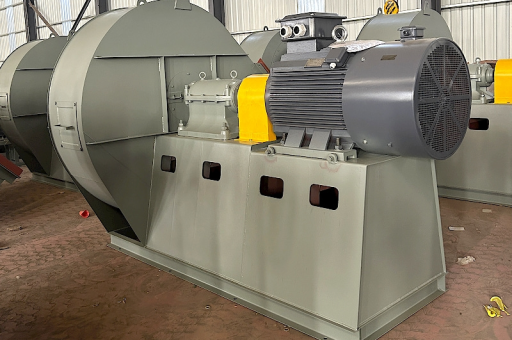
A hot air circulation centrifugal fan is a specialized industrial equipment designed to move high-temperature air or gas streams efficiently. Unlike standard fans, which may fail under extreme thermal stress, these fans are engineered with heat-resistant materials and robust motor systems to handle temperatures ranging from 150°C to over 800°C. They are integral to processes such as drying, heating, ventilation, and thermal treatment in industries like food processing, cement manufacturing, chemical plants, and power generation.
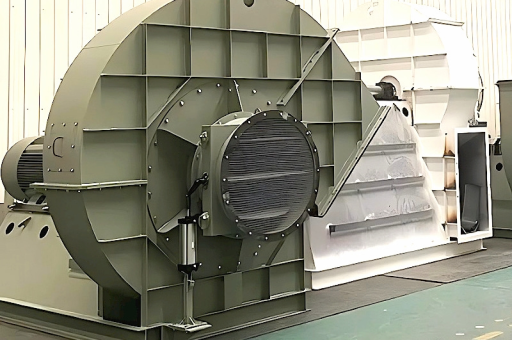
The term "centrifugal" refers to the fan's working principle: air enters the impeller axially and is accelerated radially outward by rotating blades, generating high pressure and flow. When combined with hot air circulation, the fan must maintain structural integrity and performance stability despite thermal expansion, corrosive gases, and continuous operation. This guide will help engineers, facility managers, and procurement professionals understand, select, and maintain these critical machines.
How a Hot Air Circulation Centrifugal Fan Works
At its core, a centrifugal fan converts rotational energy from a motor into kinetic energy of the air. In hot air circulation applications, the process begins when heated air enters the fan's inlet. The impeller—a wheel with curved blades—spins at high speed, throwing the air outward by centrifugal force. This action increases both velocity and pressure, pushing the hot air through the outlet duct to the target process area.
The Thermodynamic Challenge
High temperatures cause air to expand, reducing its density. According to the ideal gas law (PV = nRT), a temperature increase from 20°C to 200°C reduces air density by nearly 50%. Consequently, a fan moving hot air must deliver higher volumetric flow (m³/h) to achieve the same mass flow (kg/h) as a cold-air fan. Engineers must account for this when sizing motors, shafts, and bearings.
Flow Path
- Inlet: Hot air enters through the fan housing.
- Impeller: The rotating impeller accelerates air radially.
- Volute (Scroll Case): A spiral-shaped casing converts velocity pressure into static pressure.
- Outlet: Pressurized hot air exits into the ductwork.
Example: In a food drying tunnel, the fan pulls 200°C air from a heat exchanger and circulates it across product trays to remove moisture evenly.
Key Components and Design Features
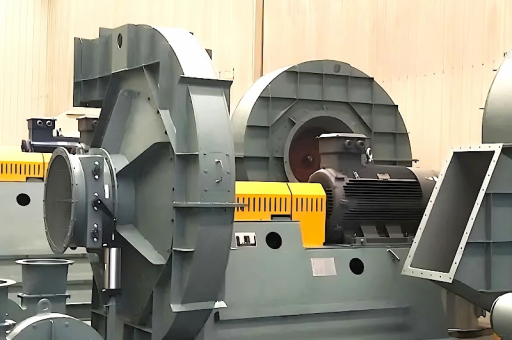
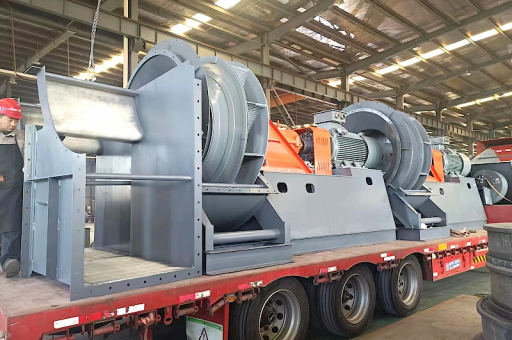
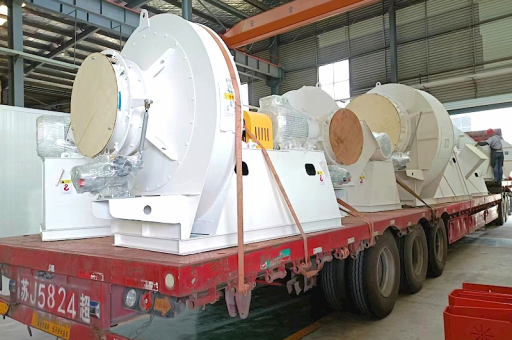
A hot air circulation centrifugal fan must withstand thermal stress, corrosion, and continuous duty. Here are its critical components:
| Component | Material / Design | Function |
|---|---|---|
| Impeller | Stainless steel (304/316), cast alloy, or ceramic-coated | Blades handle thermal expansion; backward-curved blades reduce dust buildup. |
| Shaft | High-tensile steel with heat-resistant coating | Transfers torque from motor; must resist thermal fatigue. |
| Bearings | High-temperature grease-lubricated or self-aligning | Support shaft rotation; external cooling fins or water cooling may be used. |
| Housing | Carbon steel or stainless steel with insulation | Contains hot air; insulation minimizes heat loss and protects personnel. |
| Motor | Inverter-duty, high-temperature rated (IP55/IP65) | Drives impeller; variable frequency drive (VFD) allows speed control. |
| Seals | Labyrinth or carbon-ring seals | Prevent hot air leakage and particulate ingress. |
Thermal Management
Many high-temperature fans incorporate cooling fans on the motor or shaft to prevent overheating of bearings and electrical components. In extreme environments (above 400°C), external air cooling or water jackets are mandatory.
Common Applications Across Industries
Hot air circulation centrifugal fans serve diverse sectors. Below are key examples:
| Industry | Application | Typical Temperature Range |
|---|---|---|
| Food Processing | Ovens, dryers, fryers | 100°C – 300°C |
| Cement & Minerals | Preheater towers, kiln exhaust | 400°C – 800°C |
| Chemical | Reactors, distillation columns, drying beds | 150°C – 500°C |
| Power & Energy | Boiler flue gas recirculation, biomass drying | 200°C – 650°C |
| Waste Treatment | Incineration, sludge drying | 250°C – 600°C |
Case Study: Textile Industry
In textile drying, hot air circulation fans ensure uniform heat distribution across fabric webs. A backward-curved fan operating at 180°C reduces energy consumption by 15% compared to forward-curved designs due to higher efficiency and lower turbulence.
Selection Criteria and Performance Parameters
Choosing the right fan requires evaluating multiple parameters. Use this checklist:
- Operating Temperature: Confirm peak and continuous temperature. Stainless steel impellers may be needed above 300°C.
- Airflow (CFM or m³/h): Calculate required volumetric flow at actual temperature.
- Static Pressure (Pa or in. w.c.): Determine resistance from ducts, filters, and process equipment.
- Solid Content: Dusty or sticky gases require robust, easy-to-clean designs.
- Efficiency (η): Look for peak efficiency above 75%. Backward-curved blades offer 5-10% higher efficiency than radial-tipped.
- Motor Power: Use the formula: Power (kW) = (Airflow × Pressure) / (1000 × η). Add safety margin of 10-15%.
- Noise Level: High-speed hot air fans can exceed 85 dBA; consider silencers or enclosures.
Performance Curve Interpretation
A typical fan curve shows pressure versus flow at a given speed and temperature. Hot air reduces pressure capability by 20-40% compared to cold air. Always request performance curves corrected for actual operating temperature from the manufacturer (fan website or fan technical datasheet).
Installation and Maintenance Best Practices
Installation
- Mounting: Level base to avoid vibration. Use flexible connectors between fan and ductwork.
- Ductwork: Minimize bends; each 90° turn adds 10-15% pressure loss. Insulate ducts to conserve energy.
- Electrical: Ensure motor wiring matches voltage (230V/460V/690V). Install VFD for precise speed control.
Maintenance
- Daily: Check for unusual noise, vibration, or heat at bearings. Monitor current draw.
- Monthly: Inspect impeller for wear or imbalance. Clean blades if dust accumulates.
- Quarterly: Lubricate bearings per manufacturer schedule. Replace grease if hardened.
- Annual: Complete overhaul: check shaft alignment, replace seals, measure fan efficiency.
Warning: Never operate a fan above its rated temperature. Over-temperature can cause impeller failure, bearing seizing, or motor burnout. Install a thermal cutoff switch.
Frequently Asked Questions (FAQs)
Q1: What is the maximum temperature a hot air circulation centrifugal fan can handle?
A: It depends on design. Standard models handle 200-300°C; specialized industrial fans with ceramic coating or centrifugal impellers can reach 800°C. Always verify with the manufacturer (fan supplier).
Q2: How do I calculate the airflow needed for my drying process?
A: Use the equation: Airflow (m³/h) = (Heat required in kW) / (Specific heat of air × Temperature difference in °C × Density). For hot air at 200°C, density is about 0.7 kg/m³. Many online calculators exist, but consult an engineer for precision.
Q3: Can I use a standard fan for hot air circulation?
A: No. Standard fans lack heat-resistant bearings, seals, and shaft coatings. Hot air weakens plastic parts and degrades lubricants, leading to rapid failure. Always choose a fan explicitly rated for your temperature range.
Q4: What is the difference between forward-curved and backward-curved blades for hot air?
A: Backward-curved blades are more efficient (75-85% vs. 60-70%), handle dust better, and produce less noise. Forward-curved blades generate higher pressure at low flow but are prone to dust accumulation and lower efficiency at high temperatures.
Q5: How often should I replace bearings in a hot air fan?
A: Lifespan varies: regular grease-lubricated bearings may last 8,000-12,000 hours at 150°C, but only 3,000-5,000 hours above 300°C. Monitor vibration (use accelerometers) and replace when levels exceed 5 mm/s RMS.
Q6: What causes a hot air centrifugal fan to vibrate?
A: Common causes: impeller imbalance (due to thermal distortion or dust), misaligned shaft, loose mounting, bearing wear, or resonance with ductwork. Check that the fan is designed with a self-cleaning impeller if handling dusty gases.
Q7: Is it energy-efficient to use a VFD with a hot air fan?
A: Yes. A VFD can reduce motor speed by 20% when full flow is not needed, cutting energy consumption by 50% (fan affinity laws: power ∝ speed³). For processes with variable load, a VFD can pay for itself within 1-2 years.
Conclusion
A hot air circulation centrifugal fan is a critical component in many high-temperature industrial processes. From drying and heating to exhaust and recirculation, these fans ensure efficiency, safety, and product quality. When selecting a fan, prioritize material compatibility, performance at actual temperature, and reliability in your specific environment. Regular maintenance—including bearing lubrication, vibration monitoring, and impeller cleaning—extends fan life and prevents unplanned downtime.
For detailed technical support, consult with experienced fan manufacturers who specialize in high-temperature solutions. Always provide your process parameters (temperature, airflow, pressure, and gas composition) to guarantee optimal fan performance.
Need more specific advice? Please describe your application in the comments or contact a fan specialist.