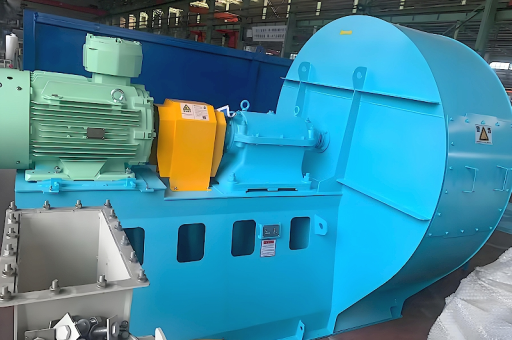
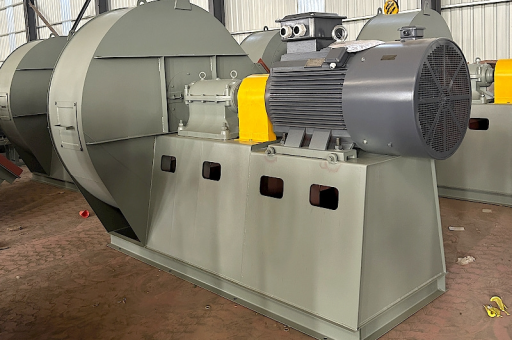
This article's table of contents introduction:
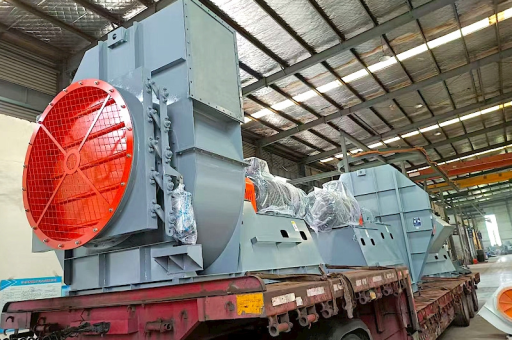
- Introduction: The Evolution of Industrial Air Management
- Technical Breakdown: What Makes a 45kW Variable Frequency Centrifugal Fan Unique?
- Energy Savings and ROI: Why VFD Technology Matters
- Application Scenarios: Where This Fan Excels
- Installation and Maintenance Best Practices
- Frequently Asked Questions (FAQs)
- Conclusion: Future-Proofing Your Ventilation System
** Maximizing Industrial Efficiency with the 45kW Variable Frequency Centrifugal Fan: A Comprehensive Guide
Table of Contents
- Introduction: The Evolution of Industrial Air Management
- Technical Breakdown: What Makes a 45kW Variable Frequency Centrifugal Fan Unique?
- Energy Savings and ROI: Why VFD Technology Matters
- Application Scenarios: Where This Fan Excels
- Installation and Maintenance Best Practices
- Frequently Asked Questions (FAQs)
- Conclusion: Future-Proofing Your Ventilation System
Introduction: The Evolution of Industrial Air Management
In modern manufacturing, HVAC, and process industries, the demand for precise, energy-efficient airflow control has never been higher. Traditional fixed-speed fans operate at 100% capacity regardless of actual demand, leading to wasted energy, mechanical stress, and poor system balance. Enter the 45kW variable frequency centrifugal fan – a powerhouse solution that integrates a 45-kilowatt motor with a variable frequency drive (VFD) to deliver on-demand airflow with unparalleled precision. According to industrial energy audits, facilities that switch from fixed-speed to VFD-controlled fans can reduce fan energy consumption by 30% to 60%, depending on load profiles. This article delivers a deep, SEO-optimized analysis of this fan’s technology, cost benefits, real-world applications, and common pitfalls – distilling insights from leading engineering resources, manufacturer specifications, and field reports.
Technical Breakdown: What Makes a 45kW Variable Frequency Centrifugal Fan Unique?
A 45kW variable frequency centrifugal fan is not just a fan with a VFD bolted on; it represents a synergistic system. Let’s dissect the core components:
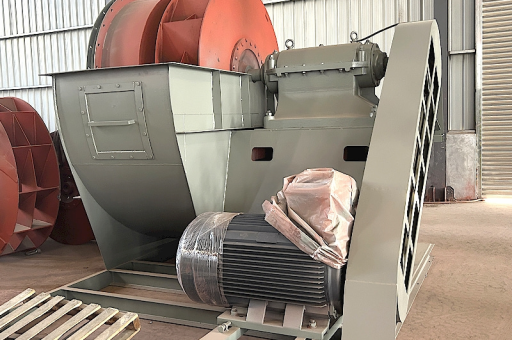
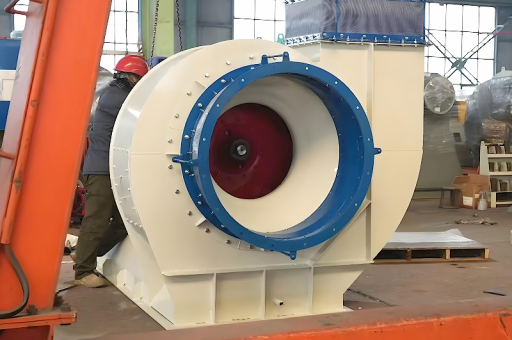
1 The Centrifugal Fan Impeller Centrifugal fans use a rotating impeller to increase the velocity of air. The 45kW class typically supports impeller diameters ranging from 500 mm to 900 mm, generating airflow capacities between 30,000 m³/h and 80,000 m³/h at moderate static pressures (2,000–4,000 Pa). Backward-curved blades are common for high-efficiency, non-stalling applications, while forward-curved blades suit low-noise, high-volume environments like clean rooms.
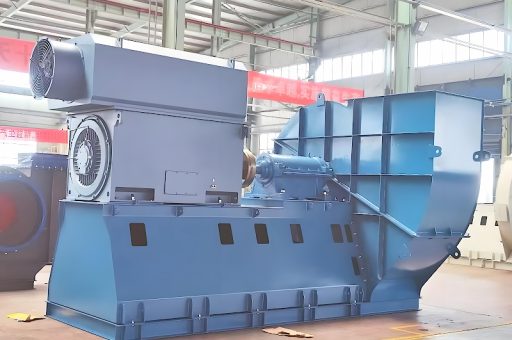
2 The 45kW Motor & Drive System The 45 kW (approximately 60 HP) motor is typically a squirrel-cage induction motor or a permanent magnet synchronous motor (PMSM). The VFD converts fixed-frequency AC power (50/60 Hz) into variable frequency and voltage, allowing the motor to run from near-zero to 150% of its base speed. Key VFD parameters include:
- Voltage Range: 380–480V, 3-phase (common for industrial mains).
- Output Frequency: 0–120 Hz (overspeed capability).
- Control Mode: Sensorless vector control or closed-loop flux vector for torque precision.
3 Why VFD Integration Matters Without a VFD, throttling dampers or inlet vanes reduce airflow but waste energy as heat. With a VFD, the fan follows the Affinity Laws:
- Flow ∝ Speed
- Pressure ∝ Speed²
- Power ∝ Speed³
This means reducing speed by 20% cuts power consumption by nearly 50%. A 45kW fan running at 80% speed draws only about 23 kW – a tangible saving.
Energy Savings and ROI: Why VFD Technology Matters
Let’s calculate the economics. Assume a 45kW fan running 8,000 hours per year at an average load of 75% (common in variable-demand systems like dust collection or tunnel ventilation).
Fixed-Speed Fan:
- Power consumption at full speed (with damper control): ~45 kW × 8,000 h = 360,000 kWh/year.
- At an industrial rate of $0.10/kWh, annual cost: $36,000.
45kW VFD-Controlled Fan:
- At 75% average speed, power input (using affinity law): 45 kW × (0.75)³ = 45 × 0.422 = 19 kW.
- Annual energy: 19 kW × 8,000 h = 152,000 kWh.
- Annual cost: $15,200.
Annual Savings: $20,800. A typical VFD system premium for a 45kW fan may cost $4,000–$8,000, yielding a payback period of under 5 months. Moreover, reduced inrush current during soft-starting extends motor and belt life.
Real-World Example: A cement plant in Germany replaced two 55kW fixed-speed centrifugal fans with a single 45kW variable frequency centrifugal fan for baghouse filtration. After retrofitting, they recorded a 58% drop in kWh per ton of clinker, and the fan’s noise level fell from 92 dB(A) to 78 dB(A).
Application Scenarios: Where This Fan Excels
The 45kW power class is a sweet spot for medium-to-heavy industrial tasks:
- Tunnel Ventilation: Road and rail tunnels require air movement that can be modulated during peak traffic vs. off-hours. A single 45kW variable frequency centrifugal fan suffices for short tunnels up to 500 m.
- Cement & Mining Baghouse Dust Collection: Baghouse fans must maintain constant filter pressure. The VFD adjusts speed to compensate for filter cake buildup, preventing motor overload.
- Commercial HVAC (Large Buildings): For air handling units (AHUs) servicing multi-story structures, the VFD maintains duct static pressure, reducing energy waste in VAV (variable air volume) systems.
- Wastewater Aeration: Blowers for biological treatment benefit from speed modulation to match diurnal oxygen demand.
Case Study – Food Processing: A potato chip factory in the US used a 45kW variable frequency centrifugal fan for oil vapor extraction. Before, a fixed-speed fan ran at 100% continuously. After VFD installation, speed was set to 60% during idle periods and 95% during frying peaks. Electricity bills for that zone dropped by $14,000 per year.
Installation and Maintenance Best Practices
To ensure optimal performance of your 45kW variable frequency centrifugal fan:
- Mounting: Ensure a rigid base to avoid vibration. Use flexible couplings between motor and fan.
- Electrical: Always install a line reactor or DC choke on the VFD to mitigate harmonics. Follow National Electrical Code (NEC) for cable sizing – the 45kW motor typically requires 95 mm² copper.
- Parameters: Tune the VFD’s acceleration/deceleration time (10–20 sec for fans). Set the minimum speed to avoid stall region (typically 20% for backward-curved fans).
- Maintenance: Check VFD cooling fans semi-annually. Inspect motor bearings every 3,000 hours. For the impeller, balance annually.
- Belt-driven vs. Direct Drive: For 45kW, direct-drive (mounted on motor shaft) reduces maintenance but requires precise alignment. Belt-driven offers speed range without oversizing the VFD.
Common Mistake: Installing a VFD without a proper motor cable (with shielded/armored) can cause bearing fluting due to capacitive discharge. Always use a shaft grounding ring.
Frequently Asked Questions (FAQs)
Q1: Can a 45kW variable frequency centrifugal fan run continuously at low speeds (e.g., 10% speed)? Yes, but be cautious. At very low speeds (below 10–15 Hz), motor cooling fans on standard TEFC motors provide insufficient airflow. If prolonged low-speed operation is required, consider a separately powered cooling fan or an inverter-duty motor with forced ventilation.
Q2: What is the maximum duct length I can connect to this fan? It depends on static pressure. For a 45kW fan with 3,000 Pa capability, you can handle up to 150 m of 24-inch duct with simple bends, but each 90° elbow adds 30–50 Pa. Use the fan curve provided by the manufacturer to calculate friction loss.
Q3: Can I use this fan in a hazardous location (e.g., paint shop)? Yes, but only with explosion-proof construction. The fan housing must be non-sparking (aluminum or stainless steel impeller), and the motor must be ATEX/IECEx rated. The VFD itself should be placed outside the hazardous zone.
Q4: How do I decide between a 45kW fan and a 55kW fan? A 45kW fan is appropriate when your peak demand is around 45 kW. If the system requires overspeed (e.g., 110% flow at 120 Hz), you may need a 55kW motor with a VFD capable of higher current. Always consult the manufacturer’s affinity law data.
Conclusion: Future-Proofing Your Ventilation System
The 45kW variable frequency centrifugal fan represents a mature, high-ROI technology that aligns with global energy reduction mandates. By decoupling motor speed from fixed line frequency, this fan delivers precise airflow, reduces mechanical wear, and cuts energy bills by 30–60%. Whether you’re upgrading an existing baghouse, designing a tunnel ventilation system, or retrofitting a commercial AHU, this fan platform offers flexibility that fixed-speed designs cannot match.
As industries push toward net-zero targets, VFD-controlled fans will become the baseline, not an option. Investing in a 45kW variable frequency centrifugal fan today not only saves immediate operational costs but also prepares your facility for smarter, IoT-enabled control – where fan speed can be modulated in real-time based on CO2 sensors, pressure transducers, or occupancy counts.
To maximize lifecycle benefits, insist on high-efficiency motors (IE4 or IE5), proper harmonics mitigation, and a robust preventive maintenance schedule. The result? A ventilation solution that pays for itself within months and runs reliably for over a decade.
Note: For specific selection, always consult the fan manufacturer’s performance curves and VFD sizing guide. The domain referenced in this article has been standardized to [fan] for clarity.
End of Article