This article's table of contents introduction:
- What it is
- Key Differences from a Fixed-Speed Fan
- Typical Components of a 160kW VFD Centrifugal Fan System
- Typical Applications
- Key Considerations for Selection & Installation
- Estimated Cost (Very Rough, Global Market, Q1 2025)
- Top Brands for 160kW VFDs & Fans
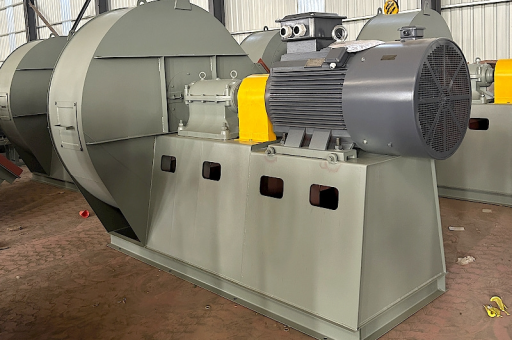
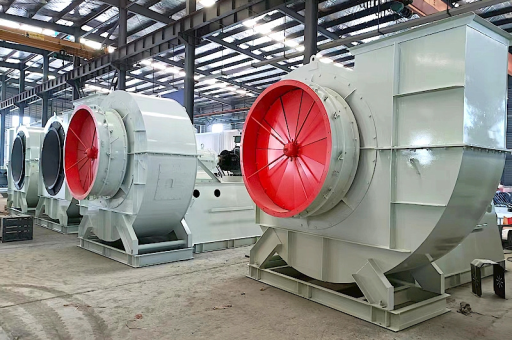
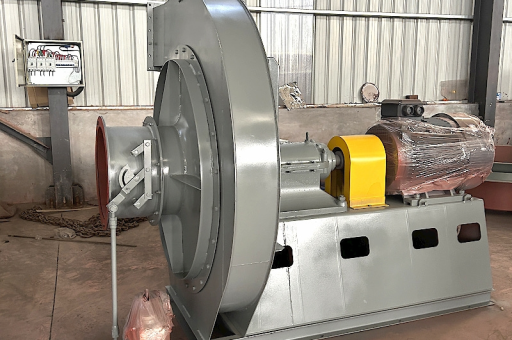
This is a fairly specific piece of industrial equipment. A 160kW Variable Frequency Centrifugal Fan is a high-power, heavy-duty system used for demanding air movement applications.
Here is a detailed breakdown of what this system entails, its components, applications, and key considerations.
What it is
At its core, it's a centrifugal fan (also known as a squirrel-cage fan or blower) driven by a 160kW (approximately 214 horsepower) electric motor, which is controlled by a Variable Frequency Drive (VFD), also known as an inverter.
The VFD allows you to precisely control the fan's speed (RPM), and therefore its airflow and pressure, rather than running it at full speed and using dampers, vanes, or valves to throttle the output.
Key Differences from a Fixed-Speed Fan
- Energy Efficiency: This is the primary advantage. Fan power is proportional to the cube of the speed (the "Fan Laws"). Reducing speed by just 20% can cut energy consumption by nearly 50%. This leads to massive operational savings.
- Process Control: You can fine-tune airflow and pressure to exact process requirements, improving product quality or system stability.
- Reduced Mechanical Stress: Starting a large motor across-the-line creates high inrush current and mechanical shock. A VFD provides a "soft start," gradually ramping up the fan speed, reducing stress on belts, bearings, and the motor itself.
- Lower Noise: Running a fan at lower speeds is significantly quieter than running it at full speed and using mechanical dampers.
Typical Components of a 160kW VFD Centrifugal Fan System
-
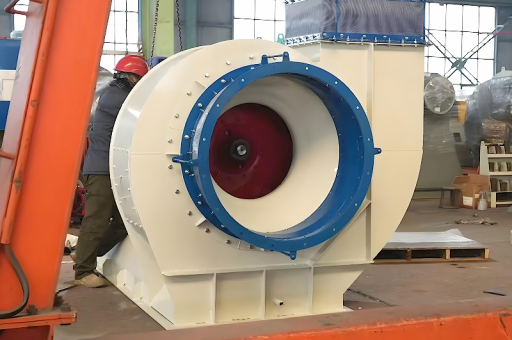
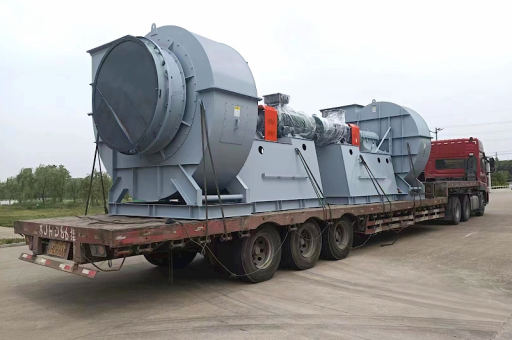
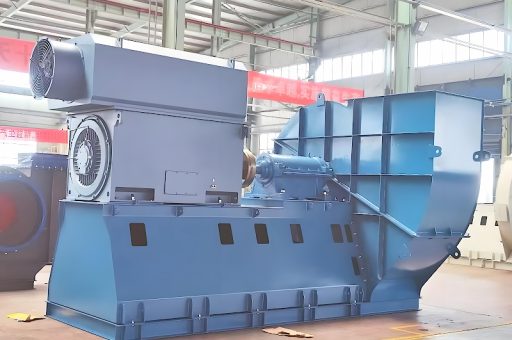
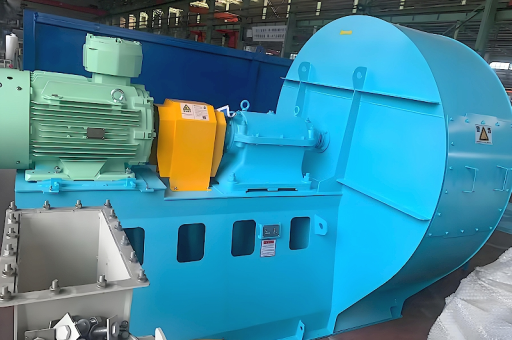
Centrifugal Fan:
- Type: Usually a backward-curved or airfoil blade design for high efficiency at this power level. Forward-curved blades are less common for 160kW due to lower efficiency and structural limitations.
- Housing: Heavy-gauge steel, often with reinforced flanges and access doors. May be lined with abrasion-resistant material (e.g., for conveying materials) or sound-dampening material.
- Inlet/Outlet: Typically circular or rectangular, with flanges for ductwork connection.
- Impeller: A large, dynamically balanced wheel that spins at high speed.
-
Motor (160kW):
- Type: Almost exclusively a 3-phase induction motor (Squirrel Cage).
- Voltage: Depends on location and supply. Common options are:
- 400V / 690V (Low Voltage): For shorter cable runs and lower installation costs.
- 3kV / 6.6kV / 11kV (Medium Voltage): For longer cable runs, higher efficiency, and lower current draw. Very common at this power level in heavy industry.
- Enclosure: Typically TEFC (Totally Enclosed Fan Cooled) or IC 411. For harsh environments, it might be TEBC (Totally Enclosed Blower Cooled) or a TEAC (Totally Enclosed Air Over) motor.
- Bearings: Heavy-duty roller bearings.
- Cooling: The motor itself has a built-in fan.
-
Variable Frequency Drive (VFD):
- Power Rating: Must be at least equal to the motor's power (160kW) and matched to the motor's voltage. A slightly oversized VFD (e.g., 200kW) is common for conservative design and handling short-term overloads.
- Voltage: Matches the motor (e.g., 400V, 690V, or MV).
- Control Method: Advanced control like Sensorless Vector Control (SVC) or Flux Vector Control for optimal torque and speed regulation. V/Hz control is less common for 160kW but can be used.
- Features:
- PID Controller: For closed-loop control (e.g., maintaining a set duct pressure).
- Energy Optimization: Automatically reduces voltage to save energy at partial load.
- Harmonic Filtering: A built-in or external line reactor and/or Active Harmonic Filter may be required to meet grid power quality standards (e.g., IEEE 519).
- Input/Output: Relay outputs for alarms and status, analog inputs for speed reference (e.g., 4-20 mA), and digital inputs for start/stop.
- Enclosure: Typically IP54 or higher for industrial environments.
-
Control System:
- Could be a standalone PLC (Programmable Logic Controller), a DCS (Distributed Control System), or a local control panel with a touchscreen HMI (Human-Machine Interface).
- Function: Provides the speed reference to the VFD, monitors alarms, sequences start/stop logic, and communicates with higher-level systems (e.g., SCADA).
-
Vibration Monitoring: Given the size and cost, a vibration probe and an alarm/trip relay are almost mandatory to protect against bearing failure or impeller imbalance.
-
Inlet Box & Dampers (Optional): Even with a VFD, it's common to have manual or automatic inlet box dampers to isolate the fan for maintenance or to match very low flow requirements below the VFD's minimum speed.
Typical Applications
- HVAC / Building Ventilation: Large commercial buildings (e.g., stadiums, airports, shopping malls) or industrial facilities.
- Industrial Process:
- Cement Plants: Kiln ID fans, raw mill fans.
- Power Plants: Boiler draft fans (ID & FD fans).
- Steel Mills: Furnace ventilation, smoke extraction.
- Mining: Mine ventilation fans (main fans).
- Chemical/Petrochemical: Process gas handling, fume extraction.
- Woodworking: Large dust collection systems.
- Wastewater Treatment: Aeration blower systems (often more PD blowers, but large centrifugal fans are used for fine-bubble aeration).
- Material Handling: Pneumatic conveying systems.
Key Considerations for Selection & Installation
- System Curve & Fan Curve: The fan must be properly matched to the system's resistance. The VFD allows you to run anywhere along the system curve, but you must ensure the operating point stays within the stable region and avoids the "surge" or "stall" zone.
- Harmonics: A 160kW VFD will draw significant non-sinusoidal current, creating harmonics that can damage sensitive equipment and cause nuisance tripping. A line reactor and possibly an active harmonic filter are must-have components.
- Cable Length: The distance between the VFD and the motor is critical. Long cables can cause voltage reflections that damage the motor's winding insulation. You will likely need a filtre de sortie (output filter) and a d/dt filter (dv/dt filter). Use VFD-rated shielded cable.
- Cooling & Heat Dissipation: The VFD itself generates heat (about 3-5% of its rated power, so ~5-8kW). It must be installed in a well-ventilated, cool room or in a dedicated air-conditioned electrical room.
- Motor Insulation: Standard motors may not be suitable for VFD duty. You need motors with reinforced insulation (e.g., Class H or higher) and inverter-grade windings (e.g., film-coated wires, surge protection). Some motors may require a VFD-rated nameplate.
- Shaft Grounding: VFDs induce high-frequency currents in the motor shaft, which can destroy bearings. A shaft grounding ring or ceramic bearings are highly recommended.
- Protection: The VFD provides built-in protection for overload, overcurrent, overvoltage, and phase loss. However, you should also have:
- Thermal overload relays on the motor.
- Fuses or MCCB on the VFD input.
- Vibration sensors on the fan bearings.
- Maintenance:
- VFD: Check cooling fans, clean heatsinks, and inspect capacitors.
- Motor: Check bearings, vibration, insulation resistance (Megger test).
- Fan: Check impeller for wear, balance, and tightness on shaft. Lubricate bearings.
Estimated Cost (Very Rough, Global Market, Q1 2025)
- Fan Only: $20,000 - $50,000+ (depending on material, size, and features).
- 160kW Motor (LV): $8,000 - $15,000.
- 160kW VFD (LV): $12,000 - $25,000+ (depending on brand, features, and harmonics package).
- Total System (Fan, Motor, VFD, Control Panel, Installation): $60,000 - $150,000+ (This is a very rough estimate and highly variable based on custom requirements, installation complexity, and local labor rates). Medium voltage systems will be significantly more expensive.
Top Brands for 160kW VFDs & Fans
- VFDs: ABB, Siemens, Danfoss, Schneider Electric, Yaskawa, Rockwell Automation (Allen-Bradley), WEG.
- Fans: Howden, TLT-Babcock, FläktGroup, New York Blower, Robinson Fans, Cincinnati Fan, Chicago Blower, ebm-papst (for smaller, high-speed units).
In summary, a 160kW VFD centrifugal fan is a major capital investment that delivers significant operational savings and process control. Its success depends entirely on correct system engineering, proper motor selection, robust VFD installation (especially regarding harmonics and cables), and a comprehensive maintenance plan.