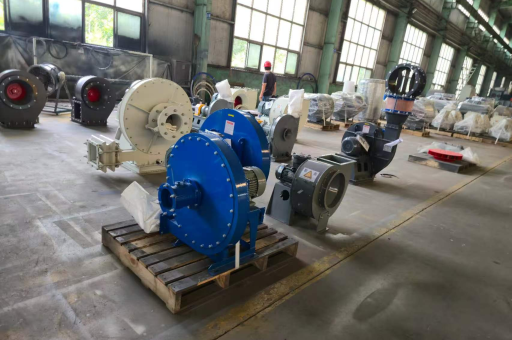
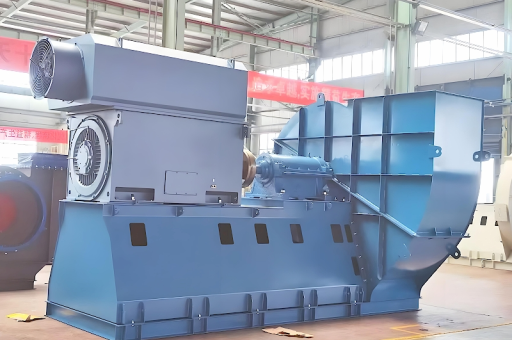
Mastering Industrial Efficiency: The Critical Role of the 200kW Flue Gas Recirculation Fan in Modern Power Plants
Table of Contents
- Introduction: What Is a 200kW Flue Gas Recirculation Fan?
- Technology Behind the 200kW FGR Fan
- Applications and Use Cases
- Performance Metrics and Specifications
- Installation and Maintenance Best Practices
- Energy Savings and Environmental Impact
- Frequently Asked Questions (FAQ)
- Industry Trends and Future Outlook
Introduction: What Is a 200kW Flue Gas Recirculation Fan?
The 200kW Flue Gas Recirculation Fan (FGR fan) is a specialized industrial fan designed to recirculate a portion of exhaust flue gases back into the combustion chamber of boilers, furnaces, or gas turbines. This process, known as Flue Gas Recirculation (FGR), is a proven technique for reducing nitrogen oxide (NOx) emissions and controlling combustion temperatures.
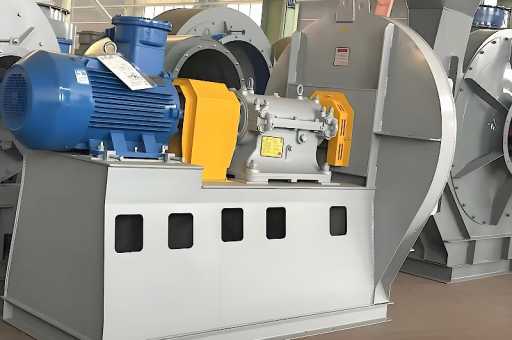
Unlike standard fans, the 200kW FGR fan must withstand high temperatures (typically 150°C–350°C), corrosive gas mixtures, and continuous heavy-duty operation. With a power rating of 200 kW (approximately 268 horsepower), this fan is capable of moving large volumes of gas—often exceeding 150,000 m³/h—against moderate to high static pressures.
Why 200kW?
This power rating is commonly selected for medium-to-large industrial boilers (20–50 MW thermal input) and combined heat and power (CHP) plants. The 200kW motor provides the torque needed to overcome duct resistance and maintain stable recirculation ratios (typically 10–30% of total flue gas flow).
Technology Behind the 200kW FGR Fan
Aerodynamic Design
Modern 200kW FGR fans employ backward-curved centrifugal impellers or airfoil blades to achieve high efficiency (85–92% static efficiency). The blade profile minimizes turbulence and erosion, critical when handling particulate-laden flue gases.
Material Selection
- Impeller: High-strength alloy steel (e.g., Corten or 16Mo3) with optional ceramic coating for abrasion resistance.
- Casing: Carbon steel with internal refractory lining or stainless steel for corrosive environments.
- Shaft seals: Labyrinth or carbon ring seals prevent gas leakage.
Variable Speed Drive (VSD)
Most 200kW FGR fans are paired with variable frequency drives (VFDs) to modulate flow dynamically. This reduces energy consumption by 20–40% compared to fixed-speed operation, especially during low-load conditions.
Cooling System
The fan bearings are often equipped with forced air cooling or water jackets to dissipate heat conducted from the hot gas stream. Some designs include shaft cooling fans for additional protection.
Key Question:
"How does a 200kW FGR fan handle high-temperature gases?"
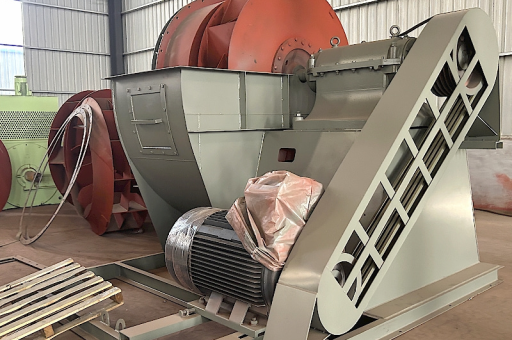
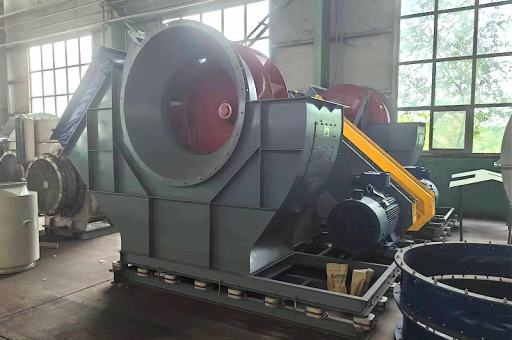
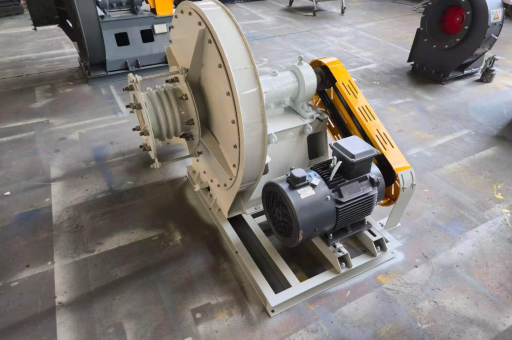
Answer: The motor is typically mounted on a separate base frame and connected via a flexible coupling. A shaft cooling fan creates a fresh air stream between the motor and the fan housing, preventing heat transfer to the motor windings. Additionally, the impeller is engineered with thermal expansion gaps.
Applications and Use Cases
Biomass and Coal-Fired Power Plants
In large thermal power stations, the 200kW FGR fan recirculates 15–25% of exhaust gases into the furnace. This reduces peak flame temperature from ~1500°C to ~1300°C, suppressing thermal NOx formation by up to 50%.
Natural Gas Combined Cycle (NGCC) Plants
Gas turbines in NGCC plants use FGR to maintain combustion stability at partial loads. The 200kW fan ensures consistent recirculation ratios, enabling low-NOx burners to operate within optimal emission ranges.
Industrial Boilers (Steam Generation)
Paper mills, chemical plants, and refineries employ FGR fans to meet stringent EPA or local emission standards. The 200kW size fits boilers producing 50–150 tons/h of steam.
Waste-to-Energy (WTE) Facilities
Incineration plants use FGR to control dioxin formation and maintain furnace temperature above 850°C without excessive oxygen. The fan must handle corrosive combustion gases containing HCl and SOx.
Real-World Example:
A 35 MW biomass plant in Sweden retrofitted its boiler with a 200kW FGR fan, reducing NOx emissions from 250 mg/Nm³ to 95 mg/Nm³—a 62% reduction—while improving boiler efficiency by 1.2%.
Performance Metrics and Specifications
| Parameter | Typical Value for 200kW FGR Fan |
|---|---|
| Power Rating | 200 kW (268 HP) |
| Air Flow Range | 80,000 – 200,000 m³/h |
| Static Pressure | 3,000 – 6,500 Pa |
| Operating Temperature | Up to 400°C (with cooling) |
| Impeller Diameter | 1,400 – 2,000 mm |
| Speed Range | 600 – 1,200 RPM (with VFD) |
| Noise Level | ≤ 85 dB(A) at 1 meter |
| Efficiency (Static) | ≥ 85% at design point |
| Compliance | ISO 5801, AMCA 210, ATEX (if needed) |
Efficiency Optimization Tip:
The NPSH (Net Positive Suction Head) of the fan should be checked during installation. A pressure drop of 10% across the recirculation duct can reduce fan efficiency by 3–5%.
Installation and Maintenance Best Practices
Installation Checklist
- Foundation: The fan base must be isolated from building vibrations using neoprene pads or spring dampers.
- Duct Design: Use long-radius elbows (R ≥ 2.5D) to minimize pressure loss. Avoid sharp turns near the fan inlet.
- Duct Support: Provide expansion joints to accommodate thermal growth (3–5 mm per meter of duct length).
- Control Integration: Connect VFD to the plant DCS system for proportional-integral-derivative (PID) control of recirculation rate.
- Safety Interlocks: Shut down the fan if bearing temperature exceeds 85°C or if vibration exceeds 6 mm/s RMS.
Maintenance Schedule
| Frequency | Action |
|---|---|
| Weekly | Check bearing temperature, vibration, and lubrication level. |
| Monthly | Inspect shaft seals for leakage; clean cooling air filters. |
| Quarterly | Take vibration spectrum analysis for early bearing wear detection. |
| Annually | Open inspection: check impeller for erosion, balance, and coating condition. |
Common Failure Modes:
- Impeller erosion: Caused by fly ash particles. Solution: Apply tungsten carbide coating or replace impeller every 3–5 years.
- Bearing failure: Due to heat soak. Solution: Upgrade to high-temperature grease (e.g., Exxon Mobil SHC 100) and increase cooling air flow.
Energy Savings and Environmental Impact
Energy Consumption Comparison
| Fan Type | Power Consumption (Annual) | Efficiency |
|---|---|---|
| Fixed-speed 200kW FGR fan | ~1,752 MWh (at 100% load) | 75–82% |
| VFD-controlled 200kW FGR fan | ~1,051 MWh (average 60% load) | 85–92% |
At $0.08/kWh, the VFD version saves approximately $56,000 per year in electricity costs.
Emission Reduction Impact
- NOx reduction: 30–60% depending on baseline burner design.
- CO reduction: 10–20% due to improved combustion stability.
- CO2 impact: Negligible; FGR may slightly increase CO2 if combustion efficiency declines by >0.5%.
Case Study:
A 200 MW coal plant in China retrofitted two 200kW FGR fans and achieved 45% NOx reduction, allowing the plant to meet China's ultra-low emission standards (≤ 50 mg/Nm³) without using expensive selective catalytic reduction (SCR) upgrades.
Frequently Asked Questions (FAQ)
Q1: Can the 200kW FGR fan be used for all fuel types?
A: Yes, but material selection differs. For high-sulfur fuels (e.g., heavy oil), use stainless steel casing. For biomass, use abrasion-resistant impellers.
Q2: What is the maximum allowable gas temperature at the fan inlet?
A: Standard design: 200°C. With cooling: up to 450°C. Beyond that, use a high-temperature fan with ceramic bearings.
Q3: How does FGR affect boiler efficiency?
A: Typically, a 1% reduction in efficiency occurs for every 10–15% recirculation ratio. However, the NOx reduction benefit outweighs the minor efficiency loss in most regulations-driven markets.
Q4: Is there a risk of condensation inside the fan?
A: Yes, if gas temperature drops below the acid dew point (≈110°C for natural gas, 130°C for coal). Install a condensate drain trap at the fan housing bottom.
Q5: What is the lifespan of a 200kW FGR fan?
A: 15–25 years with proper maintenance. The impeller may need replacement every 5–8 years depending on gas cleanliness.
Industry Trends and Future Outlook
Smart Monitoring Integration
Modern 200kW FGR fans are increasingly equipped with IoT sensors that transmit real-time data on vibration, temperature, flow, and power consumption to cloud-based analytics platforms. Predictive maintenance algorithms can forecast bearing failure up to 3 months in advance.
Advanced Material Science
Research is ongoing into hybrid ceramic-metal impellers that reduce weight by 20% and improve thermal tolerance by 100°C. Silicon carbide coatings are being tested to extend impeller life in abrasive environments.
Regulatory Drivers
The EU Industrial Emissions Directive (IED) and EPA's Clean Air Act continue to tighten NOx limits, pushing more plants to adopt FGR systems. In 2025, China's new emission standards will require FGR on all coal boilers above 35 MW.
Modular Fan Designs
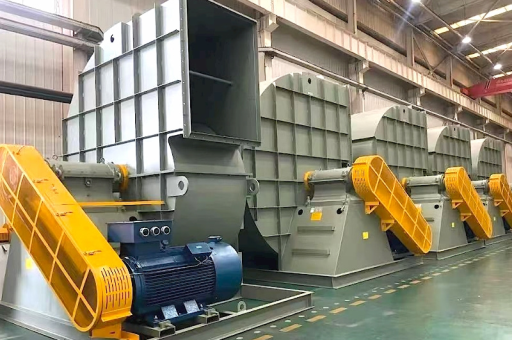
Manufacturers now offer plug-and-play 200kW FGR fan modules that include integrated VFD, motor, filter, and control panel in a single skid, reducing installation time by 40%.
Conclusion
The 200kW Flue Gas Recirculation Fan is a high-performance workhorse in the fight against industrial NOx emissions. Its ability to recirculate hot, corrosive gases reliably while maintaining energy efficiency makes it indispensable for modern power plants, chemical facilities, and incineration plants. With the right selection, installation, and predictive maintenance, operators can achieve regulatory compliance, reduce operational costs, and extend equipment lifespan by decades.
As emission standards tighten worldwide, the FGR fan—especially the 200kW variant—will continue to evolve with smarter controls, better materials, and lower lifecycle costs. It is not just a fan; it is a strategic asset for sustainable industrial operations.
For technical specification sheets, installation manuals, or supplier consultations, refer to major industrial fan manufacturers like Howden, Babcock & Wilcox, and Greenheck. Always consult your system integrator for site-specific requirements.