This article's table of contents introduction:
- Table of Contents (Directory Guide)
- Introduction: What is a 55kW Flue Gas Recirculation Fan?
- Core Function: Why FGR Fans Are Essential for NOx Reduction
- Technical Specifications: Understanding the 55kW Power Rating
- Design Features: Materials and Construction for High-Temperature Service
- Installation Best Practices: Ductwork and Control Integration
- Troubleshooting & Maintenance: Common Failure Modes
- Q&A Section: Expert Answers to Critical Questions
- Conclusion: Future Outlook for FGR Technology
Table of Contents (Directory Guide)
- Introduction: What is a 55kW Flue Gas Recirculation Fan?
- Core Function: Why FGR Fans Are Essential for NOx Reduction
- Technical Specifications: Understanding the 55kW Power Rating
- Design Features: Materials and Construction for High-Temperature Service
- Installation Best Practices: Ductwork and Control Integration
- Troubleshooting & Maintenance: Common Failure Modes
- Q&A Section: Expert Answers to Critical Questions
- Conclusion: Future Outlook for FGR Technology
Introduction: What is a 55kW Flue Gas Recirculation Fan?
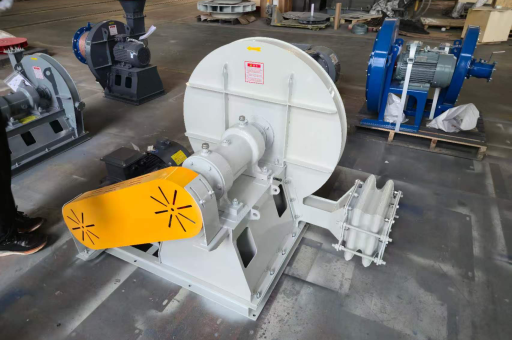
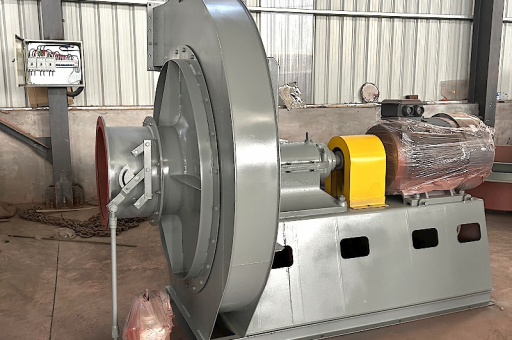
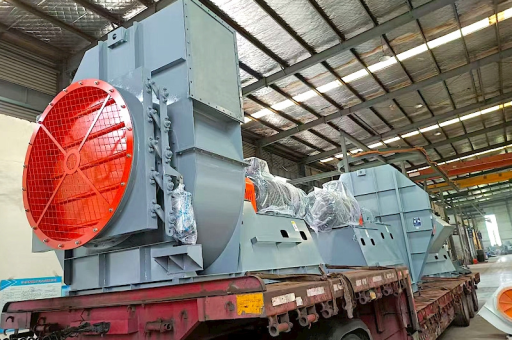
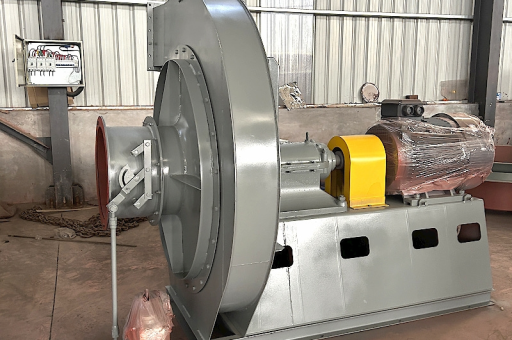
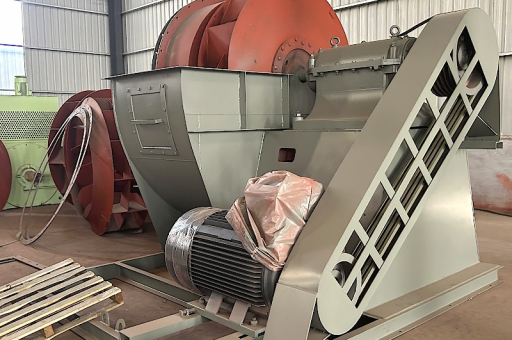
A 55kW Flue Gas Recirculation (FGR) Fan is a specialized industrial fan designed to extract a controlled portion of exhaust gas from a boiler or furnace stack and recirculate it back into the combustion air intake. The "55kW" designation refers to the motor power rating, indicating its capacity to handle significant volumetric flow rates against moderate to high pressures.
In modern thermal systems, this component is not merely a helper—it is a critical enabler of low-NOx combustion. By reintroducing inert flue gases (primarily CO₂ and N₂) into the flame zone, the FGR fan dilutes the oxygen concentration, reduces peak flame temperature, and chemically suppresses the formation of nitrogen oxides (NOx).
Why 55kW?
This power level typically supports medium-to-large industrial boilers burning natural gas, light oil, or biomass, with steam capacities ranging from 15 to 30 tons per hour. According to field data from retrofit projects, a 55kW FGR fan can handle flow rates of approximately 40,000 to 60,000 m³/h of recirculated gas at temperatures between 180°C and 240°C.
Core Function: Why FGR Fans Are Essential for NOx Reduction
The Mechanism: Dilution and Thermal Quenching
When flue gas is reintroduced into the burner, it acts as a thermal sink. The recirculated gas absorbs heat from the combustion reaction without contributing additional oxygen. This reduces the adiabatic flame temperature from roughly 1,800°C to below 1,500°C, which is the critical threshold above which thermal NOx forms rapidly.
Quantified Impact:
- Without FGR: Baseline NOx emission ≈ 100–150 ppm (typical for natural gas)
- With a properly sized 55kW FGR fan: NOx levels drop to 20–40 ppm—a reduction of 60–80%.
Energy Penalty vs. Environmental Gain
Every kW of fan power consumed must be balanced against fuel savings. High-efficiency FGR fan designs, including backward-curved impellers and variable frequency drives (VFDs), keep the parasitic load below 2% of the boiler’s firing rate. For a 20-ton/hr boiler, this translates to an annual CO₂ reduction of approximately 80 metric tons at typical capacity factors.
Technical Specifications: Understanding the 55kW Power Rating
The 55kW value is not arbitrary—it is derived from the fan affinity laws:
[
\text{Power} \propto \text{Flow Rate} \times \text{Pressure}
]
For a typical FGR application:
- Flow rate (Q): 12–15 m³/s (42,000–54,000 m³/h)
- Static pressure (ΔP): 3,500–5,000 Pa (depending on duct length and burner backpressure)
- Gas temperature: 200°C average (density ~0.74 kg/m³)
Motor and Drive Specifications:
- Motor type: IE3 or IE4 premium efficiency induction motor
- Speed: 1,450 rpm (4-pole) or 2,900 rpm (2-pole) – VFD controlled
- Bearing life: L₁₀ > 50,000 hours with proper lubrication
- Impeller material: Corten steel (weathering steel) or duplex stainless steel for corrosion resistance at acid dew point conditions
Danger Zone: Cold Start Issues
At startup, the cold fan motor draws higher current (inrush) and the gas density is higher, potentially overloading the motor. A soft starter or VFD with torque boost is mandatory for a 55kW FGR fan to prevent tripping the protection breaker.
Design Features: Materials and Construction for High-Temperature Service
Choosing the Right Impeller:
- Backward-curved blades: Preferred for FGR because they are self-limiting in power consumption. When flow drops, power draw also drops—unlike forward-curved blades.
- Radial tip clearance: Must be maintained at 2–3 mm to avoid thermal expansion seizure.
Housing and Shaft Sealing:
- Housing: Welded steel with stiffeners to prevent vibration at 55kW stress levels.
- Shaft seal: Carbon ring or labyrinth seal with purge air to prevent hot gas leakage into bearings.
- Drain port: Located at the lowest point to remove condensate from acidic flue gas (sulfuric acid when burning sulfur-containing fuels).
Thermal Break Considerations:
- A 55kW FGR fan runs at gas temperatures above 200°C. To protect bearings, a cooling fan on the motor shaft or a separate forced air cooling system is essential. Many OEMs use a spacer between the impeller hub and the bearing housing—an "in-shaft cooling" design.
Installation Best Practices: Ductwork and Control Integration
Duct Design Pitfalls:
- Inlet straight length: Minimum 3–5 diameters of straight duct before fan inlet to avoid swirl and uneven loading.
- Outlet diffuser: A gradual 7° expansion cone reduces velocity head loss, increasing static pressure recovery by up to 15%.
Control Loop Strategy:
- Pressure control: The FGR fan should be modulated based on differential pressure across the burner or flue gas O₂ levels.
- Safety interlocks:
- Fan run permit: Only when boiler firing is confirmed.
- Low-flow alarm: If FGR flow drops below 30% of setpoint, close recirculation damper to prevent flashback.
- Motor temperature: RTD-based protection set at 120°C for windings.
Vibration Monitoring:
Installing accelerometers on bearing housings is recommended. For a 55kW fan, a velocity limit of 4.5 mm/s RMS is considered safe. Levels above 7 mm/s RMS indicate imbalance or impeller fouling.
Troubleshooting & Maintenance: Common Failure Modes
| Symptom | Likely Cause | Solution |
|---|---|---|
| Motor tripping on overload | Damper stuck closed; high gas density at cold start | Install VFD; check damper linkage |
| Excessive vibration > 7 mm/s | Impeller erosion or ash build-up | Clean blades; check for pitting |
| Bearing temperature > 95°C | Cooling fan failure; grease contamination | Replace bearing; install purge line |
| Low FGR flow despite full speed | Duct leak; blocked recirculation port | Perform leak test; clean ports |
| Noisy operation | Cavitation-like sound from recirculated gas mixing | Adjust burner FGR ratio; add mixing length |
Inspection Schedule:
- Daily: Check motor current (should not exceed 105 A per phase for a 55kW 400V drive).
- Monthly: Bearing vibration spectrum analysis.
- Quarterly: Visually inspect impeller through access door for erosion.
- Annually: Shaft alignment check; replace shaft seals.
Q&A Section: Expert Answers to Critical Questions
Q1: Can a 55kW FGR fan be used for biomass boilers? Yes, but only with special coatings. Biomass flue gas contains chloride and potassium compounds that accelerate corrosion. A 316L duplex stainless steel impeller or a ceramic-epoxy coating is mandatory. Also, the fan must be designed for higher particulate loading.
Q2: What is the expected power consumption in kWh per day? At 75% load factor (typical for industrial boilers), a 55kW fan running 24 hours consumes: [ 55 \, \text{kW} \times 0.75 \times 24 \, \text{h} = 990 \, \text{kWh/day} ] At $0.10/kWh, this costs ~$99/day. Using a VFD to reduce speed by 20% drops power to 45 kW and saves ~$160/month.
Q3: Why does my FGR fan hum during startup? That “hum” is typically motor slip vibration or torsional resonance at low VFD frequencies. Solution: Configure the VFD to skip frequencies between 5–12 Hz. Also, check that the motor base bolts are fully tightened.
Q4: Is a bypass damper needed for the FGR fan? In multi-boiler plants, yes. A bypass damper allows you to isolate the fan for maintenance without shutting down the entire boiler house. For single-boiler installations, manual isolation dampers with position feedback are sufficient for safety.
Q5: Can I run the 55kW FGR fan dry (no flue gas flow)? Running an FGR fan with zero flow for more than 30 seconds can cause the impeller to overheat due to windage losses. Always ensure a minimum recirculation flow (20% of rated) is maintained when the fan is energized.
Conclusion: Future Outlook for FGR Technology
The 55kW Flue Gas Recirculation Fan is a mature yet evolving technology. As emissions regulations tighten globally—from the EU's Industrial Emissions Directive to China's ultra-low emission standards—FGR fans will see wider adoption in cement kilns, steel reheat furnaces, and waste-to-energy plants.
Emerging Trends:
- Hybrid FGR + SCR systems: Smaller FGR fans combined with selective catalytic reduction for ultra-low NOx (~10 ppm).
- Magnetic bearing FGR fans: Oil-free, low-maintenance designs for high-reliability applications.
- Digital twin integration: Predictive maintenance models that use vibration and current signatures to forecast bearing failure weeks in advance.
For plant engineers and procurement managers, selecting a high-quality 55kW FGR fan from a reputable OEM—with VFD compatibility, proper material selection, and a robust cooling system—remains a cost-effective investment that pays back through reduced emissions penalties and lower fuel consumption.
Final Recommendation:
Always spec a 55kW FGR fan with a sealed bearing housing with purge air and a VFD with PID controller. This combination ensures compliance with best emission limits while keeping operational costs predictable.